


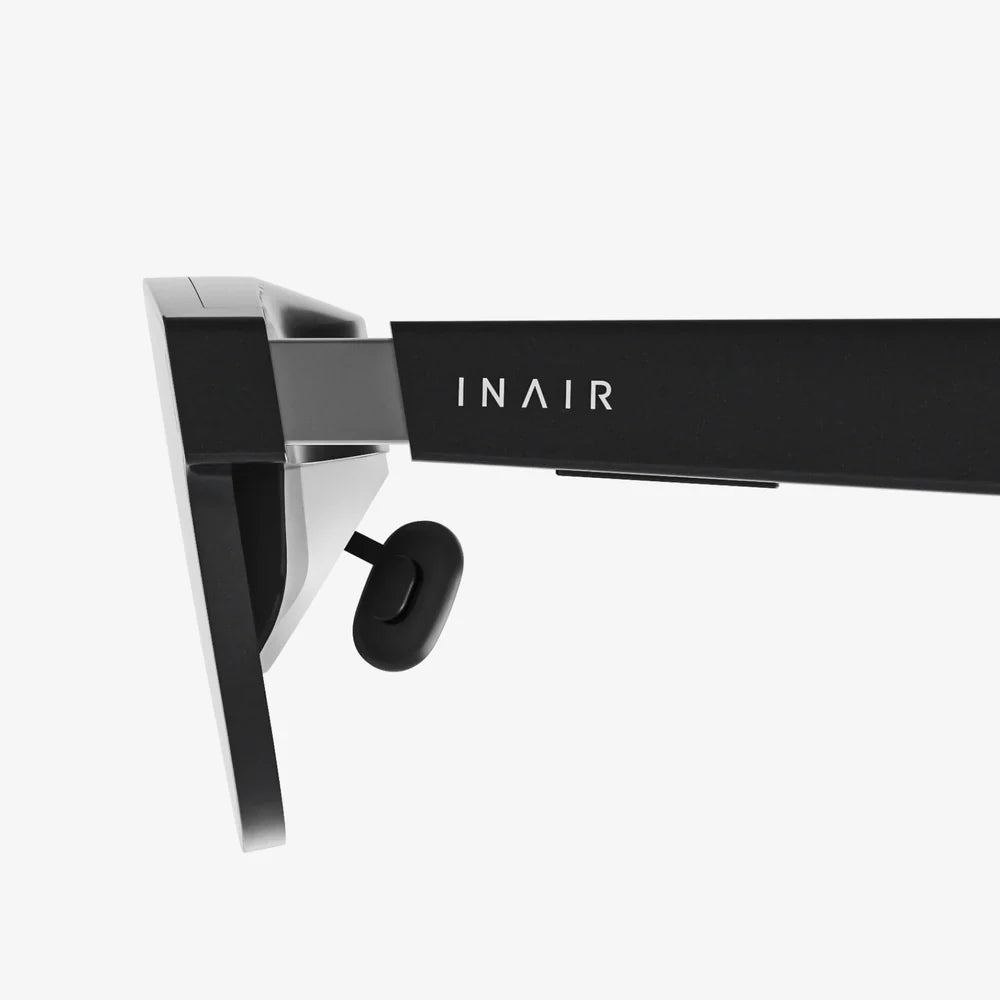
Imagine stepping out into the world, your vision not just protected from the sun but actively enhanced, your surroundings translated in real-time, your health monitored discreetly, and your digital life seamlessly integrated into your field of view. This is not a scene from a science fiction movie; this is the reality promised by the best AI sunglasses of 2025. We are standing at the precipice of a wearable technology revolution, where eyewear is transitioning from a passive accessory to an intelligent, proactive companion. The fusion of advanced artificial intelligence, micro-displays, and sophisticated sensor arrays is creating a new product category set to redefine our interaction with technology and the world around us. The journey to find the perfect pair is about understanding a new paradigm in personal computing.
The Core Technologies Powering 2025's Smart Eyewear
The remarkable capabilities of the latest AI sunglasses are built upon a convergence of several cutting-edge technologies. Understanding these components is key to appreciating the engineering marvel they represent.
On-Device AI Processors: Unlike earlier iterations that relied heavily on cloud connectivity, the best models in 2025 feature powerful, dedicated neural processing units (NPUs) embedded within the frames. These chips are designed for extreme efficiency, handling complex machine learning tasks like real-time object recognition, natural language processing, and predictive analytics without draining the battery or suffering from latency. This shift to on-device intelligence is crucial for privacy, speed, and functionality in areas with poor connectivity.
Advanced Micro-Displays and Optical Systems: The challenge has always been projecting digital information onto the real world without bulky, obtrusive hardware. 2025 sees the maturation of technologies like Laser Beam Scanning (LBS) and waveguide optics. These systems project crisp, bright text, graphics, and notifications into the user's peripheral vision, often appearing as a semi-transparent overlay that doesn't obstruct the view. Resolution and color accuracy have seen dramatic improvements, making augmented reality (AR) experiences more immersive and practical than ever before.
Multi-Sensor Arrays: These sunglasses are packed with sensors that act as their eyes and ears. High-resolution cameras, LiDAR scanners for depth perception, ambient light sensors, microphones for bone conduction audio, and a suite of health sensors including photoplethysmography (PPG) for heart rate monitoring all work in concert. The AI synthesizes this constant stream of data to understand context, environment, and user state, enabling truly responsive and intuitive interactions.
Next-Generation Battery Technology: Powering all this tech requires energy-dense, safe, and fast-charging batteries. Innovations in solid-state battery design have led to slimmer form factors with all-day battery life under typical usage. Many premium models also incorporate solar-charging cells into the lenses or arms, harnessing ambient light to extend usage even further, a perfect synergy for a product designed to be worn in the sun.
Defining Features of Top-Tier AI Sunglasses
Beyond the underlying tech, what can you actually do with these sophisticated devices? The feature set of the best AI sunglasses in 2025 is both expansive and deeply integrated.
Real-Time Translation and Transcription: This remains a killer app. Look at a menu, a street sign, or a document in a foreign language, and the translated text appears instantly in your view. Hold a conversation with someone speaking another language, and their words are transcribed and translated in near real-time, with a discreet audio feed or text display helping you communicate effortlessly. The accuracy and speed in 2025 are staggering, supporting dozens of languages offline.
Contextual Augmented Reality: The AI doesn't just show information; it shows the right information at the right time. Look at a landmark to get a pop-up with its history. Glance at a restaurant to see its reviews and wait times. Navigate a new city with arrows and directions seamlessly painted onto the streets in front of you. For professionals, this could mean viewing schematics over machinery or seeing patient vitals during a procedure.
Comprehensive Health and Wellness Monitoring: Moving beyond simple step counting, these devices offer continuous health tracking. They monitor UV exposure, alerting you when it's time to seek shade. Advanced algorithms can track activity levels, calories burned, and even provide feedback on posture. The PPG sensors allow for continuous heart rate monitoring and can detect anomalies, while future-facing models are exploring non-invasive blood glucose monitoring and blood pressure estimation.
Intelligent Photography and Videography: With hands-free, first-person perspective cameras, capturing life's moments becomes incredibly intuitive. The AI can compose shots, suggest the best moment to take a picture, and even automatically edit and share clips based on your preferences. It’s a vlogger's and content creator's dream tool, offering a truly immersive point of view.
Seamless Connectivity and Voice Assistance: Deep integration with your smartphone ecosystem allows for managing calls, messages, and notifications without ever taking your phone out of your pocket. Voice assistants are more conversational and context-aware, capable of executing complex commands and answering questions based on what you're looking at.
Navigating the Critical Considerations: Privacy, Style, and Fit
With great power comes great responsibility, and devices that see and hear what you do raise important questions.
The Privacy Imperative: The best AI sunglasses of 2025 are designed with privacy at their core. Physical camera shutters or LED indicators that show when recording is active are now standard. On-device processing means sensitive data like video feeds and conversations never need to leave the glasses. Transparent data policies and user-control over what is stored and shared are non-negotiable features for any reputable manufacturer. Users must be the ultimate arbiters of their digital footprint.
Style and Social Acceptance: The dreaded "cyborg" look is a relic of the past. This generation of AI sunglasses is indistinguishable from high-end traditional eyewear. Collaborations with renowned fashion designers have resulted in a wide variety of styles: classic aviators, wayfarers, sleek minimalist designs, and sporty wraparounds. The technology is so miniaturized that the frames are only slightly thicker than normal glasses, making them a fashionable accessory first and a tech device second.
Comfort and Customization: To be worn all day, comfort is paramount. Lightweight, durable materials like titanium, flexible Grilamid, and advanced polymers are common. Customizable nose pads and temple arms ensure a secure and comfortable fit for a wide range of face shapes. For those with prescription vision needs, most top models offer custom prescription lenses integrated with the smart technology, or compatible inserts.
How to Choose Your Perfect Pair in 2025
Selecting the right AI sunglasses is a personal journey, dependent on your lifestyle, needs, and priorities. Here’s a framework for making your decision.
Identify Your Primary Use Case: Are you a traveler who needs real-time translation and navigation? A fitness enthusiast focused on health metrics and activity tracking? A professional seeking AR overlays for work? Or a tech enthusiast who wants the most feature-packed experience available? Your dominant use case will narrow the field significantly.
Battery Life and Charging: Assess your daily routine. If you're away from a power source all day, prioritize models with the longest stated battery life and features like solar charging. If you're often near an outlet, fast charging might be more important than maximum capacity.
Software Ecosystem and Compatibility: The hardware is only half the story. The AI is powered by its software. Research the operating system and its update policy. Check for compatibility with your existing smartphone ecosystem to ensure a smooth experience. An open platform with a robust developer community can also promise more apps and features down the line.
Durability and Warranty: These are premium products. Look for frames with strong warranties, water and dust resistance ratings (IPX4 or higher is recommended for sweat and rain), and readily available customer support.
Try Before You Buy: If possible, try on different models. Assess the fit, the weight, the clarity of the display, and the intuitiveness of the touch controls or voice commands. Comfort and usability are subjective and can only be judged firsthand.
The Future is Clear: What Lies Beyond 2025
The evolution of AI sunglasses is accelerating. We can anticipate even more profound integrations in the coming years. Holographic displays could replace waveguide projections, offering richer 3D visuals. AI will become predictive, anticipating our needs before we even voice them. Biometric authentication could make keys and passwords obsolete. Furthermore, deeper integration with other IoT devices and the burgeoning smart city infrastructure will turn these glasses into a universal remote control for the physical world.
The best AI sunglasses of 2025 are more than just a gadget; they are a portal to a new way of experiencing reality. They represent a bold step towards a future where technology enhances our human capabilities without isolating us from the world, allowing us to be more present, informed, and connected than ever before. The race to perfect this technology is on, and the winners will be those who wear it.
Your world is about to get a major upgrade, and it all starts with what you put on your face. The era of passive eyewear is over; the age of intelligent vision has dawned, offering a glimpse into a future where your sunglasses are the most powerful and intuitive computer you own. The question is no longer if you'll join the revolution, but which pair will you choose to see it through?
Share:
Glasses Connected to Phone: The Invisible Revolution in Wearable Tech
What Is Augmented Reality: Bridging Our Digital and Physical Worlds