


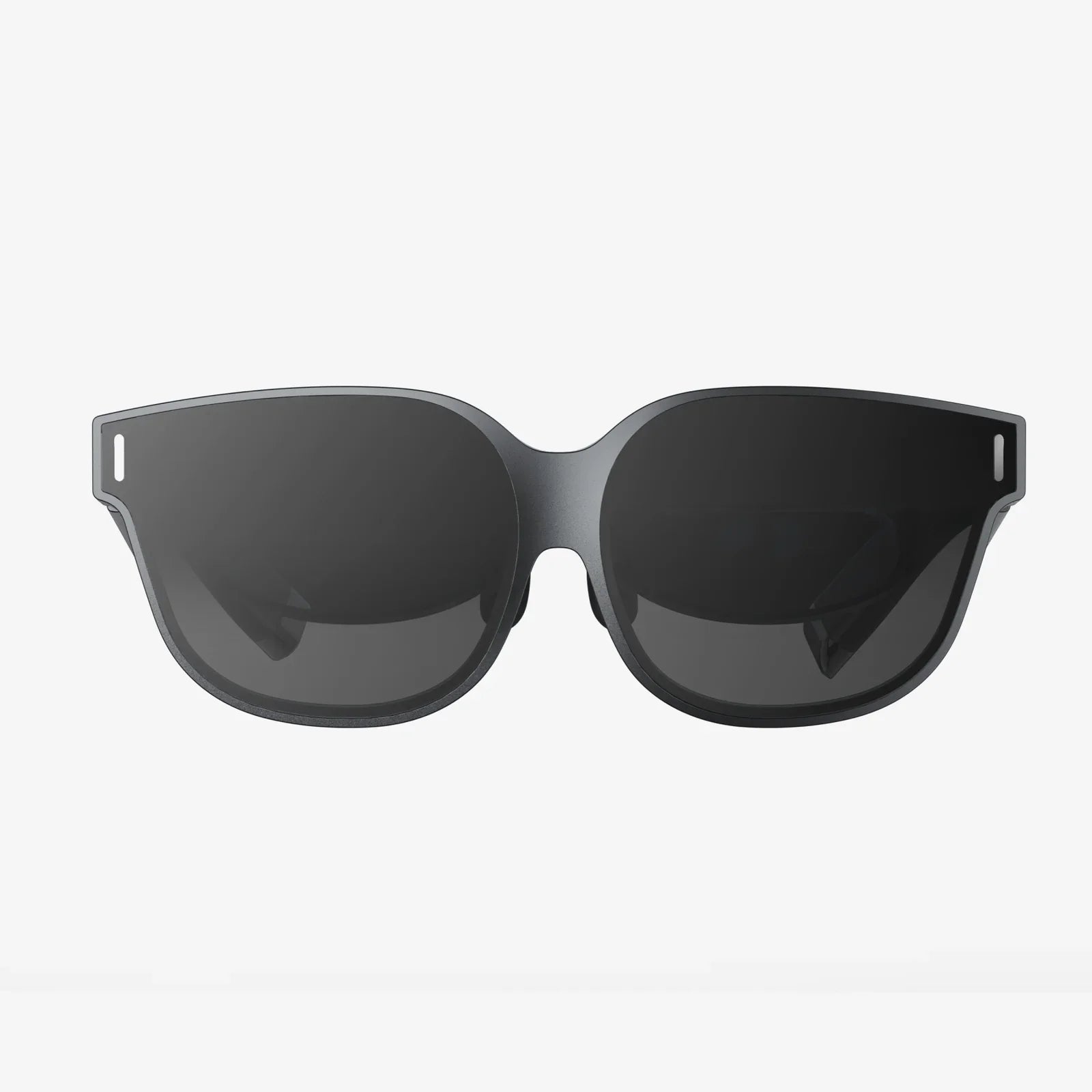
Imagine a world where digital information doesn’t live on a screen in your hand, but is seamlessly woven into the very fabric of your reality. Where directions float on the road ahead, your workout stats hover beside you as you run, and a colleague’s 3D model is presented on your coffee table during a video call. This is the promise of augmented reality, and in 2025, that promise is finally being kept. The best AR glasses of 2025 are not a distant sci-fi fantasy; they are a tangible, powerful, and increasingly accessible platform poised to redefine our relationship with technology. The race to put a lightweight, high-performance window to the digital world on everyone’s face has reached a fever pitch, and the results are nothing short of spectacular.
The Evolution of a Revolution: From Niche to Mainstream
The journey to the sleek, capable devices of 2025 has been long and arduous. Early attempts were often bulky, tethered headsets with limited field of view and battery life, confined to enterprise and developer circles. They were impressive proofs of concept but fell short of consumer-ready practicality. The turning point came with incremental advancements in micro-optics, battery chemistry, and processing power. Each year brought a slight reduction in size, a minor boost in visual clarity, and a longer untethered experience. In 2025, we are witnessing the culmination of these efforts. The convergence of several critical technologies has created a perfect storm, enabling manufacturers to overcome the historical trade-offs between form factor, functionality, and affordability. The devices we see today are the first true generation of AR glasses designed not just for early adopters, but for everyone.
Deconstructing Excellence: What Defines the Best AR Glasses in 2025?
With so many options entering the market, distinguishing the exceptional from the merely adequate requires a deep understanding of the core technologies at play. The best AR glasses of 2025 excel across several key dimensions.
The Visual Experience: Clarity, Brightness, and Field of View
At the heart of any AR glasses is the display system, often referred to as the optical engine.
The goal is to project crisp, bright, and stable digital images onto the real world. In 2025, several competing technologies have matured.
Waveguide and Photonic Light Engine Technology
This remains the dominant architecture for sleek, glasses-like form factors. Light is projected from micro-displays at the temples into a thin, transparent glass lens (the waveguide). This lens uses nanoscale gratings to bend
the light, directing it toward the user’s eye. The latest advancements have dramatically increased the efficiency of this process, allowing for brighter images with better color saturation and contrast, even in bright sunlight. Furthermore, manufacturing yields have improved, bringing down costs and making high-end optics more accessible.
MicroLED Displays
The adoption of MicroLED technology for the micro-displays has been a game-changer. These self-emissive pixels are incredibly small, efficient, and bright. They enable stunningly vivid imagery with high dynamic range (HDR) and solve the perennial issue of see-through clarity. Because they are so efficient, they place less demand on the battery, contributing to all-day wearability.
Field of View (FOV) Expansion
A narrow FOV, often compared to looking through a mail slot, has historically been a major limitation. The best devices in 2025 have significantly expanded this window into the digital world. Through advanced optical designs and overlapping waveguide systems, a much more immersive and natural experience is achieved, allowing digital objects to occupy a larger portion of the user’s vision without feeling constrained.
The Form Factor: The Pursuit of Invisibility
Technology that is not worn is technology that is not used. The societal hurdle of wearing conspicuous, geeky
hardware has been a significant barrier to adoption. In 2025, the leading AR glasses look remarkably similar to a pair of high-end sunglasses or prescription eyewear. Weight distribution is expertly engineered to avoid pressure points on the nose and ears. Materials are a blend of lightweight polymers and metals, ensuring durability without heft. This normalization of design is perhaps the single most important factor in moving AR from a dedicated activity to an all-day companion.
Intelligent Sensing: The Glasses That See What You See
For AR glasses to interact meaningfully with the world, they must understand it. This is achieved through a sophisticated array of sensors.
Advanced Computer Vision and Depth Sensing
A combination of high-resolution RGB cameras, infrared projectors, and time-of-flight sensors continuously scans the environment. This allows the glasses to create a detailed 3D mesh of the surrounding space in real-time. This spatial understanding is fundamental for placing digital objects that occlude correctly behind real-world furniture, for enabling precise hand tracking, and for accurate navigation.
Eye Tracking
Once a premium feature, eye tracking is now a standard and essential component. It serves multiple purposes: it enables intuitive UI navigation (just look at a button to select it), it allows for dynamic depth of field (where the digital content you look at is in focus while other elements are blurred), and it enables foveated rendering. This rendering technique uses AI to render the area where the user is directly looking in high resolution while subtly reducing the detail in the peripheral vision, massively conserving processing power and battery life.
Processing Power and AI Integration: The Brain Behind the Lenses
The sheer amount of data from these sensors requires immense computational power. While some glasses still leverage a companion device's processing via high-speed, low-latency wireless connections, the trend in 2025 is toward powerful, onboard dedicated processors. These chips are specifically designed for the continuous tasks of computer vision, machine learning, and spatial computing. More importantly, they are incredibly power-efficient.
Artificial Intelligence is the silent orchestrator of the entire experience. On-device AI models handle everything from real-time language translation (overlaying subtitles on a person speaking a foreign language) to object recognition (identifying a plant species or providing nutritional information about a food item) and contextual awareness (automatically pulling up your meeting notes when you walk into the conference room). This intelligence is what transforms the glasses from a simple display into a truly proactive assistant.
Audio, Input, and Battery Life: Completing the Experience
A great visual experience is only half the story. Spatial audio is now a given, using bone conduction or tiny directed speakers to create soundscapes that feel like they emanate from specific points in the environment. This is crucial for immersive games or taking a call without headphones.
Input methods have diversified beyond simple voice commands and touchpads. The combination of precise hand tracking (allowing you to pinch
and manipulate digital objects) and voice AI provides a fluid, natural way to interact. Some devices also feature subtle neural interface sensors that can detect faint electrical signals from facial muscles, enabling entirely new forms of silent, private control.
Finally, the quest for all-day battery life is being won. Innovations in solid-state battery technology and ultra-low-power components mean the best glasses can now last a full waking day of typical use. For more intensive tasks, sleek, pocketable battery pucks provide additional hours of power without adding weight to the frames.
A World Transformed: Use Cases for 2025 and Beyond
The true measure of this technology is not in its specs, but in its impact on daily life. The applications are vast and growing.
- Productivity: Imagine multiple virtual monitors floating in your ideal arrangement wherever you go, from your couch to a coffee shop. Your workflow is no longer anchored to a desk.
- Navigation: Giant floating arrows guide you through complex airports or city streets. Information about nearby restaurants and points of interest appears as you look at them.
- Social Connection: Video calls become a shared experience where participants feel present in your space as life-sized avatars or holograms, making remote collaboration feel profoundly more human.
- Fitness and Health: Real-time performance metrics, heart rate zones, and a virtual trainer appear in your line of sight during a workout. Bio-sensors can also monitor vital signs like heart rate and blood oxygen levels passively.
- Gaming and Entertainment: The world becomes a playground. Interactive game boards can materialize on your table, or a thrilling narrative can unfold with characters and effects integrated into your living room.
Navigating the New Landscape: Privacy, Security, and the Road Ahead
With great power comes great responsibility. The ability to continuously capture the world through cameras and microphones raises significant and valid privacy concerns. The industry has responded in 2025 with a multi-faceted approach. Hardware privacy switches that physically disable cameras and microphones are now standard. Clear, user-controlled visual indicators (like LED lights) show when sensors are active. Data processing is increasingly done on-device rather than in the cloud, keeping personal information secure. Transparent data policies and user consent are paramount. As a society, we are navigating the new etiquette of wearing such devices, establishing norms about recording in public and private spaces.
The trajectory is clear. The best AR glasses of 2025 are the vanguard of a fundamental shift in computing, moving us from a world of looking at technology to a world of looking through it. They are the key that unlocks a layer of infinite digital potential, painted directly onto the canvas of our reality. The future is not something we will watch on a screen; it is something we will step into, one pair of glasses at a time.
This is just the beginning. The seamless fusion of our physical and digital lives is no longer a concept for tech keynotes—it's a reality you can wear. The next time you reach for your phone to check a message, look up a fact, or get directions, imagine that simple act transformed into a magical interaction with the world itself. That future is now available, and it's waiting for you to put it on.
Share:
Cool Wearable Technology: Beyond the Wrist, A Revolution on Your Skin
AI Wearable Devices: The Silent Revolution Reshaping Our Daily Lives