


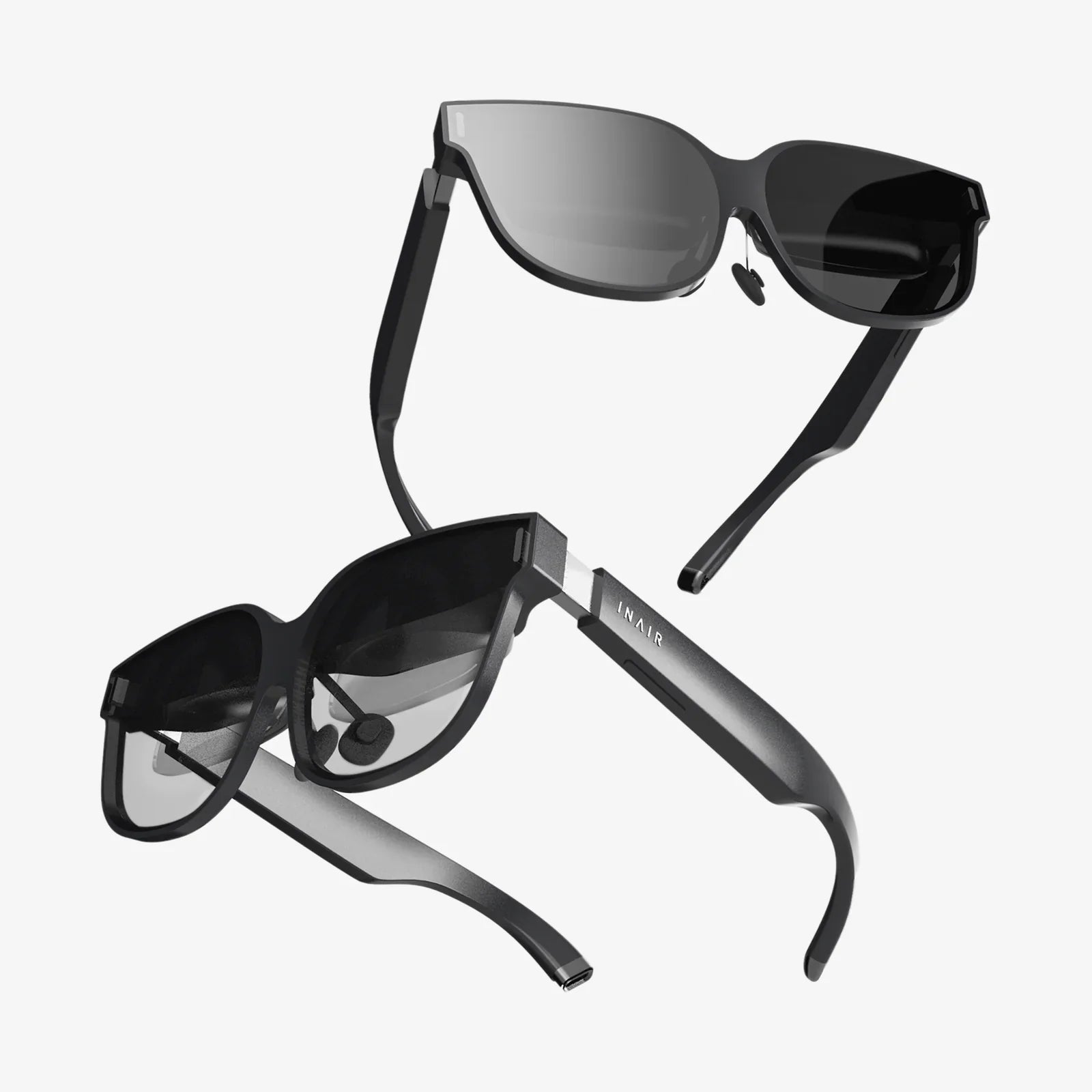
Imagine a world where digital information doesn't live on a screen in your hand, but is seamlessly woven into the fabric of your reality. Where directions float on the sidewalk before you, your workspace extends infinitely across your living room wall, and a virtual pet dinosaur actually looks like it's napping on your actual rug. This is the promise of augmented reality, and in 2025, that promise has finally been delivered. The hunt for the best AR headset 2025 has to offer isn't about finding a gadget; it's about choosing your window into the next evolution of human-computer interaction. The technology has matured, moved beyond clunky prototypes and niche developer kits, and arrived in a form that is powerful, wearable, and truly magical. This is your guide to navigating that exciting new frontier.
The New Reality: What Defines an AR Headset in 2025?
Gone are the days of simplistic holograms and limited field-of-view. The best AR headset 2025 models are defined by a convergence of technologies that create a believable and useful blended reality. It's no longer about which device has the highest resolution display; it's about which system creates the most coherent and intuitive experience.
The Pillars of Modern AR
Several key technological pillars separate the exceptional from the ordinary in today's market.
Visual Fidelity: See-Through Clarity and Digital Realism
The core of any AR experience is the quality of the passthrough video or optical overlay. In 2025, high-resolution, low-latency color cameras provide a crystal-clear view of the real world. Advanced HDR processing ensures you can move from a dark room to a sunny outdoors without losing detail in either the real or digital environment. The virtual objects themselves are rendered with stunning realism, featuring accurate lighting, shadows, and occlusion (where a real-world table can hide a virtual character behind it). This is a quantum leap from the ghostly, translucent overlays of the past.
Spatial Understanding and Mapping
A headset must understand its environment to be useful. Onboard LiDAR, depth sensors, and simultaneous localization and mapping (SLAM) software work in concert to create a millimetre-accurate 3D map of your surroundings in real-time. This allows digital content to not just appear in your space, but to interact with it—a virtual ball can convincingly bounce off your real couch, and a digital monitor can stay locked to your physical wall.
Intuitive Interaction: Beyond Hand Controllers
While controllers are still an option for precision tasks, the best AR headset 2025 offers feature advanced hand-tracking as standard. Using a combination of onboard cameras and machine learning, these devices can track all ten fingers with incredible accuracy, allowing you to pinch, grab, swipe, and type in mid-air as naturally as you would with a physical object. Eye-tracking is another critical innovation, enabling foveated rendering (which drastically boosts performance by rendering only where you are looking in high detail) and creating incredibly intuitive UI navigation.
Form Factor and All-Day Comfort
The era of the cumbersome, face-consuming visor is over. The leading devices in 2025 have adopted a more socially acceptable, glasses-like form factor. Advances in micro-OLED displays, waveguide optics, and battery technology have allowed manufacturers to shrink the core components dramatically. Many models now feature a distributed computing design, where a small, powerful processing unit (often worn on a belt or in a pocket) handles the heavy lifting, keeping the glasses themselves light and comfortable for extended wear.
Connectivity and Ecosystem
An AR headset is not an island. The best devices serve as a spatial companion to your other technology. Seamless integration with your smartphone, cloud services, and smart home ecosystem is paramount. Imagine your calendar reminders appearing contextually in your space, your smart lights automatically adjusting to complement your virtual movie screen, or taking a spatial video call where a remote colleague appears as a life-like hologram in your room.
Navigating the Landscape: Key Considerations Before You Buy
With the technology so advanced, your choice now hinges on how you plan to use it. The concept of a one-size-fits-all device is fading, replaced by headsets optimized for specific use cases.
Defining Your Primary Use Case
Are you a professional designer needing a massive virtual canvas? A developer building the next generation of spatial apps? A consumer who wants immersive entertainment and practical daily assistance? Your primary goal is the most important filter.
For the Professional and Creator
If your work involves 3D modeling, architecture, engineering, or complex data visualization, your needs are specific. You'll prioritize a wide field of view to create an expansive workspace, ultra-high resolution displays for pinpoint accuracy, and powerful processing to handle demanding applications. Multi-user collaboration features, allowing several people to see and interact with the same virtual models in real-time, are also a critical professional tool.
For the Developer and Enthusiast
This user values open platforms and access to robust development tools. Support for popular game engines and SDKs, ample storage for projects, and the ability to sideload applications are key. A focus on raw performance and cutting-edge experimental features might outweigh a slightly bulkier design.
For the Everyday User
For the mass market, the equation is different. Discreet, lightweight design is non-negotiable for all-day wear. Battery life must last a full waking day. The user experience needs to be simple, intuitive, and immediately valuable—think turn-by-turn navigation overlays, real-time translation subtitles in the real world, and effortless media consumption. The ecosystem of apps and content must be rich and accessible.
Technical Specs Decoded: What Actually Matters?
It's easy to get lost in a sea of numbers. Here’s what to focus on:
- Field of View (FoV): Measured diagonally like a TV, a wider FoV means digital objects can fill more of your vision without being cropped off at the edges. For immersion, bigger is better, but it often trades off with form factor.
- Resolution per Eye: Look for at least 2K per eye to avoid seeing a distracting screen-door effect. 4K per eye is now the gold standard for razor-sharp text and imagery.
- Field of Depth: This is the range within which the headset can accurately place and occlude digital objects. A wider field of depth means objects both very close to your face and far across the room will appear stable and realistic.
- Battery Life: Scrutinize whether the quoted life is for the glasses alone or includes the external compute unit. Look for 6-8 hours for full functionality to be considered all-day.
The Ethical Dimension: Privacy and the Always-On Camera
Wearing a device that can see everything you see and map your personal space raises profound privacy questions. The best AR headset 2025 manufacturers are addressing this with hardware solutions. Physical camera shutters, LED indicators that show when sensors are active, and on-device processing that anonymizes spatial data before it is sent to the cloud are becoming industry standards. As a user, it is crucial to understand a company's data policy—where your data is stored, how it is used, and who, if anyone, has access to it.
The Future is Already Here: How AR is Changing Our Lives Today
The applications moving from science fiction to daily routine are staggering. Surgeons are overlaying MRI data onto a patient's body during operations. Mechanics see interactive repair manuals overlaid on the engine they are fixing. Tourists can point their gaze at a historic landmark and see it restored to its former glory. Families can relive memories through life-like holograms of past events. This is the true power of AR: not to escape reality, but to enhance it, to make us more knowledgeable, efficient, and connected to the world and to each other.
The journey to find the perfect AR headset is deeply personal. It's about matching a revolutionary piece of technology to your individual vision of the future. Will you use it to create, to learn, to play, or to work? The devices available today are not just the best AR headset 2025 has produced; they are the foundation upon which the next decade of digital innovation will be built. The boundary between the physical and digital worlds has finally dissolved, and the power to shape your reality is now, quite literally, in your hands—and on your face.
Share:
Glasses Free 3D Monitor The Future of Visual Technology is Here
VR Headset News Today: The Most Significant Developments Shaping Our Virtual Future