


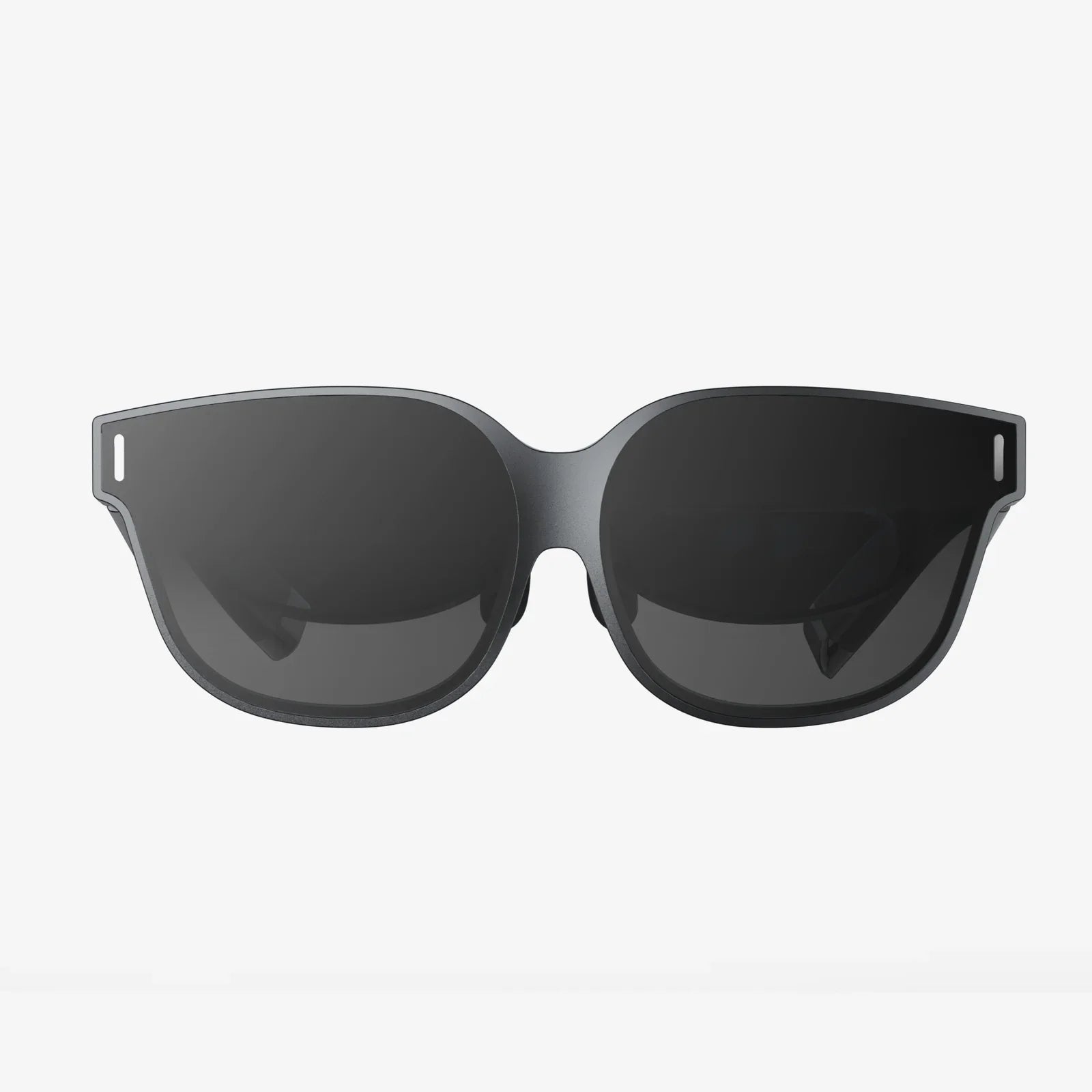
Imagine settling into your workstation, diving into a complex 3D model, and manipulating it with your bare hands, feeling its depth and scale without the barrier of clunky eyewear. Picture a family gathered around a screen, gasping in unison as a documentary's marine life seems to swim right into the living room, no special equipment required. This is the captivating promise of the glasses-free 3D monitor, a technology that feels like it's been teleported from a science fiction novel directly onto our desktops. It represents a fundamental shift in how we interact with digital content, moving from passive observation to immersive experience, and it’s poised to redefine entire industries.
The Long Road to Liberating 3D
The quest for three-dimensional imagery is as old as photography itself. The stereoscope, invented in the 1830s, offered a glimpse into the third dimension by presenting a slightly different image to each eye. For over a century, this principle remained the cornerstone of 3D technology, culminating in the cinematic revivals of the 1950s and the modern era of blockbuster 3D films. However, a significant, inconvenient truth persisted: the necessity for glasses. Whether they were the classic red-and-blue anaglyph filters or the more advanced polarized and active-shutter models, these lenses were a gatekeeper to the experience—often uncomfortable, expensive, lossy, and a constant reminder that the illusion was artificial. The dream was always to remove this barrier, to achieve autostereoscopy—3D perception without aids. Early attempts, like the parallax barrier systems on some handheld gaming devices and early prototypes, offered a tantalizing but flawed proof of concept. They were plagued by narrow viewing angles, low resolution, and a tendency to cause eye strain. The journey from those nascent, flickering images to the sophisticated displays of today is a story of relentless innovation in optics, software, and hardware engineering.
Engineering the Illusion: How It Works
At its core, a glasses-free 3D monitor is a masterclass in deception, a carefully orchestrated illusion designed to trick the human brain into perceiving depth on a flat surface. The magic lies not in a single breakthrough but in the convergence of several advanced technologies working in perfect harmony.
The Core Technologies
Lenticular Lenses: This is one of the most common methods. A lenticular lens sheet is placed over a high-resolution display. This sheet is made up of an array of magnifying lenses, each one precisely aligned to direct a different set of pixels to a viewer's left and right eyes. By presenting a unique image to each eye, the brain synthesizes them into a single, three-dimensional picture. The density and curvature of these micro-lenses are calculated with extreme precision to control the direction of light.
Parallax Barriers: Similar in principle but different in execution, a parallax barrier is a layer placed in front of the screen that contains a series of precisely calculated slits. This barrier acts like a venetian blind, blocking certain pixels from being seen from certain angles. It ensures that the left eye sees only the pixels intended for it, and the right eye sees its own set. While effective, traditional parallax barriers can reduce the overall brightness of the display.
Advanced Light Field and Multi-View Systems: The latest generation of monitors moves beyond the simple two-view system. They employ complex algorithms and incredibly high-resolution panels to project not just two, but multiple views of the same scene. These systems, often described as light field technologies, create a "field" of visual information. By tracking the viewer's position, the monitor can determine which set of these multiple images to send to each eye, creating a more robust 3D effect that can accommodate slight head movements and, in some cases, multiple viewers simultaneously. This is often combined with eye-tracking cameras that follow the viewer's gaze in real-time, adjusting the projected imagery dynamically to maintain the perfect 3D perspective from almost any angle.
A World Transformed: Applications Across Industries
The value of glasses-free 3D extends far beyond cinematic entertainment. Its ability to present data and models with true spatial context is a game-changer for numerous professional fields.
Medical Imaging and Surgery
For surgeons, depth perception is not a luxury; it is a critical tool. Radiologists and surgeons can examine CT scans, MRI, and ultrasound images in immersive 3D, allowing them to better understand the spatial relationships between tumors, blood vessels, and organs. This can lead to more accurate diagnoses, better preoperative planning, and potentially safer, more precise surgical procedures, all without taking their eyes off the screen to adjust unwieldy headgear.
Engineering and Product Design
Engineers and architects can interact with their CAD models and blueprints in a completely new way. They can virtually walk around a prototype of a new engine, inspect the intricate layout of a circuit board, or assess the structural integrity of a building design from within. This immersive review process can help identify design flaws, interferences, and opportunities for optimization much earlier in the development cycle, saving immense time and resources.
Scientific Visualization and Data Analysis
Complex multivariate data sets can be transformed into tangible 3D landscapes. Meteorologists could visualize storm systems evolving in real-time, astrophysicists could navigate through a simulation of a galaxy, and geologists could explore the layers of the Earth. Presenting data spatially allows for pattern recognition and intuitive understanding that is difficult to achieve with flat graphs and charts.
Education and Training
From exploring the human body in a biology class to taking a virtual field trip through ancient Rome, educational content can become profoundly more engaging and memorable. Training simulations for tasks like complex machinery operation or emergency response procedures can be conducted with a greater sense of realism and presence, improving knowledge retention and readiness.
The Hurdles on the Path to Perfection
Despite the exciting potential, the technology is not without its significant challenges, which have so far prevented it from becoming a ubiquitous household item.
The Resolution Dilemma: Creating a 3D effect requires dedicating pixels to create separate images for each eye. This can effectively halve the perceived resolution of the display, or require the underlying panel to have a dramatically higher native resolution (e.g., 4K or 8K) to compensate, driving up cost and complexity.
The Viewing Angle Conundrum: Many systems still have a "sweet spot"—a specific position where the 3D effect is perfect. Moving outside this zone can cause the image to break down, distort, or revert to a 2D blur. While eye-tracking helps, accommodating multiple viewers in a living room setting remains a formidable technical hurdle.
Content Creation: A new medium requires a new language of creation. Filmmakers, game developers, and software engineers need new tools and techniques to produce native 3D content that leverages the full potential of these displays, moving beyond simple conversions of existing 2D material.
Cost and Manufacturing: The precision engineering required for the optical layers and the need for ultra-high-resolution panels make these monitors expensive to produce. Widespread adoption hinges on driving these costs down through advancements in manufacturing scale and efficiency.
Gazing into the Crystal Ball: The Future is in Focus
The evolution of glasses-free 3D is inextricably linked to progress in adjacent fields. Advances in artificial intelligence will lead to smarter, faster real-time rendering and more sophisticated depth-mapping algorithms for converting 2D content. Breakthroughs in nano-optics and metamaterials could lead to thinner, more efficient, and brighter lens systems. As the underlying display technologies like MicroLED become more affordable and widespread, the foundation for mass-market autostereoscopic displays will solidify. We are moving towards a future where the line between the digital and physical worlds will continue to blur. These monitors could become the primary portal for interacting with the metaverse, for holographic telepresence where a colleague's avatar sits across from you with palpable volume, and for interfaces that we reach into and manipulate directly.
The glasses-free 3D monitor is more than just a new type of screen; it is a window. It’s a window into data, into designs, into distant places, and into pure imagination. While the technology is still maturing, its trajectory is clear. The barriers—both physical and technological—are beginning to fall. The day is approaching when the awkward headsets and specialized glasses will be looked upon as relics of a bygone era, much like the rotary phone or the cathode-ray tube television. The third dimension is waiting to be unlocked, and it’s inviting us all to take a closer look, with nothing standing between our eyes and the adventure.
Share:
Cheapest VR Headset for PC: Your Ultimate Guide to Affordable Immersion
Best AR Headset 2025: The Ultimate Guide to the Future on Your Face