


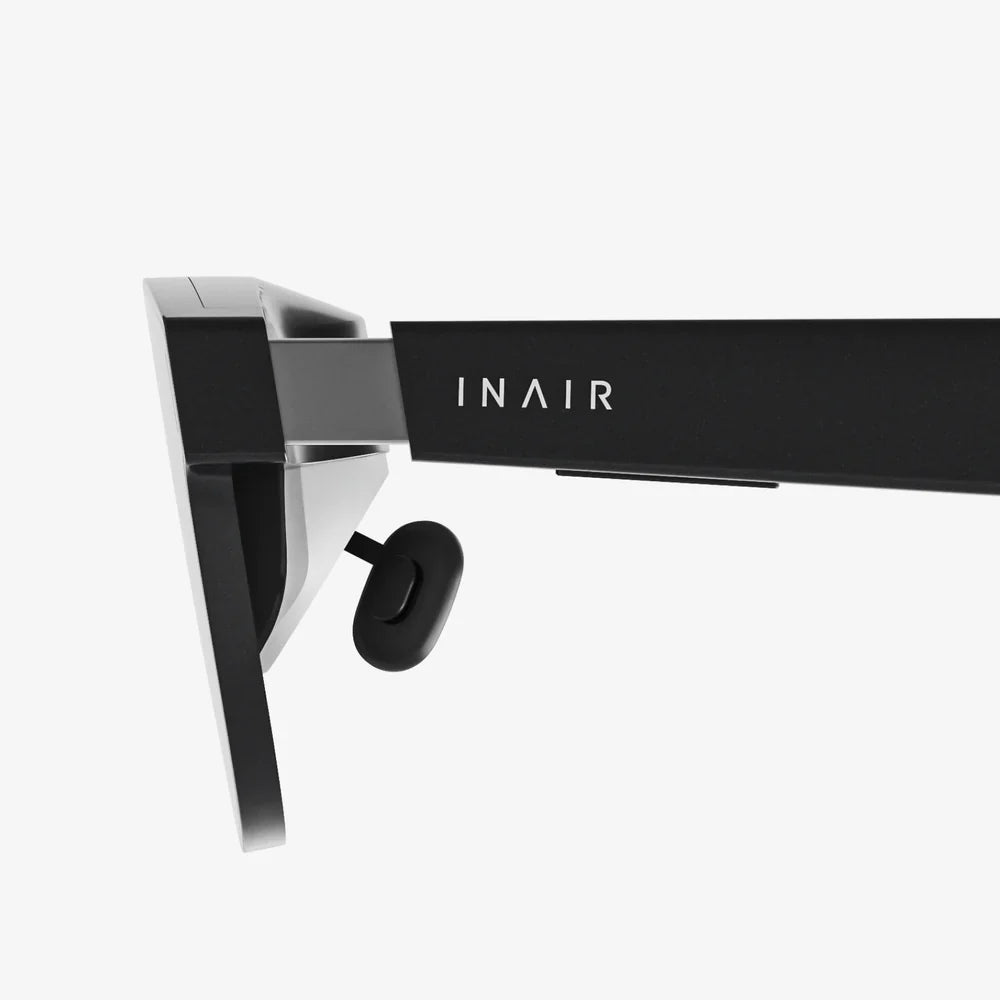
Imagine stepping inside the human heart as it beats, walking on the surface of Mars from your living room, or rehearsing a complex surgical procedure countless times without risk. This is no longer the stuff of science fiction; it is the tangible, transformative power of virtual reality today. While often associated with immersive gaming, VR's potential stretches far beyond entertainment, seeping into the very fabric of our professional, educational, and personal lives to solve real-world problems and unlock human potential in unprecedented ways.
The Digital Operating Theater: Revolutionizing Medicine and Therapy
The healthcare sector has emerged as one of the most promising frontiers for virtual reality applications. The technology is being leveraged to enhance both the capabilities of medical professionals and the well-being of patients.
Surgical Training and Planning
Traditionally, surgical training has relied on cadavers, observation, and a gradual, supervised hands-on approach. VR shatters these limitations by creating risk-free, highly detailed simulations. Surgeons can practice intricate procedures on virtual anatomies that replicate the look and feel of human tissue, complete with realistic physics and haptic feedback. This allows for endless repetition, mastery of complex techniques, and preparation for rare or unique cases without a single patient ever being at risk. Furthermore, VR enables collaborative planning, where a surgical team can explore a 3D model reconstructed from a patient's MRI or CT scans, discussing and strategizing the best approach before making a single incision.
Pain Management and Physical Rehabilitation
VR has proven to be a powerful tool for pain distraction. By immersing patients in a calming, engaging virtual environment—such as a serene landscape or an interactive game—the technology can significantly reduce the perception of pain during wound care, physical therapy, or even for chronic conditions. This method can reduce the reliance on pharmacological painkillers. In physical rehab, VR games and exercises make repetitive motion therapy for stroke victims or individuals with mobility issues more engaging and measurable. Patients are motivated to complete their exercises, and therapists can track progress with precise data on range of motion and performance.
Exposure Therapy and Mental Health
For treating phobias, anxiety disorders, and PTSD, VR offers a controlled and safe method for exposure therapy. A patient afraid of heights can gradually experience virtual balconies and elevators. A veteran with PTSD can process trauma in a carefully calibrated and replayable virtual scenario overseen by a therapist. This controlled exposure allows individuals to confront and manage their fears at a pace they can handle, which is often logistically impossible or ethically challenging to recreate in the real world.
The Immersive Classroom: Transforming Education and Training
Education is fundamentally about the transmission of experience and knowledge. VR turns abstract concepts into tangible, unforgettable experiences, creating a paradigm shift from learning about to learning by being.
Historical and Cultural Exploration
Instead of reading about ancient Rome, students can don a headset and walk through a digitally reconstructed Forum, hearing the sounds and seeing the scale of the architecture. They can stand next to a pharaoh in a virtual tomb or witness a key moment in history unfold around them. This visceral connection to the past fosters empathy and a deeper, more enduring understanding than any textbook can provide. Museums are creating virtual exhibits, allowing anyone in the world to explore their collections in depth.
Scientific Visualization and Virtual Field Trips
Biology students can shrink down to the cellular level to watch mitosis occur. Astronomy students can take a spacewalk to understand the scale of our solar system. Geology students can witness the formation of a volcano from within. VR eliminates the barriers of cost, distance, and safety, enabling field trips to the depths of the ocean, the International Space Station, or active volcanic sites. This experiential learning makes complex scientific principles intuitive and awe-inspiring.
Corporate and Vocational Training
From retail to heavy industry, VR is revolutionizing workforce training. Employees can practice operating complex machinery, dealing with difficult customer interactions, or navigating dangerous situations like a fire on an oil rig—all within a safe virtual space. This not only improves skill retention and confidence but also drastically reduces training costs and risks associated with on-the-job learning. Soft skills training, such as public speaking or leadership, can also be conducted in front of a virtual audience.
The Future of Design and Architecture: From Blueprint to Experience
For architects, engineers, and designers, VR is the ultimate communication and prototyping tool, moving beyond 3D models on a screen to full-scale experiential previews.
Architectural Walkthroughs and Client Presentations
An architect can now place a client inside their unbuilt design. Instead of trying to interpret a series of 2D blueprints or even a 3D render, clients can truly experience the space. They can assess the flow of a room, the quality of light at different times of day, and the feel of the scale and proportions. This leads to better feedback, more informed decision-making, and a dramatically reduced likelihood of costly changes later in the construction process. Design flaws that might go unnoticed on a screen become immediately apparent when experienced in VR.
Urban Planning and Real Estate
City planners can use VR to simulate the impact of a new building on traffic patterns, sightlines, and sunlight for surrounding areas. Real estate agents can offer virtual tours of properties, allowing potential buyers anywhere in the world to explore a home at their convenience. For properties still under construction or yet to be built, these virtual tours are invaluable for generating interest and sales far earlier in the development cycle.
Redefining the Workspace: The Rise of Remote Collaboration
The shift to remote work has highlighted the limitations of video conferencing. VR offers a compelling alternative with the concept of the "virtual office" or meeting space.
Virtual Meetings and Collaborative Design
VR meetings move beyond a grid of faces on a screen to a shared virtual environment. Colleagues from across the globe can meet as lifelike avatars around a virtual table, share 3D models, brainstorm on virtual whiteboards, and interact with a sense of presence and spatial awareness that flat screens cannot replicate. For collaborative design reviews, team members can manipulate and examine a 3D prototype together in real-time, pointing to specific components and making annotations in the virtual space.
Virtual Workspaces and Productivity
Individuals can create personalized, distraction-free virtual workspaces, surrounding themselves with multiple large virtual screens regardless of their physical location. This promises a future where the power of a multi-monitor workstation is portable within a lightweight headset, enabling deep focus and productivity from anywhere.
Expanding Human Experience: Empathy, Entertainment, and Social Connection
At its core, VR is an empathy machine. It has the unique ability to place you in someone else's shoes, fostering understanding and connection on a profound level.
Empathy-Driven Storytelling and Journalism
Documentarians are using VR to create immersive experiences that build deep empathy for their subjects. You can experience a day in the life of a refugee in a camp, stand in a protest march, or witness the effects of climate change firsthand. This form of immersive journalism is often described as an "empathy machine," as it can create a stronger emotional and intellectual connection to distant issues than traditional media.
Live Events and Social Platforms
VR is democratizing access to live events. You can have a front-row seat at a concert, a sporting event, or a Broadway show from anywhere in the world. Social VR platforms allow users to meet, play games, watch movies, and simply hang out with friends and family in shared virtual spaces, providing a powerful sense of togetherness that transcends physical distance. This is redefining social connection for an increasingly digital and globalized population.
The true power of virtual reality lies not in its ability to help us escape our world, but in its profound capacity to enhance it. It is a bridge across distances, a window into the impossible, and a tool for building a deeper understanding of everything from our own bodies to the vast universe around us. As the technology continues to evolve, becoming more affordable, comfortable, and sophisticated, its best uses will only become more integrated into the daily rhythms of our lives, quietly and fundamentally reshaping reality as we know it.
Share:
How to Make a Virtual Reality Tour: A Comprehensive Guide to Immersive Storytelling
Best Virtual Reality App: Your Ultimate Portal to Immersive Digital Worlds