


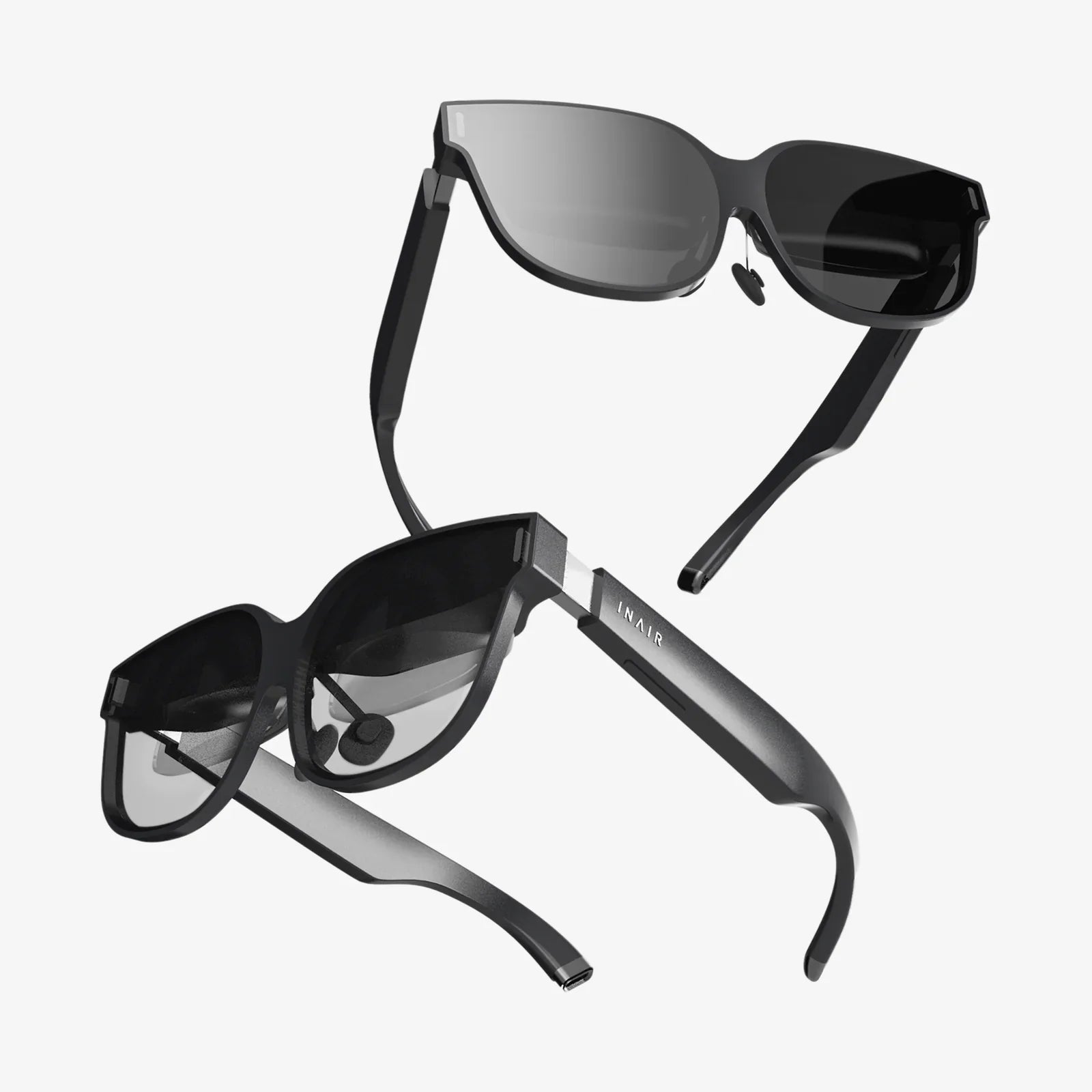
Imagine a world where a factory technician can see the exact wiring schematic overlaid on a malfunctioning machine, a surgeon can visualize a patient's anatomy in 3D before making an incision, or a furniture shopper can see how a new sofa perfectly fits in their living room before clicking 'buy.' This is not a distant science fiction fantasy; it is the present and rapidly evolving reality of business uses for augmented reality. AR is fundamentally reshaping how companies operate, train employees, and engage with customers, creating a powerful synergy between digital data and the physical environment that promises unprecedented levels of efficiency, accuracy, and connection.
The Foundational Shift: From Novelty to Necessity
The journey of augmented reality from a captivating gaming feature to a core business technology has been swift and decisive. At its essence, AR superimposes computer-generated images, sounds, and other sensory information onto a user's real-world view, typically through the lens of a smartphone, tablet, or specialized smart glasses. This seamless integration creates a composite view that augments the natural environment with contextual, digital intelligence. For businesses, this translates to information being available exactly where it is needed most: on the factory floor, in the showroom, or at the remote worksite. The value proposition is immense, moving beyond mere visual enhancement to solving tangible, costly problems.
Early adoption was often hindered by clunky hardware and underdeveloped software, but the landscape has dramatically changed. The proliferation of powerful mobile devices with high-resolution cameras and sensors has democratized access. Furthermore, the development of robust AR platforms and software development kits (SDKs) has empowered organizations to build custom solutions tailored to their specific operational challenges. The driving forces behind this adoption are clear: the relentless pursuit of operational excellence, the need to bridge skill gaps in a complex global economy, and the demand for deeper, more personalized customer experiences. AR is proving to be a versatile key that unlocks value across virtually every sector.
Revolutionizing Complex Assembly and Maintenance
One of the most potent and immediate business uses for augmented reality is in the realm of complex assembly, manufacturing, and equipment maintenance. In these fields, human error is not just costly; it can be dangerous. AR introduces a layer of digital precision that guides workers through intricate processes with unparalleled accuracy.
- Digital Work Instructions: Instead of relying on paper manuals, PDFs, or static computer screens, technicians can wear AR glasses that project step-by-step instructions directly into their field of view. As they look at a specific component, the system can highlight the exact bolt to tighten, display the correct torque setting, and show an animation of the required action. This hands-free, context-aware guidance drastically reduces errors, slashes training time for new hires, and increases overall production speed.
-
Quality Assurance and Inspection: AR systems can be programmed with the digital twin—a perfect digital replica—of a product or assembly. By comparing the physical object in front of the inspector with its digital twin, the AR software can instantly identify deviations, missing components, or misalignments that might be invisible to the human eye, ensuring that every product that leaves the facility meets the highest quality standards. - Remote Expert Assistance: When a highly specialized piece of equipment fails, companies often fly in expert engineers at great expense and delay. AR enables a paradigm known as "see what I see" support. A local technician wearing AR glasses can stream a live video feed to a remote expert thousands of miles away. The expert can then draw digital annotations—arrows, circles, notes—directly onto the technician's live view, guiding them through the repair process in real-time. This not only saves enormous costs but also dramatically reduces machine downtime.
The result is a smarter, safer, and more efficient workflow where the gap between design intention and physical execution is nearly eliminated.
Transforming Training and Onboarding
Employee training represents a significant investment of both time and capital. Traditional methods often involve shadowing experienced staff, reviewing lengthy manuals, or using expensive and static physical simulators. Augmented reality is dismantling these old models, creating dynamic, interactive, and highly effective learning environments.
AR allows for the creation of immersive training modules where employees can practice complex procedures on virtual models. A trainee mechanic can learn to assemble an engine by manipulating holographic parts, receiving instant feedback if they attempt to install a component incorrectly. This learning-by-doing approach in a risk-free environment accelerates skill acquisition and boosts confidence. Crucially, it also allows for the training of rare or dangerous scenarios that would be impractical or unsafe to recreate in the real world—such as responding to a chemical spill or a critical system failure.
Furthermore, this technology is invaluable for onboarding new employees. Instead of a generic office tour, a new hire could use their phone to scan different areas, triggering AR overlays that introduce team members, explain the function of specific equipment, or outline safety protocols specific to that location. This contextual learning ensures information is retained and applied more effectively than through traditional lectures or handbooks. By providing scalable, consistent, and engaging training, AR empowers a workforce to perform at its best from day one.
Redefining the Retail and Sales Experience
The retail sector is undergoing a seismic shift, and augmented reality is at the forefront, offering innovative solutions to the age-old challenge of connecting customers with products. AR effectively dissolves the limitations of physical space and inventory, allowing customers to visualize and interact with products in their own context before making a purchase decision.
- Virtual Try-On and Placement: From virtually trying on glasses, makeup, and clothing to placing true-to-scale 3D models of furniture, appliances, or home decor into a room, AR gives customers unprecedented confidence. They can see how a paint color will look on their wall at different times of day or how a new car would look in their driveway. This drastically reduces purchase hesitation and the likelihood of returns, directly impacting the bottom line.
- Interactive Marketing and In-Store Navigation: Marketing campaigns are brought to life with AR. A print ad in a magazine can be scanned to make a product leap off the page in 3D, or a billboard can trigger an interactive game. Inside large stores, AR wayfinding apps can guide shoppers directly to the items on their list, improving the customer experience and increasing sales of complementary products.
- Enhanced B2B Sales: For industrial sales, AR is a game-changer. Instead of carrying heavy product catalogs or samples, a sales representative can use a tablet to show a client a full-size, interactive hologram of industrial machinery, demonstrating its features, internal workings, and how it would fit within the client's existing factory layout. This level of demonstration is far more persuasive than any brochure or 2D rendering.
In a competitive market, AR provides a powerful differentiator, creating memorable, personalized, and convenient experiences that build brand loyalty and drive conversion.
Empowering Remote Collaboration and Design
The globalization of business and the rise of remote work have made collaboration across distances a critical capability. Augmented reality creates a shared virtual space where teams can collaborate on designs and prototypes as if they were in the same physical room, regardless of their actual locations.
Architects and engineers can project and interact with 3D models of buildings or products onto a real-world table, allowing them to walk around the design, make annotations, and discuss modifications in real-time. This collaborative design review process identifies potential issues long before physical prototyping begins, saving vast amounts of time and resources. In fields like automotive or aerospace design, teams spread across different continents can work on a virtual prototype simultaneously, streamlining the entire development lifecycle.
This capability extends beyond design to general enterprise collaboration. Rather than a flat video call, AR meetings can feel like holographic telepresence, where participants feel as though they are sharing a physical space with digital models and data laid out before them. This fosters a deeper level of understanding and teamwork than traditional remote meeting tools can ever achieve, breaking down geographical barriers to innovation.
Visualizing Data and Enhancing Field Services
For professionals working in the field—from utility workers and construction crews to insurance adjusters and archaeologists—access to real-time, contextual data is crucial. Augmented reality acts as a heads-up display for the real world, overlaying critical information directly onto the user's view of their surroundings.
A construction worker wearing AR glasses can look at a building site and see the planned plumbing and electrical lines buried within the walls before they start drilling, preventing costly mistakes. A wind turbine technician can see performance data and maintenance history superimposed on each component as they approach it. An insurance adjuster assessing storm damage can have claim data, measurement tools, and documentation prompts appear in their field of view, streamlining the inspection process.
This instant access to contextual data transforms field service from a reactive to a proactive and predictive practice. It empowers workers with superhuman knowledge, allowing them to make better-informed decisions faster, improve safety by visualizing hazards, and provide higher-quality service by having all the necessary information at their fingertips—literally before their eyes.
Overcoming Challenges and Looking to the Future
Despite its immense potential, the widespread enterprise adoption of AR does face hurdles. Concerns around the cost of hardware development, user privacy, data security, and network connectivity (especially for bandwidth-intensive applications) are valid and require careful consideration. Furthermore, creating high-quality, stable, and valuable AR content requires specialized skills and investment.
However, the trajectory is unmistakably positive. The hardware is becoming more affordable, comfortable, and powerful.
The future will likely see the rise of the AR cloud—a persistent, shared digital layer over the entire world—enabling context-aware applications on a massive scale. This will unlock even more sophisticated business uses for augmented reality, from smart cities with AR-enhanced navigation and information to entirely new forms of advertising and human-computer interaction. The line between our digital and physical realities will blur into a single, augmented continuum of information and experience.
The businesses that begin exploring and integrating AR solutions today are not just adopting a new technology; they are future-proofing their operations and building a foundational capability for the next decade of innovation. They are positioning themselves to train workers more effectively, design products more collaboratively, serve customers more personally, and maintain assets more efficiently. The question for modern enterprises is no longer if they should invest in augmented reality, but how quickly they can harness its transformative power to build a smarter, more connected, and more successful future.
The digital and physical worlds are converging at an accelerating pace, and augmented reality is the lens through which businesses can not only see this new landscape but actively shape it to gain a decisive competitive advantage. The ability to overlay critical data, guidance, and imagination onto our immediate surroundings is unlocking efficiencies and creating experiences that were once the domain of fantasy, proving that the most powerful resource for any business is the right information, presented in the right place, at the right time.
Share:
Smart Glasses AI Updates Are Redefining Reality and How We Interact With It
How Augmented Reality Helps Business: A Strategic Guide to Unlocking Growth and Innovation