


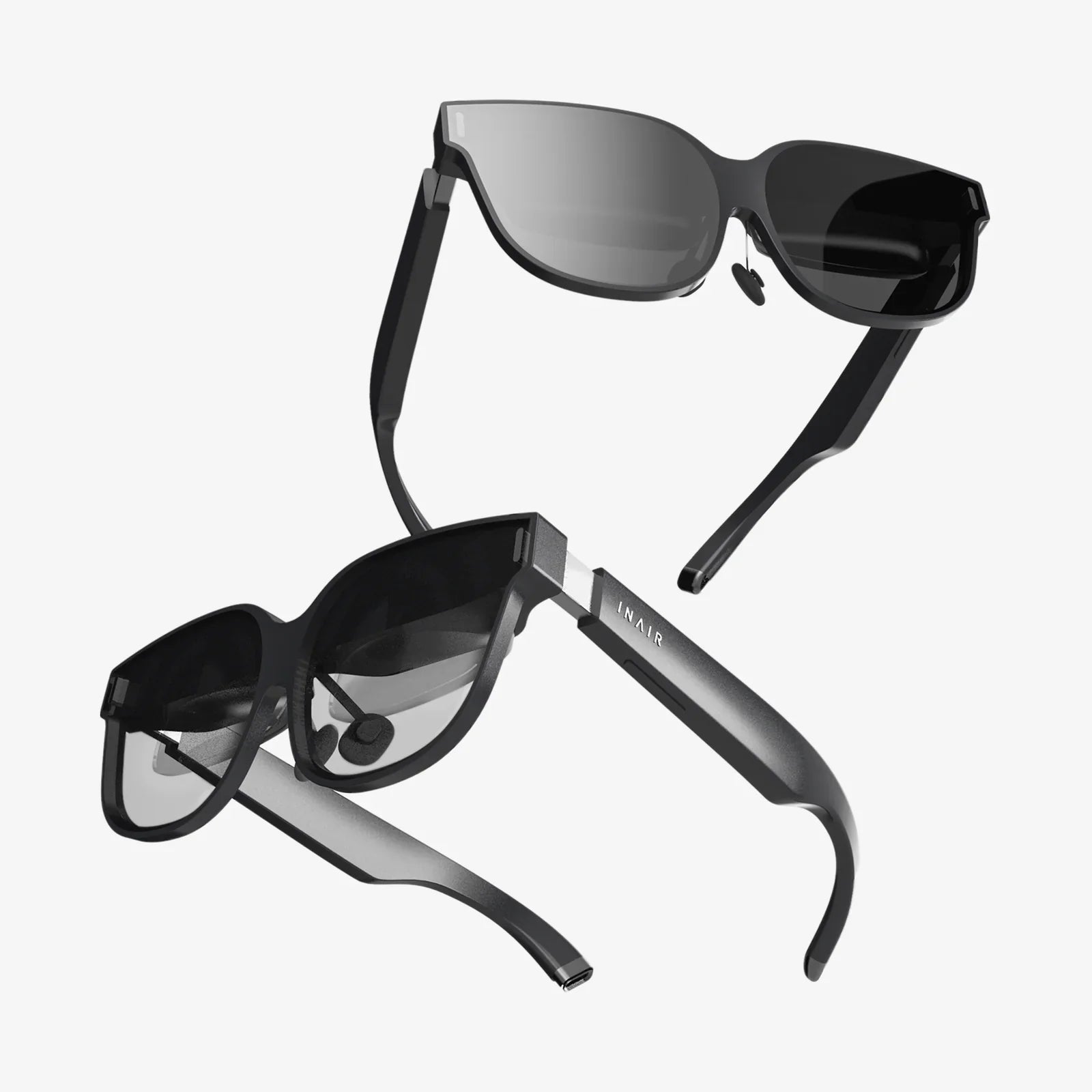
Imagine stepping into someone else's life, feeling their struggles, seeing the world through their eyes, and emerging forever changed. This isn't a fantasy from a science fiction novel; it's the burgeoning reality of immersive technology that promises not just to entertain us, but to fundamentally improve us. The question is no longer about what we can experience in a virtual world, but who we can become because of it. The potential for this medium to act as a crucible for personal growth, empathy, and skill development is staggering, pushing the boundaries of how we perceive self-improvement in the digital age.
The Empathy Machine: Walking in Another's Shoes
For centuries, literature, art, and film have been our primary tools for fostering empathy. They allow us a glimpse into lives different from our own. However, virtual reality represents a quantum leap in this domain. It is often described as an "empathy machine" because of its unique ability to create a sense of presence and embodied cognition. Instead of watching a documentary about homelessness, you can spend a day in a simulated shelter. Instead of reading about the challenges of racial bias, you can virtually experience microaggressions from a first-person perspective.
This profound shift from observation to experience triggers neurological responses that are far more potent. Studies using functional magnetic resonance imaging (fMRI) have shown that immersive experiences can activate the brain's mirror neuron system and emotional centers more intensely than traditional media. Participants in these simulations don't just understand a situation intellectually; they react to it viscerally. This can lead to a deeper, more lasting understanding of complex social issues, reducing prejudice and fostering a more inclusive worldview. The technology becomes a bridge, not just of information, but of feeling, connecting us to the human experience on a level previously unimaginable.
Conquering Fears and Building Resilience in a Safe Space
One of the most well-established and powerful applications of this technology for personal betterment is in the realm of exposure therapy. For individuals grappling with phobias—be it a fear of heights, public speaking, flying, or spiders—the real world can be a terrifying place. Traditional therapy can be slow and, at times, overwhelming. Immersive simulations offer a revolutionary middle ground.
A therapist can gradually and systematically expose a patient to their fear within a completely controlled and safe virtual environment. Someone with acrophobia can stand on the ledge of a virtual skyscraper, knowing logically they are in no physical danger, while their body and mind learn to process the anxiety. This repeated exposure allows the brain to rewire its fear response, building resilience and coping mechanisms. The lessons learned and the confidence gained in the virtual world directly translate to real-life situations. By providing a platform to fail safely and try again without consequence, this technology empowers individuals to confront their limitations and emerge stronger, more capable, and less governed by fear.
The Ultimate Practice Simulator: Mastering Skills Without Real-World Risk
Beyond emotional and psychological training, the immersive nature of this technology creates the ultimate practice environment for a vast array of tangible skills. Surgeons can practice complex procedures on virtual patients, honing their technique and decision-making without ever risking a life. Astronauts train for spacewalks, and mechanics can learn to dismantle and reassemble intricate engine models. The applications extend to soft skills as well.
Imagine a manager preparing for a difficult conversation with an employee. They could practice the exchange within a simulated office environment, experimenting with different tones, phrases, and strategies. A public speaker can rehearse their presentation in front of a virtual audience that reacts and responds, helping to combat stage fright and improve delivery. This type of realistic, repetitive practice accelerates the learning curve dramatically. It allows for deliberate practice, where specific elements of a skill can be isolated and improved upon, leading to mastery faster and more efficiently than traditional methods often allow. The virtual world becomes a sandbox for human potential.
Mindfulness and Mental Fitness: A Digital Sanctuary
In our hyper-connected, constantly stimulating world, finding moments of true peace and mindfulness is a challenge. Ironically, putting on a headset can now provide a much-needed escape from digital distractions. Guided meditation experiences can transport an individual to a serene beach at sunset, a quiet forest glade, or even the vast, silent expanse of space. These environments are designed to be fully immersive, engaging all senses to facilitate a deep state of relaxation and present-moment awareness.
For those who struggle with traditional meditation, this guided, sensory-rich experience can be a more accessible entry point. It can help users learn breathing techniques, body scanning, and other mindfulness practices within a calming context. Furthermore, biofeedback integration can take this a step further. By connecting heart rate monitors or electroencephalogram (EEG) sensors, the virtual environment can respond to a user's physiological state—for example, a visual scene becoming calmer as the user's heart rate slows. This creates a powerful feedback loop, teaching users to consciously control their stress responses. This daily mental workout strengthens neural pathways associated with calm and focus, contributing significantly to overall emotional regulation and well-being.
Expanding Perspectives and Challenging Biases
Our worldview is inherently limited by our own experiences and the biases, both conscious and unconscious, that form as a result. Immersive technology possesses a unique power to shatter these limitations. Narrative experiences that place the user in the role of someone from a different gender, race, cultural background, or socioeconomic status can be profoundly eye-opening. It is one thing to be told about systemic inequality; it is another to virtually live through a scenario where you are passed over for a promotion due to a bias you cannot control.
These experiences can act as a catalyst for critical self-reflection, forcing users to confront their own preconceived notions and privileges. By embodying another persona, even for a short time, the abstract concept of "the other" dissolves, replaced by a tangible, felt experience. This doesn't automatically erase bias, but it can plant a seed of understanding that challenges simplistic judgments and fosters a more nuanced and compassionate perspective. It is a tool for breaking down the barriers of "us vs. them" by fundamentally demonstrating, through experience, that we all share a common core of humanity.
The Ethical Imperative and Navigating the Pitfalls
Of course, this path to becoming a better person is not without its ethical dilemmas and potential pitfalls. The very power that makes the technology so effective for good can also be harnessed for manipulation. "Empathy fatigue" is a real concern—could an overabundance of intense virtual experiences lead to desensitization rather than compassion? The line between authentic empathy and a fleeting, voyeuristic experience is thin.
Furthermore, the data collected in these immersive environments—our physiological responses, our gaze patterns, our reactions to stimuli—is incredibly intimate. Robust ethical frameworks and stringent data privacy laws are essential to prevent misuse. There is also the risk of escapism, where individuals might prefer a curated virtual life to the messy reality of human connection. The goal must be to use these experiences as a supplement to, not a replacement for, real-world action and interaction. The technology is a tool, and like any tool, its moral value is determined by the hands that wield it and the intention behind its use.
The journey of human improvement is getting a powerful new ally. This is not about replacing the hard, personal work of growth but about augmenting it with unprecedented tools for understanding, practice, and reflection. We are standing at the precipice of a new era where the digital and the human are becoming deeply intertwined, not just for profit or entertainment, but for the profound and noble pursuit of becoming better, more connected, and more understanding versions of ourselves. The headset may be virtual, but the person who takes it off is undeniably real—and potentially transformed.
Share:
Virtual Reality VR: Beyond the Hype and Into Our Reality
Futurist Virtual Reality: The Next Frontier of Human Experience and Connection