


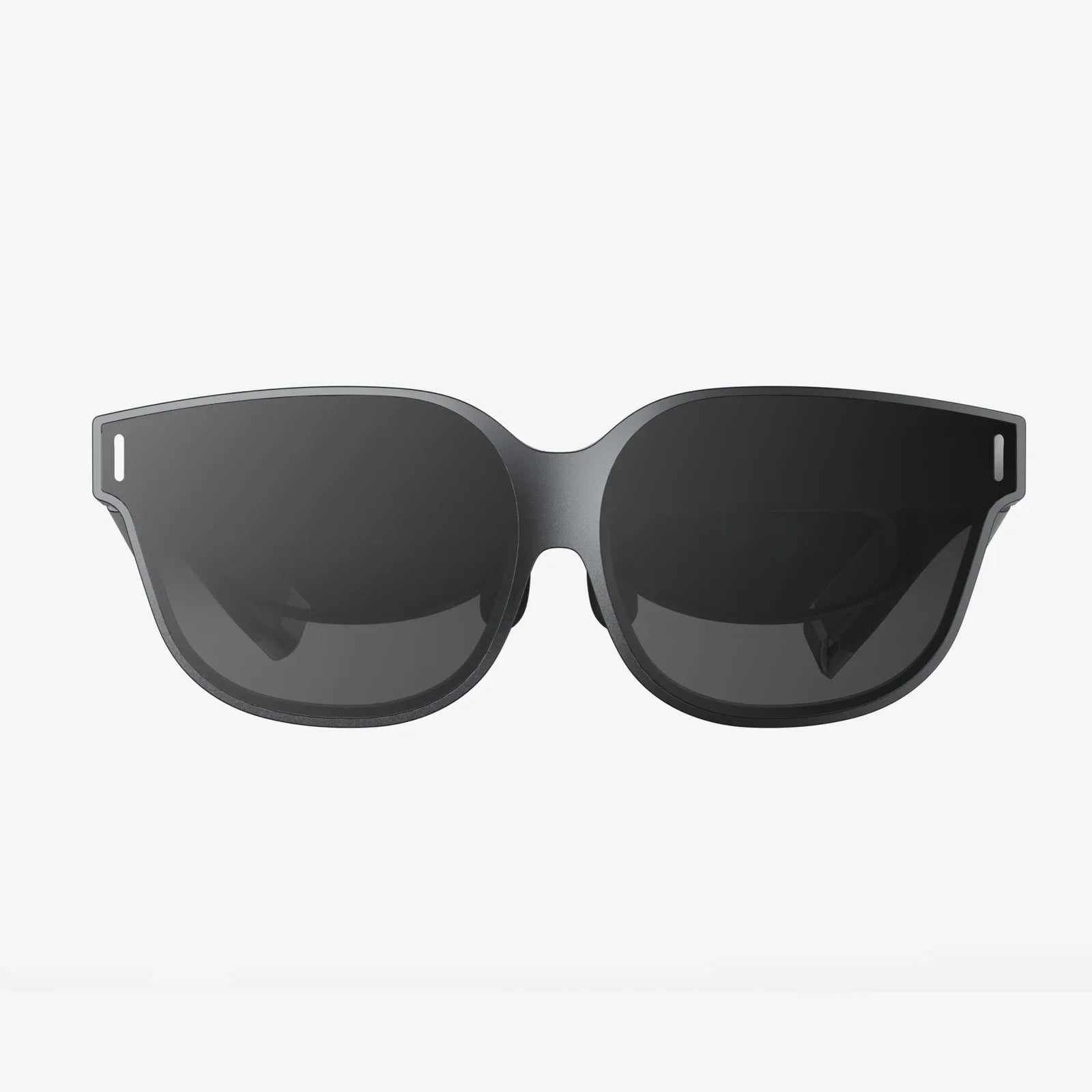
Imagine a world where information doesn't just live on a screen in your pocket but is woven directly into the fabric of your reality, accessible with a glance and actionable with a gesture. This isn't a distant science fiction fantasy; it's the imminent future promised by the deep integration of Augmented Reality (AR), a shift that will fundamentally alter how we work, learn, play, and connect with our environment. The journey from clunky, novelty apps to a seamlessly integrated AR layer is the next great digital frontier, and it’s already beginning to reshape our world.
The Foundational Shift: From App to Infrastructure
For years, AR existed primarily as a feature within specific applications. Users would download an app, point their device's camera at a target, and experience a digital overlay. This model, while innovative, treated AR as a destination rather than a utility. It was a compartmentalized experience that required conscious effort to access. Deep integration shatters this model. It moves AR from being an app you open to an ambient layer of intelligence that is always available, contextually aware, and deeply embedded within operating systems, enterprise software, and IoT ecosystems.
This shift is powered by a confluence of advanced technologies. Sophisticated computer vision algorithms can now understand and map complex environments in real-time, allowing digital objects to interact convincingly with the physical world. Simultaneous Localization and Mapping (SLAM) technology enables devices to know their precise position without relying on external markers like GPS, which is crucial for indoor navigation and precise object placement. Furthermore, the proliferation of powerful edge computing and faster, low-latency networks means the immense processing required for these experiences can happen instantaneously, without the lag that breaks immersion. Finally, the development of more natural user interfaces—from hand and eye tracking to voice commands—is removing the barrier of abstract controls, allowing us to interact with AR content as intuitively as we do with physical objects.
Transforming Industries: The Enterprise Leads the Charge
While consumer applications often grab headlines, the most profound and immediate impact of deeply integrated AR is occurring within the enterprise. Here, the technology is solving real-world problems, boosting efficiency, reducing errors, and enhancing safety.
Manufacturing and Field Service
On the factory floor, integrated AR is revolutionizing complex assembly, maintenance, and training. Technicians wearing AR-enabled glasses can see digital work instructions overlaid directly onto the machinery they are repairing. Animated arrows can show the precise sequence for disassembly, warnings can highlight live wires, and real-time data from IoT sensors can display temperature or pressure readings. This hands-free access to information drastically reduces errors, slashes training time for new employees, and minimizes downtime. For a field service engineer at a remote wind turbine, an AR interface can provide a remote expert with a first-person view of the problem, allowing the expert to annotate the engineer's field of view with guidance, effectively teleporting expertise to wherever it's needed.
Healthcare and Medicine
The integration of AR in medicine is literally providing surgeons with X-ray vision. By overlaying 3D reconstructions from CT or MRI scans directly onto a patient's body during surgery, surgeons can see precisely where to make an incision or locate a tumor without resorting to more invasive exploratory techniques. This enhances precision and improves patient outcomes. Furthermore, AR is transforming medical training, allowing students to practice procedures on hyper-realistic digital holograms of human anatomy, and it can aid in complex tasks like vein visualization for easier injections.
Design and Architecture
For architects and interior designers, deeply integrated AR is the ultimate design tool. Instead of presenting clients with static blueprints or 3D models on a screen, they can project a full-scale, holographic model of a building onto the physical construction site or place virtual furniture within a client's actual living room. This allows for unparalleled collaboration and decision-making, as stakeholders can walk through and experience a design long before a single brick is laid. It enables the rapid iteration of designs within their intended context, identifying potential issues with scale, lighting, and flow that would be impossible to spot on a traditional screen.
Retail and Logistics
The retail experience is poised for an AR-driven overhaul. Customers could use their smartphones or future glasses to see how a piece of clothing fits them virtually or how a new sofa would look in their home. On the backend, in massive warehouses, AR-powered smart glasses can guide logistics workers along the most efficient picking routes, visually highlight the exact items to be selected on crowded shelves, and display crucial information about handling instructions, dramatically accelerating order fulfillment and reducing logistical errors.
The User Experience Imperative: Designing for the Invisible Interface
For deep integration to succeed, the user experience (UX) must be paramount. The goal is not to overwhelm the user with flashy graphics but to provide subtle, contextually relevant information that enhances their perception without obstructing it. This is the concept of the "invisible interface."
Effective AR UX design follows core principles. Information must be presented at the right time and, crucially, in the right place, anchored to the physical world in a way that feels natural. The technology must be responsive and low-latency; any delay between a user's movement and the AR content's response creates a disconnect that ruins the sense of immersion. Most importantly, the interaction must be intuitive, leveraging gaze, gesture, and voice to create a frictionless dialogue between the user and the digital layer. The best AR experiences feel less like using a tool and more like harnessing a superpower.
Navigating the Challenges: The Path to Seamless Integration
The path to a deeply integrated AR future is not without significant hurdles. Overcoming these challenges is critical for widespread adoption.
Hardware Limitations: Truly seamless AR requires devices that are socially acceptable, all-day wearable, and powerful. Current smart glasses often face a trade-off between capability and form factor—bulky headsets with high processing power or sleek glasses with limited functionality. Battery life remains a persistent constraint. The holy grail is a device that looks like ordinary eyewear but contains the computational power of a smartphone.
Digital Divide and Accessibility: As with any transformative technology, there is a risk of creating a new digital divide. Ensuring that these powerful tools are accessible and beneficial to a broad population, not just a privileged few, is a societal challenge that must be addressed through thoughtful policy and inclusive design.
Privacy and Security: Pervasive, always-on AR devices equipped with cameras and sensors raise profound privacy concerns. The continuous collection of real-world data—recording people, private spaces, and activities—demands robust ethical frameworks, transparent data policies, and stringent security measures to prevent misuse and build public trust.
The Spatial Web and Interoperability: For AR to become a universal layer, digital content must be able to exist persistently in space and be accessible across different devices and platforms—a concept often called the "spatial web" or "metaverse." This requires the development of open standards and protocols to ensure that a digital object created in one ecosystem can be seen and interacted with in another, preventing a future of walled digital gardens.
The Future: The Invisible Revolution
Looking ahead, the deepest integration of AR will be when the technology itself fades into the background. We won't think about "using AR" any more than we think about "using electricity" when we turn on a light. It will simply be a fundamental part of how we perceive and interact with our world.
We will move towards contextual and predictive computing, where our devices anticipate our needs based on our environment and actions. Walking towards your car could automatically display your schedule for the day and current traffic conditions. Looking at a complex document in a foreign language could instantly provide a translation overlaid on the text. The potential is limited only by our imagination.
This evolution will be fueled by convergence with other transformative technologies. Artificial Intelligence (AI) will act as the brain, interpreting sensor data and serving up the right information at the right time. The Internet of Things (IoT) will provide the data stream from the physical world, and 5G/6G networks will provide the high-bandwidth, low-latency connectivity required for these rich, shared experiences to happen seamlessly.
The goal is not to escape reality but to augment it, to make us more informed, more efficient, more creative, and more connected to the world and to each other. We are standing on the brink of a new era of human-computer interaction, one that promises to weave the digital and physical into a single, enhanced tapestry of experience. The companies and creators who succeed will be those who understand that the ultimate interface is no interface at all, and the most powerful technology is the kind that quietly empowers us, leaving us to marvel not at the tool, but at what we can finally achieve with it.
Share:
3 Types of Wearables: The Ultimate Guide to On-Body Technology
What Digital Products Are Trending 2025: A Glimpse Into The Next Tech Revolution