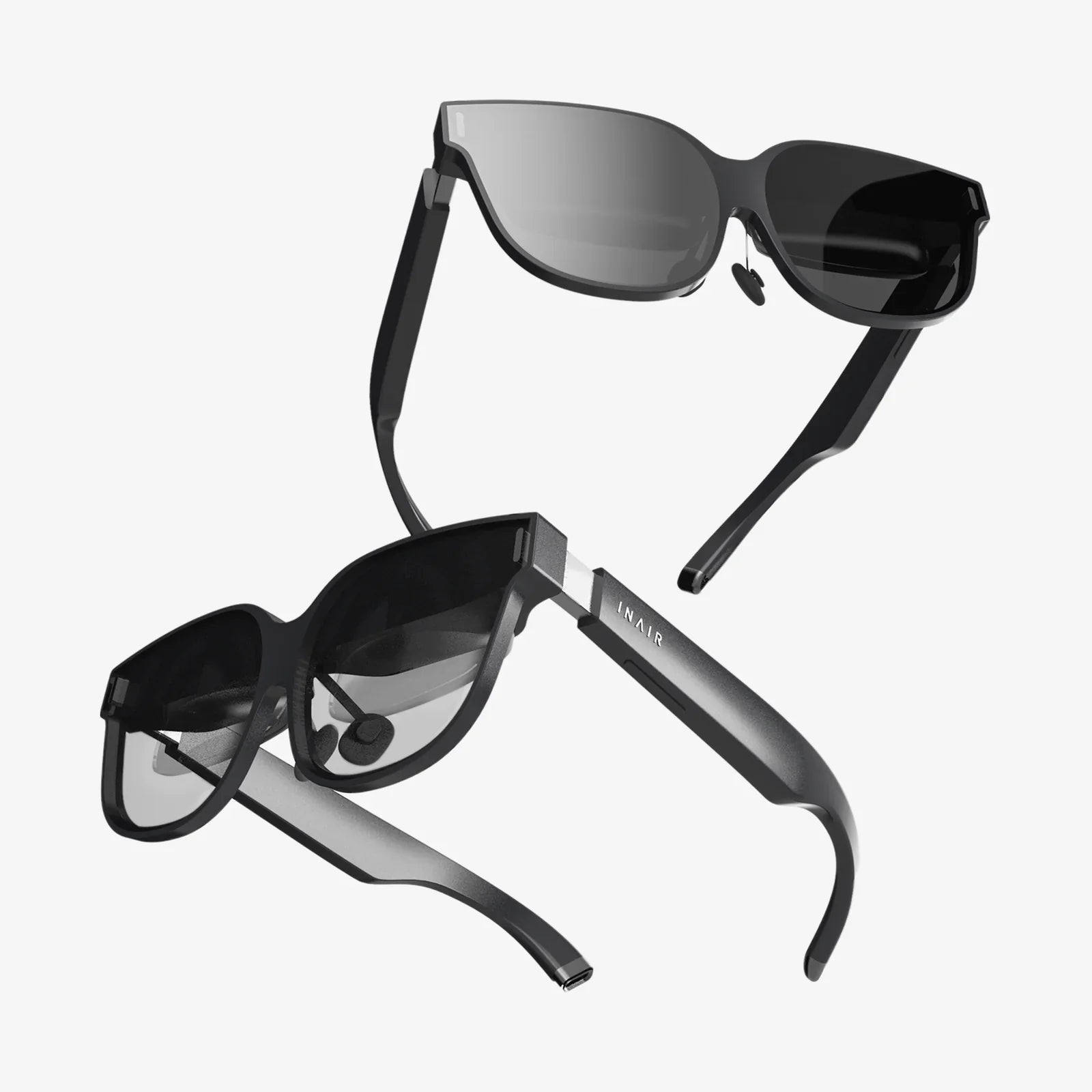
Imagine a world where your digital life doesn’t exist behind a screen but is seamlessly woven into the fabric of your physical reality, where holographic assistants help you cook dinner and virtual monsters hide behind your actual sofa. This isn't a distant sci-fi fantasy; it's the burgeoning frontier of immersive technology, a landscape dominated by two powerful concepts often confused yet fundamentally distinct. Understanding the difference between these two realms is not just a matter of tech semantics—it's a key to unlocking how we will work, learn, play, and connect in the coming decades.
Defining the Realms: From Fully Virtual to Blended Reality
At its core, the entire spectrum of immersive technologies exists on a continuum, often referred to as the Virtuality Continuum. On one end lies our tangible, physical reality. On the opposite end exists a completely synthetic, digital environment. The technologies we use navigate this spectrum in profoundly different ways.
Virtual Reality: The Complete Digital Escape
Virtual Reality (VR) is the technology of total immersion. Its primary goal is to isolate the user from the physical world and transport their senses entirely into a computer-generated simulation. When you don a dedicated headset, your visual and auditory fields are completely dominated by the digital environment. Advanced systems even incorporate haptic feedback controllers and body tracking to convince your sense of touch and proprioception that you are truly inside the virtual space.
The experience is all-encompassing. You cannot see your own hands unless they are digitally rendered; you cannot glance at your physical desk or talk to someone in the room without breaking the illusion. VR constructs a reality that is separate and distinct from your immediate surroundings, making it the ultimate tool for simulation, deep gaming immersion, and virtual travel. It is, by design, a closed system.
Mixed Reality: The Symphony of Real and Virtual
Mixed Reality (MR), sometimes used interchangeably with the term Augmented Reality (AR) though technically its more advanced subset, operates on an entirely different principle. Instead of replacing your reality, MR aims to augment and interact with it. It seamlessly blends digital objects and information into your perception of the real world, allowing them to coexist and interact in real-time.
This is where the magic of anchoring comes into play. A true MR system uses a complex array of cameras, sensors, and algorithms to understand the geometry of your physical space—the walls, floors, tables, and surfaces. It can then place a holographic object on your actual desk, and that object will stay there even if you walk around it or look away. It can occlude behind real-world objects; a digital character can hide behind your real sofa. This creates a persuasive illusion that the virtual content is genuinely part of your environment. MR doesn't ask you to escape your world; it asks you to enhance it.
The Technological Chasm: How They Achieve Their Magic
The fundamental difference in purpose between VR and MR leads to a significant divergence in their underlying technology. While both may appear similar as head-worn devices, their capabilities and components are engineered for different missions.
The VR Hardware Paradigm: High Power, Full Immersion
VR headsets are essentially high-resolution screens housed in a box you wear on your face. Their primary technological focus is on:
-
Display Resolution and Refresh Rate: To prevent motion sickness and create a believable world, VR demands incredibly high-resolution displays with very fast refresh rates, often 90Hz or higher.
-
Precise Head Tracking: Using internal gyroscopes, accelerometers, and external base stations or inside-out cameras, VR systems track the orientation and position of your head with millimeter accuracy to make the virtual world feel stable and responsive.
-
Input Controllers: These are designed to be your virtual hands, with intricate button layouts, joysticks, and precise haptic feedback to simulate touch and interaction within the digital realm.
The goal is fidelity and immersion within the simulation, often at the cost of being completely blind to the outside world.
The MR Hardware Paradigm: The World as a Platform
MR headsets, often called holographic or spatial computers, contain all the components of a VR system but add a critical layer: environmental understanding. Their added complexity includes:
-
Advanced Sensor Suites: An array of cameras, depth sensors (like time-of-flight sensors), LiDAR, and infrared projectors constantly scan the environment to build a real-time 3D map of the room.
-
Passthrough Cameras: Instead of opaque displays, many MR headsets use high-resolution cameras to feed a live video feed of your real world to the displays inside, upon which digital content is then composited. The quality of this passthrough is crucial for a convincing experience.
-
Processing Power for Spatial Mapping: The computational requirement to process all the spatial data in real-time is immense, demanding powerful onboard processors and sophisticated algorithms for spatial anchor persistence (remembering where you put things).
This makes MR technology inherently more complex, as it must perfectly align two realities instead of creating just one.
A Tale of Two Experiences: Applications and Use Cases
The philosophical and technological divide between VR and MR naturally leads them to excel in different applications, shaping their value proposition across various industries.
Where Virtual Reality Reigns Supreme
VR's strength is its ability to create experiences that are impossible, impractical, or too dangerous in the real world.
-
Gaming and Entertainment: This is VR's flagship domain. It offers unparalleled immersion, placing you directly on the battlefield, inside a racing car, or at the center of a narrative.
-
Training and Simulation: From training surgeons for complex procedures to preparing soldiers for combat missions or pilots for flight, VR provides a safe, controlled, and repeatable environment to practice high-stakes skills.
-
Virtual Tourism and Real Estate: Walk through a digitally reconstructed ancient ruin or tour a property on the other side of the globe without leaving your home.
-
Therapy and Exposure Treatment: VR is powerfully used to treat phobias, PTSD, and anxiety disorders by allowing controlled exposure to triggering stimuli within a safe space.
Where Mixed Reality Transforms Reality
MR's power lies in its contextual enhancement of our existing tasks and environment.
-
Design and Manufacturing: Architects can holographically walk through 3D models of their buildings at scale. Mechanics can see repair instructions overlaid directly onto the engine they are fixing.
-
Remote Collaboration and Telepresence: Colleagues from across the world can appear as life-like holograms in your room, able to collaboratively manipulate a 3D model of a product design as if it were physically present.
-
Education: Students can dissect a holographic frog on their desk or watch historical events unfold in their classroom, blending digital information with the physical learning space.
-
Everyday Computing: Imagine replacing your physical monitors with infinite, virtual screens that only you can see, allowing you to work from anywhere.
Navigating the Spectrum: It's Not Always Black and White
The line between VR and MR is becoming increasingly blurred thanks to technological advancements. Many modern VR headsets now feature high-quality color video passthrough modes. This functionality allows them to switch from a fully immersive VR experience to an MR-like experience, using their cameras to show the real world and overlay digital content onto it.
While this passthrough MR may not yet match the fidelity and seamless environmental understanding of dedicated MR headsets, it represents a significant convergence. It suggests a future where a single device might fluidly travel across the entire Virtuality Continuum, adapting to the user's needs—from deep diving into a virtual world to placing a virtual television on your living room wall.
The Future is a Blended One
As these technologies evolve, the distinction may become less about the hardware and more about the software experience. The ultimate goal of spatial computing is to make digital information an intuitive and integrated part of our lives, erasing the clumsy boundary between the bytes in our machines and the atoms in our world. Whether donning a device for a total escape or enhancing your morning routine with contextual information, the common thread is a more natural and powerful human-computer interaction.
The journey into these digital dimensions is just beginning, and the path is paved with both breathtaking potential and complex challenges. The hardware will get lighter, the graphics more photorealistic, and the interactions more intuitive. But the core choice will remain: do you want to visit another world, or do you want to bring the magic into yours? One offers an escape; the other promises an upgrade. Your reality, however you choose to define or enhance it, will never be the same.