


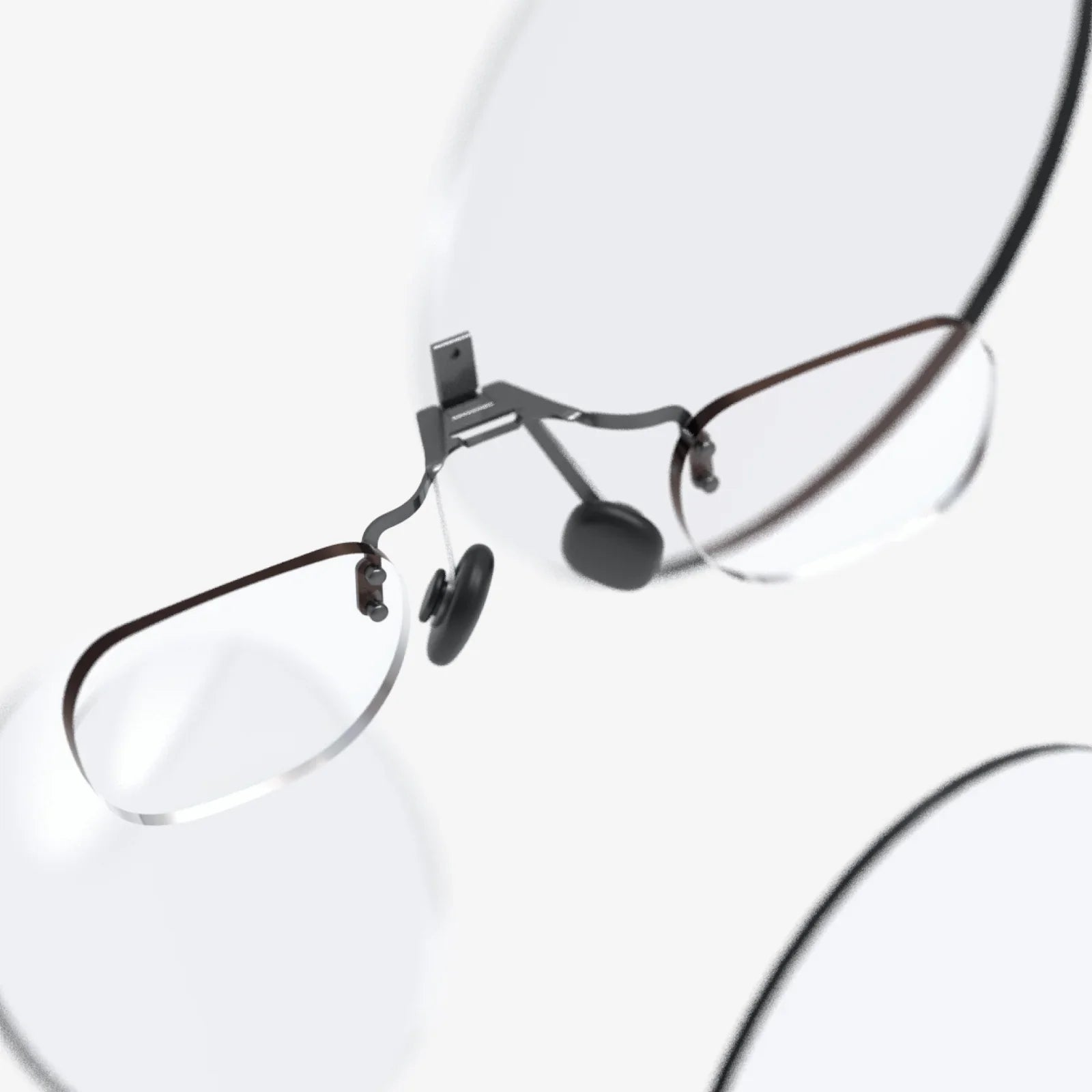
Imagine a world where the line between the digital and the physical isn't just blurred—it's erased. Where you can walk through ancient ruins rebuilt to their former glory, practice complex surgical procedures on a holographic patient, or design a new car engine with virtual parts that you can hold in your hands. This is not a distant sci-fi fantasy; it is the imminent future being built today through the rapid advancement of extended reality definition technology. This powerful convergence of hardware and software is poised to fundamentally alter every facet of our lives, from how we work and learn to how we connect and create. The journey into this new dimension starts with a simple question: what exactly is this technology that promises to redefine our very reality?
The Umbrella Term: Demystifying Extended Reality
At its core, extended reality definition technology is an umbrella term that encompasses all combined real-and-virtual environments generated by computer technology and wearables. It refers to the spectrum of immersive technologies that extend the reality we experience by either blending the virtual and real worlds or creating a fully immersive experience. The term serves as a unifying concept for a trio of transformative technologies: Virtual Reality (VR), Augmented Reality (AR), and Mixed Reality (MR). While often used interchangeably, each represents a distinct point on the continuum of immersion.
Virtual Reality (VR) is the most immersive endpoint. It completely replaces the user's real-world environment with a simulated, digital one. Using a head-mounted display (HMD) that blocks out the physical world, VR transports the user to a computer-generated reality. This environment can be a photorealistic simulation of a real place or a completely fantastical, imagined world. The goal of VR is to create a sense of presence—the convincing feeling of being somewhere else. This is often achieved with integrated head tracking, motion controllers, and haptic feedback devices that allow users to navigate and interact with the virtual world.
On the opposite end of the spectrum lies Augmented Reality (AR). Unlike VR, AR does not replace the real world. Instead, it overlays digital information—such as images, text, or 3D models—onto the user's view of their physical surroundings. The real world remains the primary backdrop, enhanced with a layer of contextual computer-generated perceptual information. This technology is most commonly experienced through smartphone cameras, smart glasses, and transparent heads-up displays. A classic example is using a mobile app to see how a new piece of furniture would look in your living room before you buy it.
Bridging the gap between the purely virtual and the merely augmented is Mixed Reality (MR). This is the most advanced and least understood facet of XR. MR not only overlays digital objects onto the real world but also anchors them to the physical environment, allowing for real-time interaction. In a true mixed reality experience, a digital character can hide behind your real sofa, or a virtual control panel can be affixed to your wall. The key differentiator is that the digital and physical elements can interact with each other in a cohesive way. This requires sophisticated sensors and cameras to continuously map and understand the geometry and lighting of the real world, making MR the most computationally complex form of extended reality definition technology.
The Technological Pillars Powering the XR Revolution
The magic of XR doesn't happen by accident. It is the result of several cutting-edge technologies converging and maturing in unison. These pillars work together to create convincing, interactive, and comfortable immersive experiences.
1. Display and Optics
The window into any XR experience is the display. Creating a high-resolution, wide-field-of-view image that is comfortable for the human eye is a monumental engineering challenge. Different approaches exist, from smartphone-based screens to more advanced systems like:
- stereoscopic displays that present a slightly different image to each eye to create depth perception.
- Waveguide optics that pipe light into the eye, commonly used in AR smart glasses to project images onto transparent lenses.
- Varifocal and light field displays that aim to solve the vergence-accommodation conflict—a major source of eye strain where your eyes focus on a fixed screen distance but must converge to perceive depth in a 3D scene.
2. Tracking and Sensing
For an XR system to understand and interact with the user and their environment, it needs a sophisticated array of sensors. This includes:
- Inside-Out and Outside-In Tracking: Systems use cameras (inside-out) or external sensors placed in a room (outside-in) to precisely track the position and orientation (together known as 6 degrees of freedom or 6DoF) of the user's head and controllers.
- Simultaneous Localization and Mapping (SLAM): This is the core software algorithm that allows a device to scan its environment, create a 3D map of the space, and understand its own position within that map in real-time. This is absolutely critical for AR and MR, enabling digital objects to stay locked in place.
- Eye, Hand, and Gesture Tracking: Advanced systems are moving beyond controllers to use internal cameras to track eye movement and hand gestures. This allows for more intuitive interaction, such as selecting a menu item just by looking at it or grabbing a virtual object with your bare hands.
3. Processing Power and Latency
Rendering photorealistic 3D graphics at high frame rates (90Hz or higher) is incredibly demanding. Any lag or delay between a user's movement and the update of the display—known as latency—can break immersion and cause motion sickness. This requires immense processing power, which is being addressed by:
- Standalone Headsets: Devices with onboard processors, system-on-chips (SoCs), and batteries for complete wireless freedom.
- PC and Console-Tethered Systems: Offloading the heavy computational workload to a powerful external computer, enabling the highest-fidelity experiences.
- Cloud Rendering and Edge Computing: The future may lie in streaming XR content from powerful remote servers, reducing the cost and weight of the headset itself.
4. Haptics and Audio
Immersion is a multi-sensory endeavor. 3D spatial audio is essential, making sounds appear to come from specific points in the virtual or augmented space, enhancing realism. Haptic feedback provides the sense of touch. This can range from simple vibrations in controllers to more advanced exoskeleton gloves that simulate resistance and texture, allowing users to "feel" virtual objects.
Transforming Industries: The Practical Applications of XR
The value of extended reality definition technology is proven not in demos, but in its practical, real-world applications. It is already delivering tangible benefits across numerous sectors.
Healthcare and Medicine
XR is revolutionizing medical training and patient care. Surgeons use VR to practice complex procedures on virtual anatomy, reducing risk and improving outcomes. MR allows a surgeon to see a patient's MRI data or critical vitals overlaid on their body during an operation. AR is used for vein visualization, making it easier to draw blood or insert IVs. Furthermore, VR is a powerful tool for pain management, physical therapy, and treating phobias and PTSD through controlled exposure therapy.
Manufacturing, Engineering, and Design
In industrial settings, XR is streamlining design and production. Engineers and designers can collaborate in real-time on full-scale 3D prototypes of cars, buildings, or complex machinery, making changes on the fly and identifying potential issues long before physical prototypes are built. On the factory floor, assembly line workers can use AR glasses to see step-by-step instructions overlaid on the equipment they are assembling, drastically reducing errors and training time. Remote experts can see what a field technician sees and annotate their view to guide them through a repair, saving time and travel costs.
Education and Training
XR turns learning from a passive activity into an active experience. Instead of reading about ancient Rome, students can take a guided VR tour of the Colosseum. Medical students can dissect a virtual cadaver from every angle. Trainee mechanics can practice taking apart a jet engine. This experiential learning leads to dramatically higher retention rates and deeper understanding. It also provides a safe, repeatable, and cost-effective environment to practice high-stakes skills, from public speaking to firefighting.
Retail and Remote Collaboration
The retail industry is leveraging AR to allow customers to "try before they buy," visualizing products like furniture, clothing, and cosmetics in their own homes. In the corporate world, XR is the next evolution of video conferencing. Instead of flat screens, remote teams can meet in a shared virtual workspace as lifelike avatars, interacting with 3D data models, whiteboards, and prototypes as if they were in the same room, fostering a new level of collaboration and creativity.
Navigating the Challenges and the Road Ahead
Despite its immense potential, the widespread adoption of extended reality definition technology faces significant hurdles. The hardware, while improving rapidly, still needs to become lighter, more comfortable, more powerful, and significantly cheaper to achieve mass-market consumer adoption. Social acceptance and the establishment of digital etiquette for using AR glasses in public are still evolving.
Perhaps the most pressing challenges are those of privacy and security. XR devices, with their always-on cameras and microphones, collect unprecedented amounts of sensitive data about a user's environment, behavior, and even biometric responses. This data is a goldmine that must be protected from malicious actors. Furthermore, the creation of hyper-realistic synthetic environments raises profound questions about misinformation, deepfakes, and the very nature of reality itself. Establishing robust ethical frameworks, data governance policies, and security protocols is not an option; it is a necessity for the healthy development of the XR ecosystem.
Looking forward, the trajectory is clear. We are moving towards increasingly seamless and socially acceptable form factors, like everyday eyeglasses. The concept of the "metaverse"—a persistent network of shared, interconnected virtual spaces—is intrinsically linked to the advancement of XR, promising a future where our digital and physical lives are seamlessly integrated. Advances in artificial intelligence will further power these experiences, enabling more natural interactions and intelligent, context-aware digital content.
The evolution of extended reality definition technology is more than just a technical upgrade; it represents a fundamental shift in the human experience. It is a new canvas for storytelling, a new tool for problem-solving, and a new medium for human connection. It challenges us to reimagine the possible and to carefully consider the world we are building, both physically and virtually. The door to this new dimension is now open, and stepping through it will change everything.
Share:
What Is The Cheapest Good VR Headset - A Guide to Affordable Immersion
Best Starter VR Headset for PC: Your Ultimate Guide to Entry-Level Immersion