


Imagine a world where the digital and the physical are no longer separate realms but a single, intertwined experience. A world where information is not confined to screens but painted onto the very fabric of reality, accessible with a glance, a gesture, or a spoken word. This is the promise of Augmented Reality (AR), a technology not of distant science fiction, but one that is actively weaving itself into the tapestry of our daily lives, poised to revolutionize everything from how we work and learn to how we connect and create. The journey of how augmented reality is dismantling the barriers between bits and atoms is the most compelling technological story of our time, and it’s only just beginning.
The Foundational Pillars: How Augmented Reality Actually Works
At its core, augmented reality is a technology that superimposes a computer-generated image, video, or 3D model onto a user's view of the real world. Unlike Virtual Reality (VR), which creates a completely artificial environment, AR takes the existing environment and adds to it. This seemingly magical feat is achieved through a sophisticated interplay of hardware and software components.
The process begins with sensors and cameras. These act as the eyes of the AR system, continuously capturing the surrounding environment. This visual data is then processed by advanced computer vision algorithms and machine learning models. Their job is to understand the scene: to identify flat surfaces like tables and floors, to recognize objects, and, crucially, to map the physical space in three dimensions. This process, known as simultaneous localization and mapping (SLAM), allows the device to understand its own position relative to the world around it.
Once the environment is mapped, the system uses projection and display technology to render the digital content and anchor it precisely to a point in the physical world. This can be achieved through various methods:
- Smartphone and Tablet AR: The most accessible form, using the device's screen as a viewport to the augmented world.
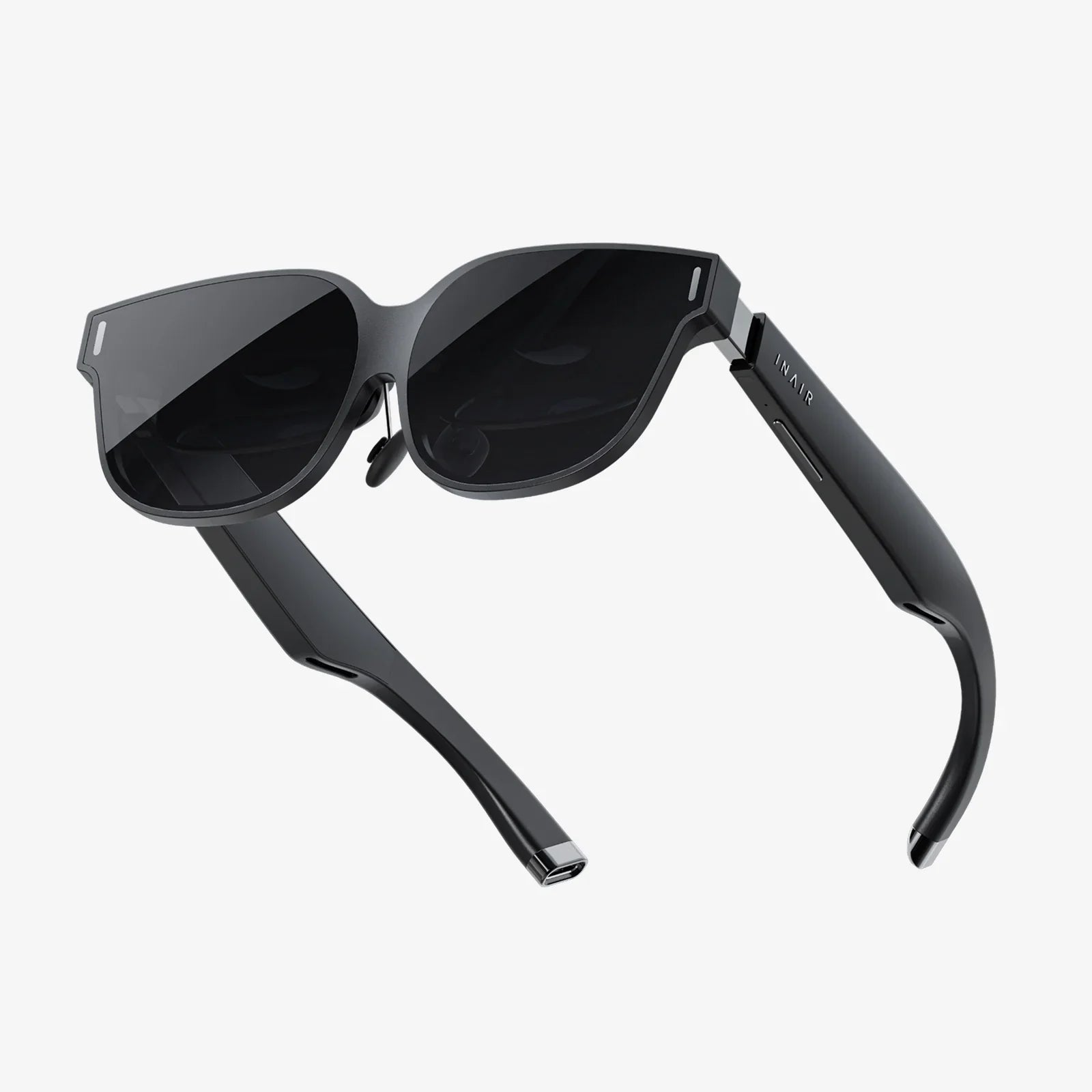
- Smart Glasses and Headsets: Wearable devices that project light onto transparent lenses (optical see-through) or use cameras to blend digital content with a video feed of the real world (video see-through).
- Projection-Based AR: Directly projecting digital information onto physical surfaces, turning any wall or table into an interactive display.
Finally, processing units—powerful mobile chipsets or cloud computing resources—provide the computational muscle to run the complex algorithms and render high-fidelity graphics in real-time, ensuring the digital overlay remains stable and responsive as the user moves.
Beyond the Novelty: How Augmented Reality is Transforming Industries
The true power of AR is not in its novelty but in its utility. It is moving beyond marketing gimmicks and casual games to become a serious tool solving real-world problems across a vast spectrum of professions.
Revolutionizing Healthcare and Medicine
In medicine, AR is saving lives and improving outcomes. Surgeons can use AR headsets to overlay critical information—such as 3D reconstructions of a patient's anatomy from CT or MRI scans—directly onto their field of view during procedures. This "X-ray vision" allows for unparalleled precision, helping to avoid vital nerves and blood vessels. Medical students can practice complex procedures on detailed, interactive holograms, accelerating their learning curve without risk to patients. Furthermore, AR is aiding in physical therapy by guiding patients through exercises with correct form and providing motivational feedback.
Reimagining Education and Training
AR is turning passive learning into an active, immersive experience. Instead of reading about ancient Rome, students can walk through a digitally reconstructed Colosseum right in their classroom. Complex scientific concepts, from the structure of a DNA molecule to the orbits of planets, can be visualized and manipulated in 3D space, making abstract ideas tangible. In corporate and industrial training, AR provides on-the-job guidance. A technician repairing a complex machine can see step-by-step instructions overlaid on the equipment, highlighting which component to remove and which tools to use, drastically reducing errors and training time.
Optimizing Manufacturing and Field Service
On the factory floor, AR is a cornerstone of Industry 4.0. Assembly line workers can see wiring diagrams or assembly instructions superimposed onto the product they are building. Designers and engineers can collaborate on a full-scale 3D hologram of a prototype, identifying design flaws long before physical manufacturing begins. For field service engineers, AR enables remote expert assistance; a senior engineer located thousands of miles away can see what the on-site technician sees and draw annotations directly into their field of view to guide them through a repair, minimizing downtime and travel costs.
Enhancing Retail and E-Commerce
The retail sector is being transformed by AR's ability to bridge the gap between online shopping and the in-store experience. Customers can use their smartphones to see how a piece of furniture would look and fit in their living room, or how a new shade of paint would appear on their walls. Fashion retailers allow shoppers to "try on" clothes, glasses, or makeup virtually. This not only boosts consumer confidence and reduces return rates but also creates a engaging and personalized shopping journey.
The Human Dimension: How Augmented Reality Changes Us
The impact of AR extends beyond practical applications; it begins to alter the very nature of human experience and social interaction.
Redefining Communication and Connection
AR has the potential to evolve communication from a primarily audio-visual exchange into a shared spatial experience. Imagine a video call where instead of seeing someone on a screen, their life-sized hologram is sitting on your couch, able to gesture and interact with your environment. This could bring a profound sense of presence and connection to remote interactions, making distance feel less significant.
The New Creative Canvas
For artists and creators, AR unlocks an entirely new medium. They are no longer constrained by physical materials or canvases. They can create dynamic, interactive sculptures that exist in public parks, design murals that change and tell stories as people walk by, or compose music through gestural interfaces in mid-air. This democratizes art and allows for public spaces to be dynamically curated and reimagined.
Augmented Memory and Navigation
AR could function as a cognitive aid, an externalized memory. Walking through a city, your glasses could highlight the history of a building, show you reviews of a restaurant as you look at it, or remind you that you need to pick up groceries as you pass the store. Navigation arrows painted onto the street could guide you seamlessly to your destination. This constant, contextual stream of information promises to make us more efficient and knowledgeable in our daily navigation of the world.
Navigating the Challenges: The Ethical and Social Implications
With great power comes great responsibility. The widespread adoption of AR raises significant questions that society must address.
Privacy in a Super-Sensed World
AR devices, by their very nature, are data collection powerhouses. They have cameras, microphones, and sensors constantly scanning environments and, potentially, people. This raises immense privacy concerns. Who owns the data collected about a public space? How do we prevent unauthorized facial recognition or data harvesting? Establishing clear ethical guidelines and robust data protection frameworks is paramount to prevent a dystopian future of constant surveillance.
The Blurring Line Between Reality and Fiction
When everyone can potentially see a different, personalized version of reality, we risk eroding our shared sense of what is real. This could be exploited for misinformation, manipulating what users see in the world around them for political or commercial gain. The potential for addiction is also real, as digitally augmented worlds may become more appealing than the unadorned physical one. Digital graffiti could deface both public and private property in the AR layer, raising questions about vandalism and consent.
Access and the Digital Divide
There is a risk that AR could exacerbate social and economic inequalities. If AR becomes essential for education, work, and social participation, those who cannot afford the necessary hardware or lack access to high-speed connectivity could be left at a significant disadvantage, creating a new class divide between the augmented and the un-augmented.
The Future Lens: Where How Augmented Reality is Headed
The current state of AR is merely a glimpse of what is to come. The trajectory points towards a future where AR interfaces become increasingly seamless, powerful, and integrated into our lives.
We are moving towards always-on, wearable AR in the form of stylish, lightweight glasses that we wear all day, replacing smartphones as our primary gateway to digital information. These devices will be powered by advancements in battery life, display technology, and 5G/6G connectivity, enabling persistent, high-fidelity experiences.
The development of a robust AR cloud—a persistent 3D digital copy of the world—will be a critical infrastructure. This will allow digital content to be permanently anchored to specific locations, creating a shared layer of information and experience that anyone with an AR device can access and interact with.
Perhaps the most profound evolution will be the move towards contextual and predictive AR. Instead of us asking for information, the AR system will use AI to understand our context, our habits, and our needs, proactively surfacing the right information at the right time, essentially acting as an intelligent assistant that sees and understands the world with us.
The path forward is not about replacing reality, but about enhancing it; not about escaping our world, but about understanding it more deeply, interacting with it more meaningfully, and unlocking human potential in ways we are only beginning to imagine. The real world is about to get a lot more interesting.
Share:
Augmented Reality Development Australia: Shaping the Future Down Under
What Is the Future of Augmented Reality: A World Transformed Through Digital Overlays