


You slip on a headset, and the world you know vanishes. The hum of your computer, the feel of the chair beneath you, the constraints of the room—all dissolve into a symphony of digital creation. You are no longer a spectator; you are an occupant of a new reality. This is the promise that has captivated millions, but it begs a fundamental, almost deceptively simple question: Is virtual reality a technology? The answer, while seemingly straightforward, unravels a complex tapestry of engineering, neuroscience, philosophy, and human aspiration, revealing that VR is far more than just another gadget; it is a paradigm shift in how we perceive and interact with information itself.
Beyond the Hype: Defining the Technological Core
To answer the question "is virtual reality a technology?" we must first define our terms. At its most fundamental level, technology is the application of scientific knowledge for practical purposes, especially in industry. It is the toolkit humanity has built to solve problems, extend our capabilities, and reshape our environment. By this definition, virtual reality fits unequivocally. It is not magic; it is a sophisticated orchestration of hardware and software designed for the practical purpose of creating a simulated, interactive experience.
The technological stack of VR is built upon several critical pillars:
The Hardware: Engineering Presence
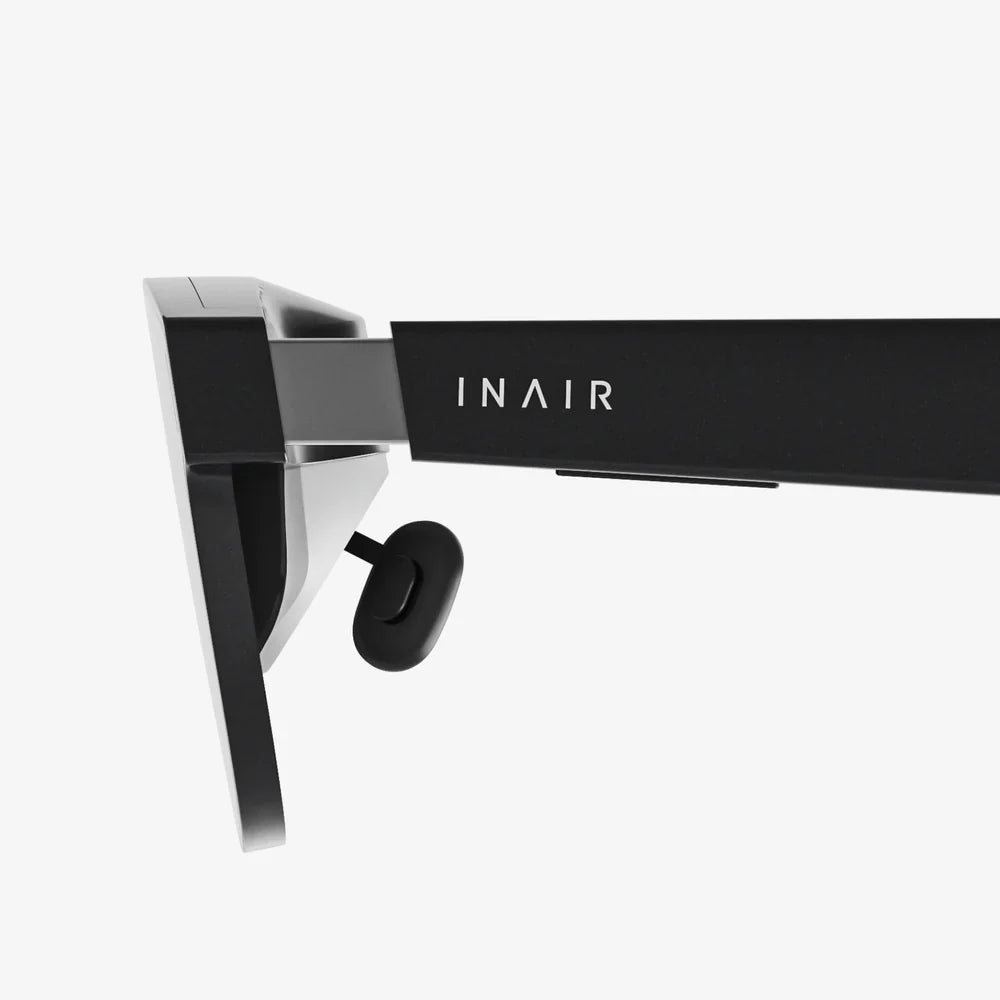
The most visible component is the head-mounted display (HMD). This device is a marvel of miniaturization, packing high-resolution displays mere centimeters from the user's eyes. But a screen alone does not create reality. The illusion is soldered together with a suite of sensors: gyroscopes, accelerometers, and magnetometers that track the precise orientation of your head in real-time. Advanced systems incorporate outside-in or inside-out positional tracking, using external cameras or onboard sensors to map your physical movement through space and translate it seamlessly into the virtual world. This eliminates latency—the dreaded lag between your movement and the visual response—which is the ultimate immersion-breaker. When executed flawlessly, this hardware combo creates the phenomenon known as "presence," the visceral, undeniable feeling of being somewhere else.
The Software: Crafting the World
Hardware is the body of VR, but software is its soul. Powerful game engines render complex 3D environments at a blistering frame rate, often 90 frames per second or higher, to maintain smoothness and prevent motion sickness. This software must also handle spatial audio, a critical yet often overlooked technology. Sound in VR isn't stereo; it's 3D. A noise behind you actually sounds like it's coming from behind you, based on sophisticated head-related transfer function (HRTF) algorithms. Furthermore, user interface (UI) and user experience (UX) design are being completely rewritten for VR. There are no traditional menus or mice; interaction happens through gaze, gesture, and voice, requiring a new language of digital human-computer interaction.
The Peripherals: Extending the Illusion
While the HMD creates visual and auditory immersion, handheld controllers complete the illusion by giving your virtual hands agency. These devices have evolved from simple wands to sophisticated pieces of technology with haptic feedback, finger-tracking capabilities, and adaptive triggers that simulate the resistance of pulling a virtual trigger or drawing a virtual bow. The frontier of VR technology now includes full-body tracking suits, treadmills that allow for natural walking in infinite virtual spaces, and even haptic vests that let you feel impacts. Each peripheral is a technological answer to the challenge of fooling the body's sensory system more completely.
A Brief History of an Idea Forged in Technology
The concept of virtual reality is not new. From the panoramic paintings of the 19th century to Morton Heilig's Sensorama machine in the 1960s, humans have long sought to create artificial experiences. However, the term "virtual reality" was popularized in the 1980s by Jaron Lanier, whose company VPL Research developed some of the first commercial goggles and datagloves. This era proved the concept was technologically possible, but the available computing power was laughably inadequate for a compelling experience.
The 1990s and early 2000s saw a series of false starts and expensive failures, earning VR a reputation as a technology forever "five years away." The hardware was too heavy, the graphics too primitive, and the cost too prohibitive. It was a technology in search of a market and a practical application. The catalyst for its modern renaissance was the smartphone industry. The mass production of high-resolution OLED screens, tiny precise motion sensors, and powerful mobile processors—all driven by the demand for better phones—provided the perfect, cost-effective technological foundation. A modern VR headset is, in many ways, a smartphone repurposed and hyper-specialized for immersion. This demonstrates that VR is not a technology in isolation; it is the culmination and convergence of progress across multiple technological fields.
More Than a Gadget: The Philosophical and Psychological Dimensions
Calling VR "just a technology" feels reductive because its implications are so profound. It is a medium as much as it is a machine. It is the "empathy machine" touted by filmmakers, allowing users to literally stand in someone else's shoes, whether a refugee in a camp or a patient undergoing a medical procedure. This experiential quality transcends traditional media like text, radio, or flat screens.
Philosophers and neuroscientists are fascinated by VR because it directly challenges our understanding of "reality." Our brains are not objective receivers of the world; they are prediction engines constructing a model of reality based on sensory input. VR hijacks this process, providing a controlled set of inputs that the brain willingly accepts as real. This raises deep questions: If our senses can be so completely deceived, what does that say about the nature of our perceived reality? The technology becomes a tool for exploring consciousness itself.
Psychologically, the effects are significant. Studies have shown the efficacy of VR exposure therapy for treating phobias, anxiety, and PTSD. Surgeons use VR simulators to practice complex procedures, building muscle memory without risk. Architects and engineers walk through their designs before a single foundation is poured. In these applications, VR is a technology not for escapism, but for enhancement, therapy, and safety—a tool for improving our real-world capabilities and understanding.
Practical Applications: The Technology at Work
While gaming remains the most visible driver of consumer VR, the technology's practical applications are vast and growing rapidly, moving far beyond entertainment.
- Education: Students can take virtual field trips to ancient Rome, the depths of the ocean, or the surface of Mars. They can manipulate virtual molecules in 3D or witness historical events unfold around them, transforming abstract concepts into tangible experiences.
- Healthcare: Beyond therapy, VR is used for pain management, distracting burn victims during painful wound care. Medical students practice anatomy by dissecting virtual cadavers, and remote surgeons can guide procedures through a shared virtual space.
- Enterprise and Design: Car companies design vehicles in collaborative virtual spaces with teams across the globe. Retailers design virtual store layouts and allow customers to "try on" products like furniture in their own homes before buying.
- Remote Collaboration: The concept of the "metaverse" points to a future where physical distance is erased. Colleagues can meet in a virtual boardroom as lifelike avatars, interacting with 3D data models as if they were physical objects.
In each case, VR is the enabling technology—the platform that makes these previously impossible or impractical experiences not just possible, but scalable and effective.
The Challenges and Ethical Considerations
No technology is without its challenges and downsides, and VR is no exception. The question of "is it a technology?" must be followed by "and what responsibilities does that entail?"
Physically, issues like simulator sickness, eye strain, and the potential long-term effects on developing brains and visual systems are active areas of research. Socially, there are concerns about further escapism and isolation, of people preferring a curated virtual world to the messy complexities of real life. The data collected in VR is also incredibly intimate—it’s not just what you search for, but how you move, where you look, and your physiological responses. This raises monumental questions about privacy, data ownership, and psychological manipulation.
Furthermore, the potential for hyper-realistic misinformation or propaganda is terrifying. If seeing is believing, what happens when you can no longer trust what you see? These are not science fiction musings; they are the immediate ethical dilemmas facing the engineers, corporations, and regulators shaping this technology. Acknowledging these challenges is a crucial part of understanding VR's full technological and societal footprint.
So, is virtual reality a technology? The evidence is overwhelming. It is a tangible, complex, and rapidly evolving suite of hardware and software born from decades of scientific progress. But to view it solely through this lens is to miss its true significance. It is also a new art form, a therapeutic tool, an educational platform, and a philosophical probe into the nature of human perception. It is a bridge between the abstract digital realm and our physical sensory experience. The headset is merely the keyhole; the technology is what allows us to open the door and step through. The real journey is just beginning, and it will redefine not just how we play, but how we learn, work, connect, and understand the very fabric of our reality.
Share:
Business Uses of Virtual Reality: Transforming Industries from Training to Retail
The Potential of Virtual Reality: A New Digital Frontier for Humanity