


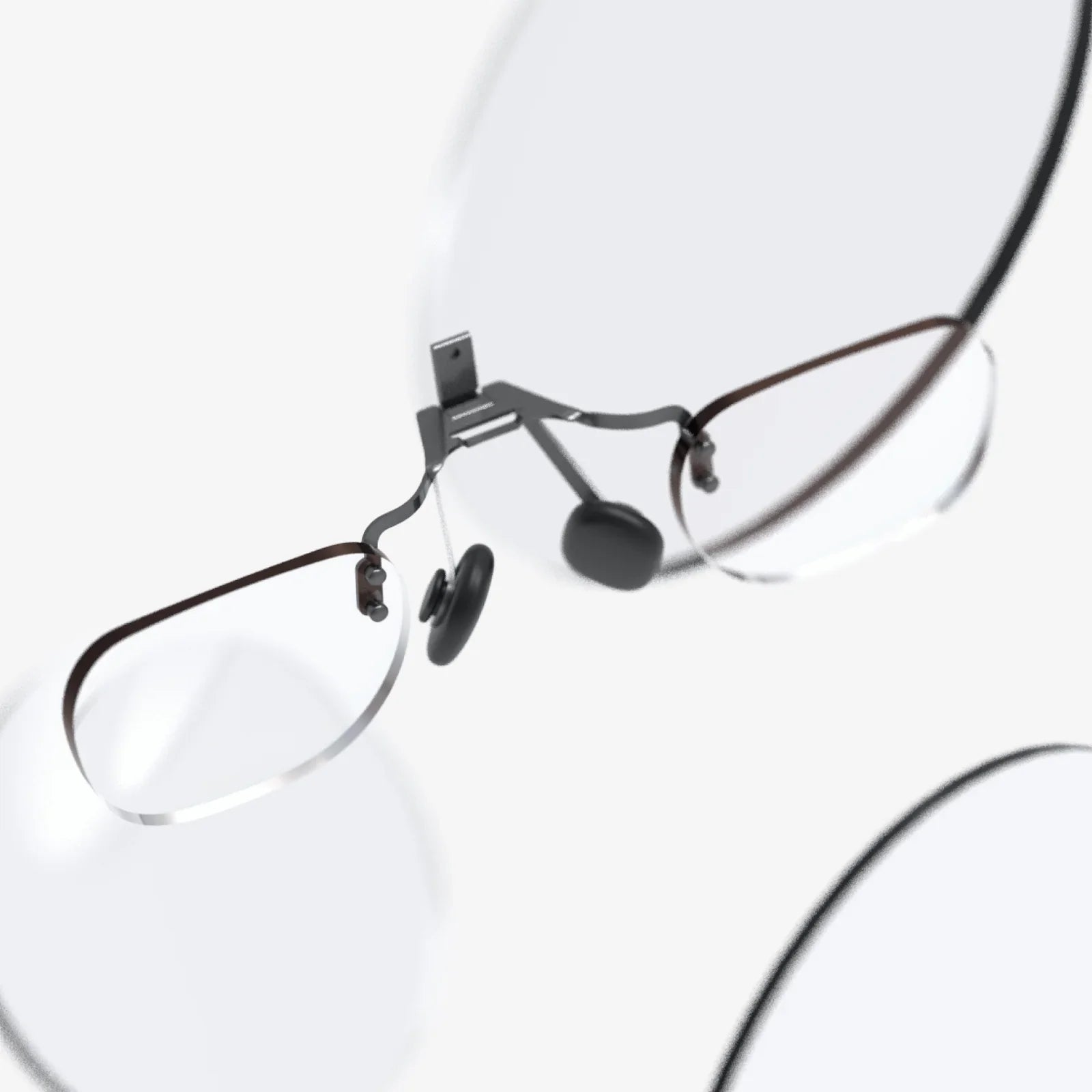
Imagine a world where digital information doesn't live trapped behind a glass screen but flows seamlessly into your physical environment, enhancing everything you see, do, and create. This is the promise of the latest augmented reality glasses, a technological leap that is finally moving from clunky prototypes and niche industrial applications into a realm of genuine, consumer-ready potential. We are standing on the precipice of a new computing paradigm, and it’s being viewed through a new generation of sleek, intelligent lenses.
The Evolutionary Leap: From Prototype to Product
For years, AR glasses were synonymous with bulky frames, limited field of view, short battery life, and a distinct lack of compelling software. They were either powerful but impractical or discreet but functionally anemic. The latest wave of devices represents a fundamental shift, addressing these core limitations through a combination of hardware innovation and sophisticated software integration.
The most noticeable improvement is in form factor and wearability. Engineers have made significant strides in miniaturizing the complex optical systems required for high-quality AR. Instead of resembling safety goggles, many new models look strikingly similar to premium sunglasses or contemporary eyeglasses. This normalization of design is critical for social acceptance and all-day wear, moving the technology from a device you use to a device you wear.
Under the hood, a revolution is occurring in display technology. Waveguide optics, micro-LED projectors, and holographic film are creating brighter, sharper, and more vibrant digital overlays. The dreaded "screen door effect" and dim imagery of past generations are giving way to digital objects that feel solid and real, with a color gamut and luminosity that can compete with ambient light. Furthermore, the field of view—the window through which you see the digital world—has expanded dramatically, moving from a small, postage-stamp-sized overlay to a more immersive canvas that fills a significant portion of your natural vision.
Core Technologies Powering the New Vision
This leap in capability is powered by a symphony of advanced technologies working in concert.
Spatial Computing and Environmental Understanding
At the heart of modern AR glasses is a sophisticated array of sensors—including high-resolution cameras, depth sensors (LiDAR), and inertial measurement units (IMUs)—that constantly scan and interpret the environment. This is not merely about overlaying an image; it’s about understanding context. The glasses can precisely map a room, recognize surfaces (floors, walls, tables), and track the position of objects within it. This allows digital content to interact realistically with the physical world: a virtual pet can run behind your sofa, a navigation arrow can curve along the path of the sidewalk, and a video player can appear to be pinned solidly to your wall.
On-Device AI and Machine Learning
Processing this immense amount of spatial data requires immense computational power. The latest devices feature dedicated AI processors that handle tasks like object recognition, gesture tracking, and spatial mapping in real-time. This on-board intelligence enables features like instant translation of foreign text you look at, identifying products on a shelf, or providing contextual information about a landmark. The AI acts as a personal assistant, perceiving the world through your eyes and offering relevant insights without you ever needing to ask.
Intuitive Interaction Paradigms
Gone are the days of needing a handheld remote or touchpad to interact with the AR world. The latest glasses are pioneering new, more natural forms of input:
- Voice Commands: A ubiquitous and hands-free method for issuing commands and searching for information.
- Hand and Gesture Tracking: Advanced cameras track the precise movement of your fingers, allowing you to pinch, select, drag, and resize virtual elements as if they were physical objects in front of you.
- Eye Tracking: By knowing precisely where you are looking, the system can enable intuitive menu navigation (look at a button to select it) and create a more realistic depth of field effect, saving processing power by rendering only what you are directly looking at in high fidelity.
Transforming Industries and Redefining Experiences
The applications for this technology extend far beyond novelty filters and games. The latest AR glasses are poised to become indispensable tools across a wide spectrum of professional and personal domains.
The Future of Work and Remote Collaboration
This is perhaps the most immediate and impactful application. Imagine a remote expert, thousands of miles away, being able to see exactly what a field technician sees. The expert can then draw arrows, highlight components, and pull up schematics that appear anchored to the machinery in the technician's field of view, guiding them through a complex repair step-by-step. For designers and architects, 3D models can be projected onto a physical site, allowing them to assess scale, fit, and aesthetic impact in real-time. This "see-what-I-see" collaboration dissolves geographical barriers, creating a shared spatial workspace.
Revolutionizing Navigation and Exploration
Navigation will evolve from looking down at a phone to seeing giant, floating arrows and pathways superimposed onto the real world. You could follow a route through a complex airport, find your gate, and even see estimated walking times without ever breaking your stride. For tourists, looking at a historic building could instantly bring up information about its architecture and history. Museums could come alive with virtual exhibits and reconstructions placed alongside physical artifacts.
Enhanced Learning and Skill Development
AR glasses can provide interactive, hands-on learning experiences. A medical student could practice procedures on a virtual cadaver. A mechanic-in-training could see the internal parts of an engine and receive guided instructions overlaid on the tools. A cook could follow a recipe with step-by-step visuals projected onto their ingredients, showing them precisely how to chop or plate a dish.
Personalized Entertainment and Social Connection
Entertainment will become a spatially immersive experience. Instead of watching a movie on a single screen, you could have multiple virtual screens floating in your living room. Friends and family could appear as realistic avatars in your space, watching a movie or playing a game together as if they were physically present. This creates a profound new sense of social presence and shared experience.
Navigating the Challenges on the Horizon
Despite the exciting progress, significant hurdles remain before AR glasses become as commonplace as smartphones.
Battery Life and Thermal Management: High-resolution displays, powerful processors, and constant sensor data processing are incredibly power-intensive. Achieving all-day battery life in a sleek form factor remains a monumental engineering challenge, often leading to trade-offs between performance and longevity.
The Killer App and Ecosystem: While professional applications are clear, the consumer market is still searching for its "killer app"—the must-have experience that drives mass adoption. Furthermore, a robust ecosystem of apps and services is essential. Developers need powerful and accessible tools to create compelling AR experiences that feel native to the medium.
Privacy and Social Etiquette: Devices with always-on cameras and microphones understandably raise privacy concerns. Manufacturers must implement clear, user-controlled privacy indicators and robust data security protocols. Furthermore, the social etiquette of wearing cameras on your face in public spaces is still being negotiated. Will it be considered rude to wear AR glasses during a conversation? These are social, not just technical, challenges.
A Glimpse into the Future
The trajectory is clear: AR glasses will continue to become lighter, more powerful, and more integrated into our daily lives. We can anticipate future iterations with even more advanced displays, perhaps eventually ditching traditional optics for retinal projection. Haptic feedback gloves could add a sense of touch to virtual objects. As the underlying AI grows more sophisticated, our digital assistants will become truly contextual, anticipating our needs based on what we see and hear.
The ultimate goal is a device that feels like a natural extension of our own cognition, effortlessly blending the infinite potential of the digital world with the rich, tangible reality of the physical one. The latest AR glasses are the most significant step yet toward that future, offering a compelling preview of a world where the line between what is real and what is digital is not just blurred, but beautifully erased.
The next time you glance down at your smartphone, remember that its successor is already being designed, and it won’t fit in your palm—it will sit on your face, offering a window into a world where information is not just at your fingertips, but layered over everything you see, waiting to be explored with nothing more than a glance or a whispered command. The future is transparent, interactive, and already in view.
Share:
Best 3D Video Player for Android: The Ultimate Guide to Immersive Mobile Viewing
How to Make Your Own AR Glasses: A Comprehensive DIY Guide to Building Your Wearable Display