


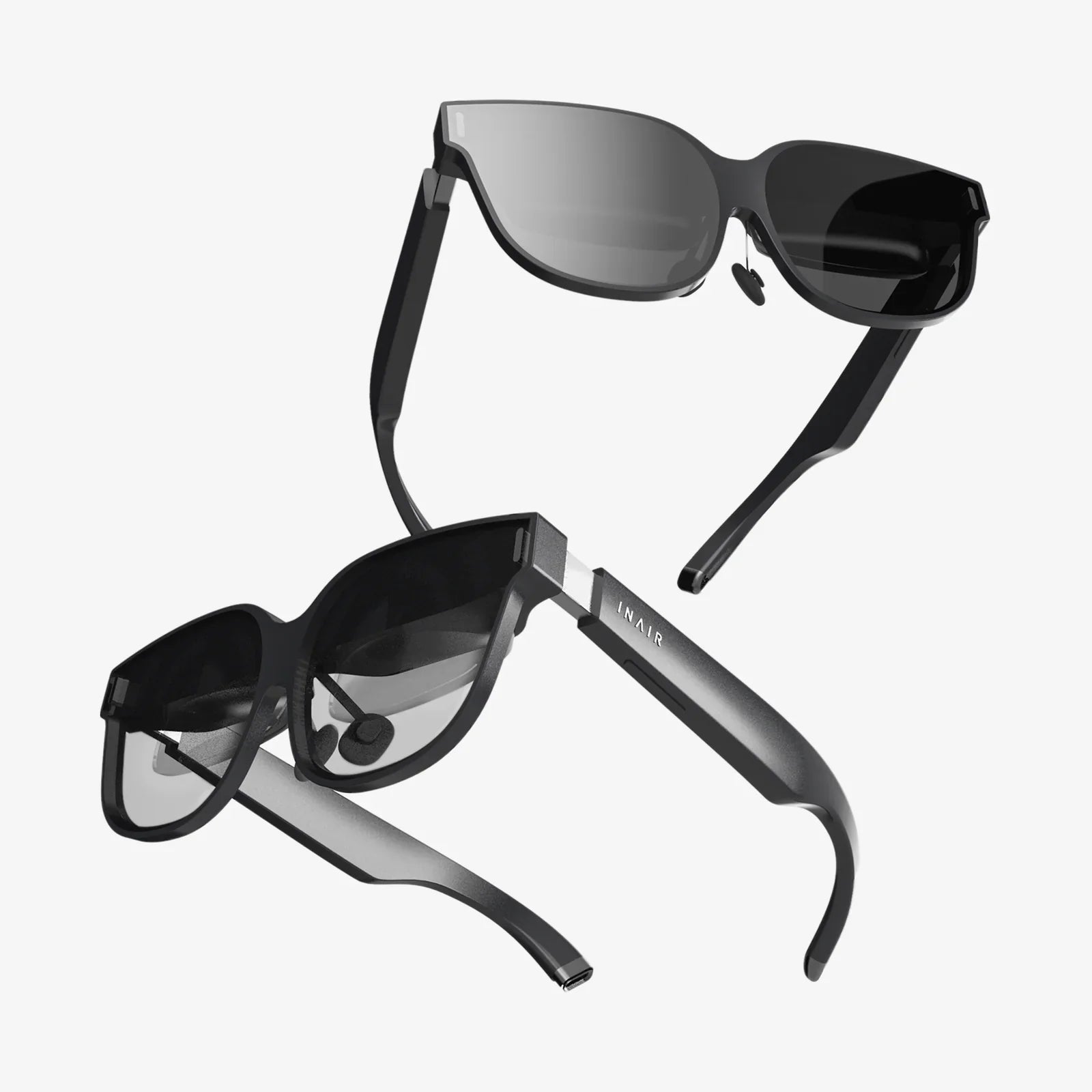
The very notion of putting on a virtual reality headset has, until now, been a transaction. We willingly traded a portion of our physical comfort—the nagging pressure on the bridge of the nose, the tight strap across the skull, the inevitable neck strain after an hour—for the unparalleled wonder of digital immersion. We accepted this trade-off because the experiences within were worth the minor physical toll. But what if that transaction was rendered obsolete? What if you could step into another world without first feeling the weight of the portal? This is not a hypothetical future; this is the reality promised by the lightest VR headsets of 2025, a watershed moment where engineering has finally conquered gravity to set our minds, and our bodies, free.
The Evolutionary Imperative: Shedding Grams to Gain Users
The journey to the 2025 benchmark has been one of relentless, incremental progress. Early VR hardware was notoriously cumbersome, often weighing over 600 grams—the equivalent of strapping a brick to your face. This immediately created a barrier to entry, limiting play sessions, causing discomfort for glasses wearers, and making the technology a non-starter for many. The industry quickly realized that for VR to transition from a niche enthusiast hobby to a ubiquitous computing platform, it had to become physically invisible. The race was on to eliminate every superfluous gram, not through subtraction of features, but through a revolution in design philosophy and material science.
Deconstructing Weight: The Pillars of the 2025 Featherlight Design
The achievement of the current generation is not the result of a single breakthrough but a symphony of innovations across multiple domains. To understand how these headsets feel almost like wearing a pair of swim goggles, we must examine the core pillars of their design.
1. The Materials Revolution: Beyond Plastic
Gone are the days of heavy, injection-molded plastic chassis. The structural components of the 2025 headsets are a masterclass in advanced materials science.
- Aerospace-Grade Magnesium-Lithium Alloys: With a density roughly half that of aluminum and a quarter that of steel, these ultra-strong, ultra-light alloys form the internal skeleton of the headset, providing a rigid frame for component mounting without adding mass.
- Monolithic Carbon Fiber Unibodies: Borrowing from high-performance automotive and aerospace design, some manufacturers have pioneered a single, seamless carbon fiber shell. This monocoque structure distributes stress evenly and eliminates the need for multiple heavy joining parts, resulting in an incredibly robust yet astonishingly light enclosure.
- Advanced Polymer Composites: Newly formulated polymers, reinforced with carbon nanotubes or glass fiber, offer a weight-to-strength ratio that makes traditional plastics seem archaic. These materials are used for facial interfaces and external shrouds, often with antimicrobial and hypoallergenic properties.
2. Optical Breakthroughs: Pancake Lenses and Holographic Waveguides
The traditional Fresnel lens assembly was a significant source of weight and bulk. The 2025 standard has overwhelmingly shifted to far superior alternatives.
- Pancake Lens Domination: These compact, multi-element folded optics have become the industry norm. By bouncing light multiple times between lenses, they drastically reduce the distance needed between the display and the eye (the eyebox). This allows the entire optical stack to be slimmer and, consequently, much lighter, all while improving edge-to-edge clarity and reducing god rays.
- The Dawn of Waveguides: For the very lightest devices, often targeting augmented reality overlays, holographic waveguide technology is emerging. These wafer-thin pieces of glass or transparent plastic use diffraction gratings to pipe light from micro-displays on the temple directly into the eye. This eliminates bulky lens assemblies altogether, representing the ultimate future of weight reduction.
3. Computational Redistribution: The Decentralized Headset
A significant paradigm shift has been the rethinking of what processing must happen on the head and what can be handled elsewhere.
- Enhanced Wireless Standards: With the widespread adoption of next-generation Wi-Fi protocols and dedicated high-bandwidth wireless links, streaming high-fidelity VR content is now seamless and lag-free. This untethers the user physically and allows the heaviest components—the battery and the primary processor—to be moved off the head.
- Companion Processing Pucks: Many 2025 systems utilize a small, lightweight smartphone-sized device that can be clipped to a belt or slipped into a pocket. This “processing puck” handles the intense graphical number crunching, communicating wirelessly with the headset, which now only needs to manage its dedicated tasks like tracking, rendering final frames, and sensor input.
- On-Headset AI Co-Processors: For inside-out tracking, hand tracking, and eye tracking, dedicated low-power AI chips on the headset itself handle these complex tasks efficiently, preventing the need to send constant data streams back to the main processor and minimizing latency and power consumption.
4. Battery Innovation: Distributed and High-Density Power
Batteries have long been a major contributor to weight. The solution has been two-fold: distribution and new chemistry.
- Rear-Mounted Counterbalance Cells: Instead of a single heavy battery on the front, the optimal design now uses two smaller, flexible battery cells integrated into the rear of the head strap. This serves a dual purpose: it reduces the frontal weight and improves overall balance, making the headset feel even lighter than it is.
- Solid-State and Graphene Batteries: Moving away from traditional lithium-ion, new solid-state and graphene-based battery technologies offer significantly higher energy density. This means a battery of the same weight can last much longer, or a battery with the same capacity can be made dramatically smaller and lighter.
The Human Factor: Ergonomics Reimagined
Lightness alone is not enough; it must be paired with intelligent ergonomics. The headsets of 2025 feature:
- Automatic Fit Systems: Motorized straps that, at the press of a button, automatically tension themselves to a perfect, comfortable, and secure fit for the user's head shape.
- Dynamic Weight Distribution: Sophisticated strap designs, often with a rigid top strap and flexible rear cradle, actively pull weight away from the face and distribute it evenly across the upper skull.
- Breathable, Weightless Interfaces: Facial gaskets made from memory foam infused with cooling gels and covered in moisture-wicking, breathable fabrics ensure comfort during extended use without adding heat or pressure.
The Impact: A New Era of VR Applications
The implications of this weightlessness extend far beyond gaming. The removal of physical discomfort opens doors previously closed.
- Enterprise and Productivity: Architects, engineers, and designers can work in collaborative VR spaces for entire workdays without fatigue. Virtual monitors become a true replacement for physical ones.
- Fitness and Health: VR fitness explodes as intense cardio and rhythm games no longer become a battle against a sweaty, heavy headset. The experience is purely about movement.
- Social and Persistent Worlds: When a headset is as easy to wear as a hat, spending hours in social virtual spaces or persistent digital worlds becomes the norm, not the exception.
- Accessibility: A lower physical barrier makes VR accessible to a wider range of people, including those with neck or back issues who were previously unable to participate.
The Future is Light
The progression will not stop here. Research is already underway into even more radical approaches: electro-active polymer lenses that can change focus without moving parts, retinal projection systems that do away with screens and complex optics entirely, and even lighter metamaterials with properties once confined to science fiction. The goal of a pair of sunglasses offering full VR/AR capabilities is now clearly on the horizon.
Imagine a world where diving into a virtual meeting, an immersive game, or a distant memory is as simple and thoughtless as putting on a pair of sunglasses. The heaviest thing you'll carry won't be the hardware on your face, but the emotional weight of the experiences within. The lightest VR headsets of 2025 haven't just changed the specs sheet; they have fundamentally altered the human relationship with digital reality, making the barrier between our world and the next thinner than ever before. The age of frictionless immersion is here, and it feels like almost nothing at all.
Share:
XR Headset News Today 2025: The Year Spatial Computing Became Mainstream
Glasses for Mobile Screen: The Ultimate Guide to Protecting Your Eyes in a Digital World