


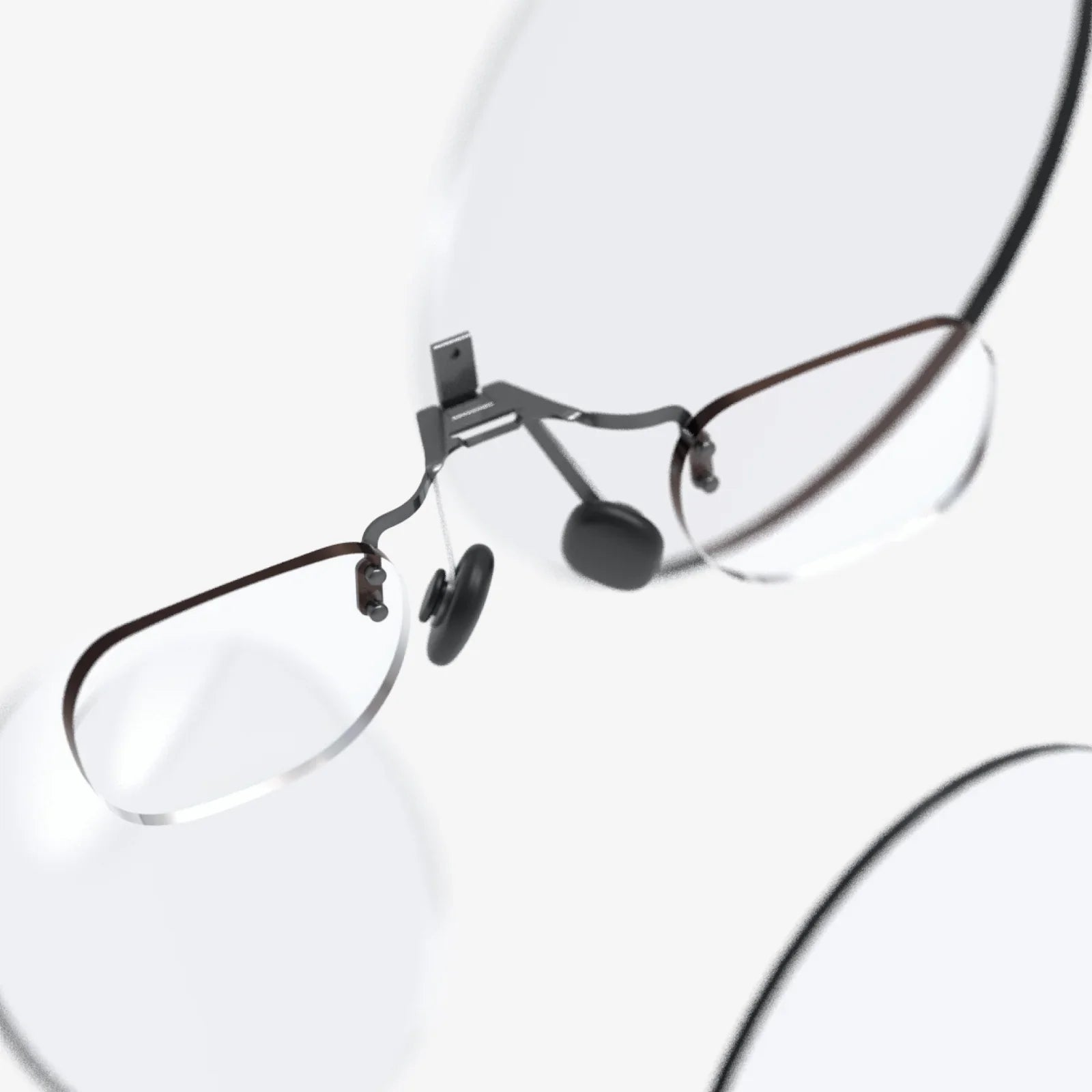
Remember when putting on a headset meant escaping reality? In 2025, the opposite is true. The biggest XR headset news today isn't about building better virtual worlds; it's about fundamentally enhancing our own. This year has marked a tectonic shift from niche gadgetry to indispensable tool, and the pace of innovation is nothing short of breathtaking. If you thought the digital revolution was over, think again—it’s just putting on a new, far more intelligent layer.
The State of the Market: Consolidation and New Challengers
The XR landscape in 2025 is a fascinating dichotomy of powerful consolidation and the explosive entry of agile newcomers. The tech giants of the previous decade have largely solidified their platforms, creating robust ecosystems that developers are flocking to. However, this hasn't stifled innovation. On the contrary, it has created a stable foundation upon which a new wave of specialized companies is building.
These new entrants aren't trying to be everything to everyone. Instead, they are hyper-focused. We're seeing companies emerge with headsets dedicated solely to precision engineering, with built-in lidar scanners and sub-millimeter tracking for CAD model manipulation. Others are targeting the medical field with specialized sensors for patient data visualization during surgical simulations. This specialization is a clear sign of a maturing market. XR is no longer a solution in search of a problem; it's a diverse set of tools, each expertly crafted for a specific set of tasks.
Investment patterns have also shifted dramatically. Venture capital is flowing less towards the hardware itself and more towards the killer applications and enterprise-grade software that make the hardware worthwhile. The mantra for 2025 is clearly software-defined reality. The headset is merely the window; the value is in the digital experiences and data streams it can access and manipulate.
Breakthroughs in Hardware: Lighter, Brighter, and Smarter
The physical form of XR headsets has undergone its most radical transformation yet. The bulky, front-heavy designs of yesteryear are rapidly disappearing from the news cycle, replaced by sleek, glasses-like form factors that are socially acceptable and comfortable for all-day wear.
The Resolution Revolution
The dreaded "screen door effect" is now officially a relic of the past. Advancements in micro-OLED and laser-beam scanning displays have pushed pixel densities to heights once considered theoretical. With resolutions now exceeding 40 pixels per degree (PPD) in flagship devices, digital text is as crisp as print and virtual objects blend with physical ones without visible flicker or blur. This leap in visual fidelity is arguably the single most important factor driving enterprise adoption in 2025.
The Weight Dilemma Solved
Through innovative use of new polymer composites and a fundamental rethinking of internal architecture—moving the battery to a separate, hip-worn module—leading devices now weigh less than 250 grams. This shift from a "worn" device to an "almost forgotten" one is a game-changer for productivity, removing the primary barrier to extended use.
On-Device AI Co-Processors
This is the unsung hero of 2025's XR headset news. Dedicated neural processing units (NPUs) inside the headsets are now handling the immense computational load of real-time scene understanding, persistent world mapping, and gesture recognition. This offloads the main processor and allows for complex interactions without latency. These NPUs instantly recognize objects in your field of view—is that a specific model of printer? Your NPU identifies it and overlays the manual. Is that a colleague approaching? Their name and last project note appear subtly in your periphery. This is ambient computing, realized.
The Operating System Wars: A Truly Spatial Experience
The battle for the next great operating system is no longer fought on our desks or in our pockets; it's being waged in the space around us. The major platform holders have all launched their vision for a spatial OS in 2025, and the competition is fierce.
These are not merely adaptations of mobile or desktop OSs. They are built from the ground up to understand and interact with space. The core interface is a three-dimensional canvas that respects physical geometry. Windows and applications don't just float; they can be pinned to walls, wrapped around curved surfaces, or placed deliberately on a physical desk.
Inter-app continuity is a key feature. A 3D model created in one CAD application can be effortlessly dragged and dropped into a presentation slide pinned on your office wall, or into a video conferencing app to share with a remote colleague. The OS handles the scaling and formatting automatically. This seamless flow of data between applications in a spatial context is finally unlocking the promised productivity gains that have been touted for years.
Furthermore, these spatial OSs are deeply integrated with cloud services. Your digital workspace isn't tied to a single headset or location. You can don a headset in a different office, city, or even use a high-fidelity AR projector in a hotel room, and your entire spatial desktop—with all its perfectly placed windows and applications—loads exactly as you left it. This persistence is foundational to the concept of a ubiquitous computing environment.
Enterprise Adoption Soars: Use Cases Beyond Training
While immersive training simulations were the initial hook for enterprise XR, 2025 has seen adoption explode across every vertical, moving far beyond the training room.
- Remote Assistance and Collaboration: The term "remote work" has been redefined. Field technicians, often working alone, now have a constant lifeline to senior experts. Using shared persistence, an expert can see exactly what the technician sees and annotate directly onto their real-world field of view—circling a specific component, drawing a wiring diagram over the machine, or pulling up a schematic. The expert’s annotations are locked in space, so if the technician moves their head, the annotations stay precisely on the machine. This reduces errors and resolution times dramatically.
- Design and Prototyping: Automotive and aerospace engineers are collaborating in real-time on full-scale, 1:1 digital prototypes. Teams spread across the globe can walk around a virtual car chassis, inspect the interior, and make adjustments to the digital model on the fly, saving millions in physical prototyping costs and compressing design cycles from months to weeks.
- Healthcare and Surgery: Surgeons are using XR for pre-operative planning, overlaying CT scans and MRI data directly onto a patient's body to visualize anatomy before the first incision. Medical students are learning anatomy by dissecting infinitely reusable, photo-realistic digital cadavers.
The Consumer Tipping Point: More Than Just Games
For years, the consumer market lagged behind enterprise, but 2025 is the year that changed. The combination of lower prices, better form factors, and compelling content is finally creating a viable consumer market.
Gaming, while still a powerhouse, is no longer the only narrative. Social spatial experiences have evolved from novel chat rooms to intricate virtual spaces where people gather for concerts, watch parties, and even guided meditation. The key is shared context and presence—feeling like you are truly in the same room with someone else.
Perhaps the most surprising growth area is in home and lifestyle. Furniture retailers allow you to place true-to-scale digital replicas of sofas and tables in your living room to see how they fit and look before you buy. DIY enthusiasts can pull up interactive wiring or plumbing guides that overlay step-by-step instructions onto the wall they are trying to repair. Cooking apps can project recipe instructions and timers right onto your kitchen counter, keeping your hands free and your screen clean.
This practical, daily utility is what is finally driving mainstream consumer interest beyond the early adopters and gamers.
Addressing the Elephant in the Room: Privacy and the Ethics of Spatial Data
With great power comes great responsibility, and the ability of these devices to continuously map and understand our environments raises profound privacy questions. The XR headset news today in 2025 isn't all celebratory; it includes serious debates in regulatory halls.
How is the detailed 3D map of your home stored? Who owns that data? Could it be used for targeted advertising based on your possessions? Could a malicious actor gain access to the live feed from your device?
In response, leading manufacturers are adopting a principle of "on-device processing first." Sensitive data like continuous environment mapping and live video feed are processed by the onboard NPU and never leave the device. Only the necessary abstracted data—e.g., "a flat surface is here"—is sent to the cloud for application use. Furthermore, physical privacy features like hardware kill switches for cameras and microphones are becoming standard, giving users tangible control over their data. The industry knows that trust is its most valuable currency, and building it is an ongoing process.
Gazing into the Crystal Ball: What's Beyond 2025?
The progress this year has been staggering, but it is merely a foundation for what's to come. The trends point towards even more seamless integration of the digital and physical. We are moving towards devices with varifocal displays that dynamically adjust to where your eyes are focused, eliminating eye strain and deepening the illusion. Haptic feedback gloves and wearables will evolve from novelties to standard peripherals, allowing us to not just see but also feel digital objects.
The ultimate goal, whispered in R&D labs, is the development of true photonic displays that can perfectly mimic the way light behaves in the real world, making digital objects utterly indistinguishable from physical ones. This, combined with advancements in brain-computer interfaces for more intuitive control, will eventually dissolve the barrier between user and interface entirely.
From the clunky prototypes of the past decade to the sleek, powerful, and intelligent devices of today, the journey of XR has been one of relentless iteration. The headlines of 2025 prove one thing unequivocally: spatial computing is no longer a future promise. It's a present reality, reshaping how we work, connect, and perceive the world around us from the ground up. The next time you see someone gesturing in the air, don't assume they're eccentric—they might just be building the future.
Share:
Best VR Headset to Buy 2025: The Ultimate Guide to Immersive Technology
Lightest VR Headset 2025: The Unprecedented Dawn of Frictionless Immersion