


- by wangfred
Smart Glasses That Project Screen: The Invisible Revolution Reshaping Reality
- by wangfred
Imagine a world where your most vital information doesn't live on a slab of glass in your pocket, but floats seamlessly in your field of vision, accessible with a glance and dismissed with a thought. This is the tantalizing promise of smart glasses that project a screen, a technology that is quietly inching its way from science fiction into our daily reality. This isn't just another gadget; it's a fundamental shift in how we interface with the digital universe, promising to untether us from our devices and weave computing directly into the fabric of our lives. The race to dominate our eyeline is on, and the prize is nothing less than the next major computing platform.
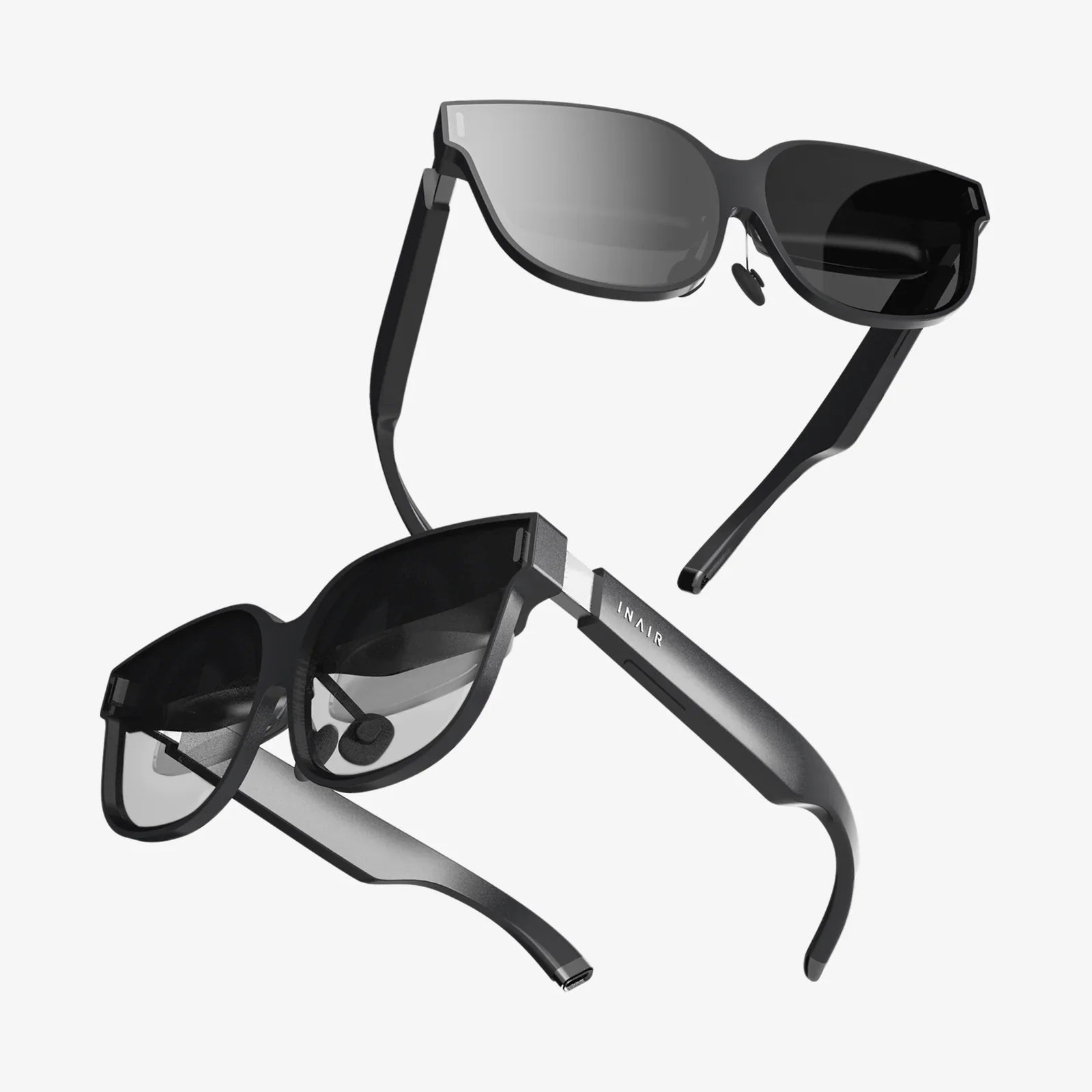
At the heart of these remarkable devices lies a complex dance of optics and engineering, designed to paint a digital image onto the real world. Unlike virtual reality headsets that immerse you in a fully digital environment, smart glasses that project a screen are designed for augmented reality (AR), layering information on top of what you naturally see.
The magic begins with a minuscule display engine, often a Liquid Crystal on Silicon (LCoS) panel or a MicroLED array. These micro-displays are incredibly small and efficient, generating the initial image. This image is then directed towards a critical component: the waveguide. This is the true marvel of the technology. A waveguide is a flat, transparent piece of glass or plastic etched with microscopic precision. It acts like a conduit, using a combination of diffraction and reflection to "pipe" the light from the micro-display directly into the user's eye.
Think of it like a fiber optic cable for your vision. The light enters one end of the waveguide, bounces along its internal structure, and is gradually ejected out towards the eye, creating a bright, sharp image that appears to hover in space several feet away. This complex optical system allows for a sleek, eyeglasses-like form factor, a stark contrast to the bulky headsets of the past. Advancements in materials science and nanofabrication are constantly refining this process, making waveguides more efficient, affordable, and capable of delivering a wider field of view with richer colors.
The true value of this technology is not in the wizardry of its optics, but in its practical application. The potential use cases stretch across every facet of professional and personal life, offering paradigm-shifting improvements in efficiency, safety, and accessibility.
In fields where hands-free access to information is critical, smart glasses that project a screen are a game-changer. For a surgeon, vital signs and ultrasound imagery can be projected directly into their view, allowing them to focus on the patient without glancing away at a monitor. For a field engineer repairing a complex machine, a schematic or a live video feed from a remote expert can be overlaid onto the equipment itself, guiding their every move. Architects could walk through a physical building site and see the digital blueprints laid perfectly over the unfinished structure. The applications in logistics, manufacturing, and complex assembly are virtually limitless, reducing error rates and dramatically accelerating workflows.
Imagine walking through a foreign city where translation of street signs appears instantly beneath them, or directional arrows are painted onto the sidewalk guiding you to your destination. For a tourist, this provides an unparalleled layer of immersion and convenience. For professionals, this could mean warehouse workers seeing the most efficient picking path glowing on the floor, or firefighters seeing the layout of a burning building and the location of their teammates through the smoke.
Perhaps one of the most profound impacts will be in the realm of accessibility. For individuals with hearing impairments, real-time speech-to-text transcription could be displayed directly in their glasses, making conversations fluid and effortless. For those with low vision, the glasses could highlight obstacles on a sidewalk, enhance contrast, or read out text from a menu. This technology has the power to break down barriers and provide a new layer of independence for millions.
For all its promise, the path to ubiquitous adoption of smart glasses that project a screen is fraught with significant technological, social, and ethical hurdles that must be navigated with care.
Projecting high-resolution imagery and processing complex data in real-time is computationally intensive. The greatest challenge remains power consumption. Fitting a battery capable of all-day use into a stylish, lightweight frame is the holy grail that engineers are still chasing. Current iterations often rely on a separate battery pack or offer only a few hours of active use, which limits their practicality for all-day scenarios.
Early attempts at this technology were met with significant social resistance. Concerns about constant recording, surreptitious photography, and the simple rudeness of someone being mentally "elsewhere" during a conversation created a major barrier. Future success hinges on designing for social cues. Indicators that clearly show when recording is active, and interfaces that are minimally intrusive and prioritize real-world interaction, will be essential for gaining public trust. The technology must be designed to enhance human connection, not replace it.
Devices that see what you see and hear what you hear raise monumental privacy questions. The data collected by these sensors is incredibly intimate. Who owns this data? How is it stored, processed, and used? The potential for constant environmental surveillance, targeted advertising based on what you look at, and unauthorized data collection is a dystopian nightmare. Robust, transparent, and user-centric data policies will be non-negotiable for any company that hopes to succeed in this space. Legislation will need to evolve rapidly to protect individuals in this new augmented world.
Finally, the technology needs its defining application. The smartphone revolution was catalyzed by the combination of the web, email, and later, the app store and touch interface. Smart glasses that project a screen are still searching for that indispensable use case that makes them a "must-have" rather than a "nice-to-have" curiosity. It could be a revolutionary new social media format, an unparalleled navigation tool, or a professional application so powerful it justifies the investment on its own.
Looking ahead, the evolution of this technology points toward a future where the digital and physical are inextricably linked. We are moving toward more intuitive interfaces—control via subtle eye movements, voice commands, or even neural input. The displays will become wider, brighter, and eventually full color, capable of rendering convincing 3D objects into our space. The form factor will continue to shrink, eventually becoming indistinguishable from standard eyewear.
This will give rise to the "ambient computing" era, where technology recedes into the background of our lives. We won't "use" a computer; we will simply exist in a digitally enhanced environment. Information will be contextual, appearing only when and where it is needed, and disappearing when it is not. This could fundamentally change disciplines like education, where historical events could be reenacted on a student's desk, or medicine, where a medic could see a tutorial overlay the wound they are treating.
The flickering screen projected before your eyes is more than a technical marvel; it's a portal. It’s a glimpse into a future where the boundaries between our minds and our machines finally blur, offering a superhuman layer of understanding to the world we walk through every day. The revolution won't be televised; it will be projected directly onto your retina, and it’s closer than you think.