


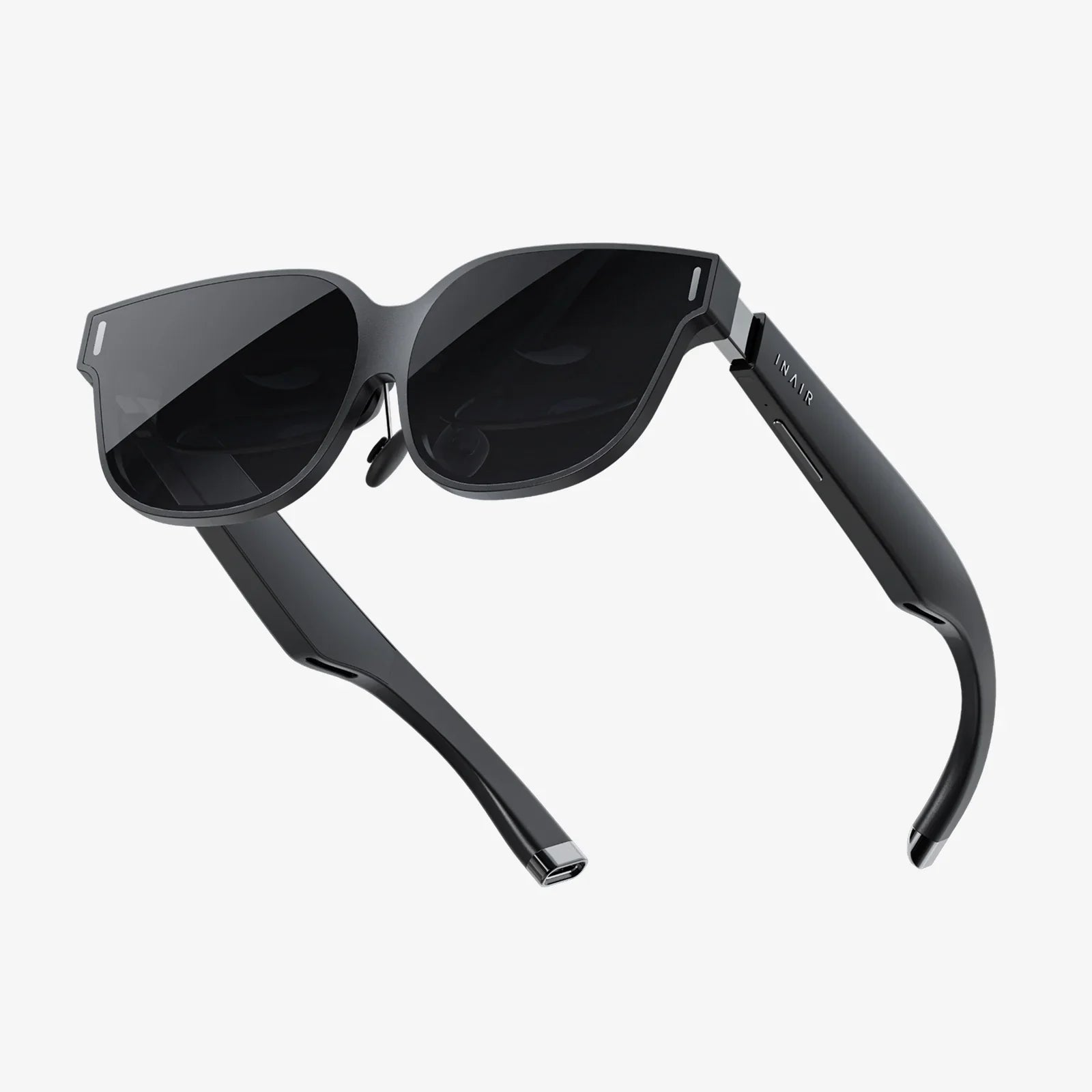
Imagine a world where digital information seamlessly overlays your physical reality, where instructions for a complex repair float before your eyes, or where a virtual meeting room is superimposed onto your quiet office. This is the promise of smart goggles, a technology poised to revolutionize how we work, play, and connect. Yet, for many, the first and most pressing question isn't about the specs or the software—it's about the investment. The smart goggles price point is the gateway to this augmented future, a figure shrouded in mystery and varying wildly across the market. Understanding what dictates this cost is crucial for any early adopter or curious observer looking to peer into the next era of computing.
Deconstructing the Cost: What You're Really Paying For
The price tag on a pair of smart goggles is not arbitrary; it's a direct reflection of the sophisticated technology packed into a relatively small form factor. Unlike their simpler virtual reality counterparts, which primarily immerse you in a fully digital world, smart goggles for augmented reality must perform a delicate ballet between the real and the virtual. This requires a suite of advanced components, each contributing significantly to the final smart goggles price.
Display Technology: The Window to the Digital World
The most critical component, and often the most expensive, is the display system. Consumers are faced with a primary choice between two technologies, each with profound implications for cost and experience.
- Optical See-Through (OST): This technology uses waveguides, miniature combiners, or half-silvered mirrors to project digital images directly into the user's field of view while allowing them to see the real world through the lenses. High-quality waveguides, particularly those based on holographic or diffractive optics, are incredibly complex and expensive to manufacture. They require nanometer-precision engineering, which drives the smart goggles price into the thousands. The benefit is a more natural, high-resolution blend of real and virtual elements.
- Video See-Through (VST): This approach uses outward-facing cameras to capture the real world, which is then combined with digital elements on internal displays and presented to the user. While this can sometimes allow for more vivid digital graphics and easier occlusion (where digital objects can appear behind real ones), it requires ultra-low-latency cameras and processing to avoid nausea-inducing lag. The computational burden is higher, impacting both performance and battery life, which are factored into the overall cost.
Processing Power: The Brain Behind the Lenses
Smart goggles are essentially wearable computers. They require significant processing muscle to handle tasks like:
- Simultaneous Localization and Mapping (SLAM): The device must constantly map its environment and understand its position within it in real-time.
- Object Recognition and Tracking: Identifying surfaces, people, and specific objects to anchor digital content accurately.
- Rendering High-Fidelity Graphics: Generating complex 3D models and interfaces without dropping frames.
This processing can be handled by a dedicated onboard chipset—a premium feature that increases the smart goggles price—or offloaded to a connected external device, such as a powerful computer or smartphone, which can lower the unit's cost but add to the overall system cost.
Sensors and Cameras: The Eyes of the Device
A high-end pair of smart goggles is a sensor hub. They typically include a combination of:
- High-resolution RGB cameras for video pass-through and recording.
- Depth sensors (e.g., LiDAR, time-of-flight sensors) for precise environmental mapping.
- Inertial Measurement Units (IMUs) including accelerometers and gyroscopes for tracking head movement.
- Eye-tracking cameras for foveated rendering (which boosts performance by rendering only where you look) and intuitive interaction.
The quantity, quality, and integration of these sensors are a major cost driver. More sensors mean better performance and more immersive experiences, but also higher research, development, and component costs.
Design, Materials, and Form Factor
There's a immense challenge in balancing performance with wearability. Engineering a device that is powerful yet lightweight, sleek yet robust, and cool-running yet silent requires premium materials like magnesium alloys and carbon fiber. The research into ergonomics and the miniaturization of components all add to the development cost reflected in the smart goggles price. A device designed for all-day enterprise use will have a different (and often higher) cost structure than a bulky developer kit.
Software and Ecosystem
The initial purchase price isn't just for hardware. It includes the value of the operating system, the development platform, and the suite of applications it supports. A robust ecosystem with professional CAD tools, enterprise remote assistance platforms, or a thriving game development community adds intangible value that justifies a higher price point. The ongoing cost of software updates, security patches, and cloud services is also baked into the initial smart goggles price.
The Market Spectrum: From Budget to Bleeding Edge
The market for smart goggles is not monolithic. It can be segmented into distinct tiers, each with its own price range and target audience.
Enterprise-Grade Goggles (The Premium Tier)
This segment represents the highest end of the smart goggles price spectrum, often ranging from $2,000 to over $3,500. These devices are engineered for mission-critical applications in fields like manufacturing, surgery, logistics, and field service. Key characteristics include:
- Industrial-grade durability and reliability.
- Top-tier waveguide displays with a wide field of view.
- Powerful onboard processing.
- Advanced enterprise-focused features like user management, device security, and specialized software suites.
- Justified by a clear Return on Investment (ROI) through increased productivity, reduced errors, and enhanced training.
For these buyers, the smart goggles price is a capital expenditure evaluated against business outcomes, not a consumer gadget purchase.
Prosumer and Developer Kits (The Mid-Range)
Occupying a space between $500 and $2,000, this tier is aimed at developers, creators, and tech enthusiasts. These devices often serve as a platform for building the next generation of AR experiences. They may sacrifice some polish, battery life, or form factor for greater accessibility and hackability. The price here pays for entry into the development ecosystem and early access to transformative technology.
The Emerging Consumer Tier
This is the frontier of the market. True consumer-ready smart goggles at an accessible price (sub-$500) are still rare. Most devices in this range are either very limited in capability (e.g., smart glasses focused solely on notifications and audio) or are tethered accessories that rely on a smartphone for most of their processing. The holy grail of the industry is to drive the high-end technology found in enterprise models down to a mass-market smart goggles price, a challenge that hinges on manufacturing scale and technological breakthroughs.
Beyond the Sticker Price: The Total Cost of Ownership
Evaluating smart goggles based solely on the initial purchase price is a mistake. The true cost of ownership encompasses several other factors:
- Required Accessories: Does the system need a separate processing unit? Specialized controllers? Additional tracking sensors?
- Software and Subscriptions: Are critical enterprise applications sold on a monthly or annual subscription model?
- Insurance and Warranty: Protecting a multi-thousand-dollar investment on someone's face is prudent.
- Content and Development: For businesses, the cost of developing custom AR applications can far exceed the hardware cost itself.
The Future of Smart Goggles Pricing
The trajectory of smart goggles price is one of gradual decline towards accessibility, though high-end models will always command a premium. Several trends will accelerate this:
- Economies of Scale: As manufacturing volumes increase, the cost of complex components like waveguides will fall.
- Technological Advancements: Innovations in display technology, such as laser beam scanning and metasurface optics, promise higher performance at lower cost. More efficient processors will reduce thermal and power demands, simplifying design.
- Increased Competition: As more players enter the market, competition will drive prices down and force innovation, benefiting consumers.
- Market Segmentation: The market will likely splinter further, with purpose-built devices at specific price points for gaming, navigation, media consumption, and communication, rather than one device trying to do everything.
We can expect a future where a range of smart goggles exists, from simple, stylish notification and audio glasses for everyday wear priced like premium headphones, to powerful tethered gaming and productivity devices priced like consoles, all the way up to specialized professional tools with costs justified by business needs.
Making the Right Choice: Value Over Price
When considering a purchase, the smart goggles price should be the last question you ask, not the first. The critical steps are:
- Define Your Use Case: Are you developing software, performing remote repairs, or wanting to watch immersive movies? The answer dictates the necessary features.
- Research the Ecosystem: The best hardware is useless without great software. Ensure the device supports the applications you need.
- Consider Comfort and Usability: A cheaper device that is uncomfortable to wear for more than 10 minutes is a poor value.
- Evaluate the Total Cost of Ownership: Account for all associated costs, not just the initial outlay.
- Then, and only then, evaluate if the price justifies the value it will deliver for your specific needs.
The journey to a world enhanced by augmented reality is well underway, and the smart goggles price is the ticket for admission. While today's costs may seem prohibitive to the average consumer, they represent the incredible engineering achievement of packing a supercomputer into a pair of glasses. As the technology matures and evolves, the barriers will crumble. The question will shift from "Can I afford them?" to "How did I ever live without them?" The true value of smart goggles lies not in their cost, but in their potential to augment human capability, redefine collaboration, and unlock new forms of creativity, making the eventual investment not just in a device, but in a fundamentally new way of seeing and interacting with the world around you.
Share:
VR Headset Settings: The Ultimate Guide to Unlocking Your Immersive Potential
PC VR Headset Comparison 2025: The Ultimate Buyer's Guide to Next-Gen Immersion