


Imagine slipping on a headset and instantly being transported to another world—a world so crisp, so vivid, and so breathtakingly real that the boundaries between the digital and the physical begin to blur and then vanish entirely. This is no longer the stuff of science fiction; it is the promise and the reality of Super Screen VR, a technological leap that is fundamentally redefining what virtual reality can be. This isn't just an incremental upgrade; it's a paradigm shift, moving beyond mere immersion into the realm of genuine presence. The quest for the perfect virtual experience has long been hampered by the screen door effect, low pixel density, and optical limitations that constantly remind users they are looking at a screen. Super Screen VR technology smashes through these barriers, offering a visual fidelity that was, until recently, a distant dream for developers and enthusiasts alike. We are standing at the precipice of a new era, and the view has never been clearer.
The Anatomy of a Super Screen: Beyond Pixels Per Inch
At its core, Super Screen VR is defined by a combination of ultra-high-resolution displays, advanced optical systems, and powerful processing hardware working in perfect harmony. The goal is singular: to eliminate any and all visual artifacts that break the illusion of reality.
The most critical component is, unsurprisingly, the display itself. Early consumer headsets featured resolutions that, by today's standards, seem primitive. The dreaded 'screen door effect'—the visible grid lines between pixels—was a constant reminder of the technology's limitations. Super Screen VR employs micro-OLED or advanced LCD panels that pack an astonishing number of pixels into a minuscule space. We're talking about resolutions that meet or exceed human visual acuity, often referred to as 'retina' quality in the headset's field of view. This means pixel densities soaring past 30 pixels per degree (PPD), a metric far beyond what was achievable just a few years ago.
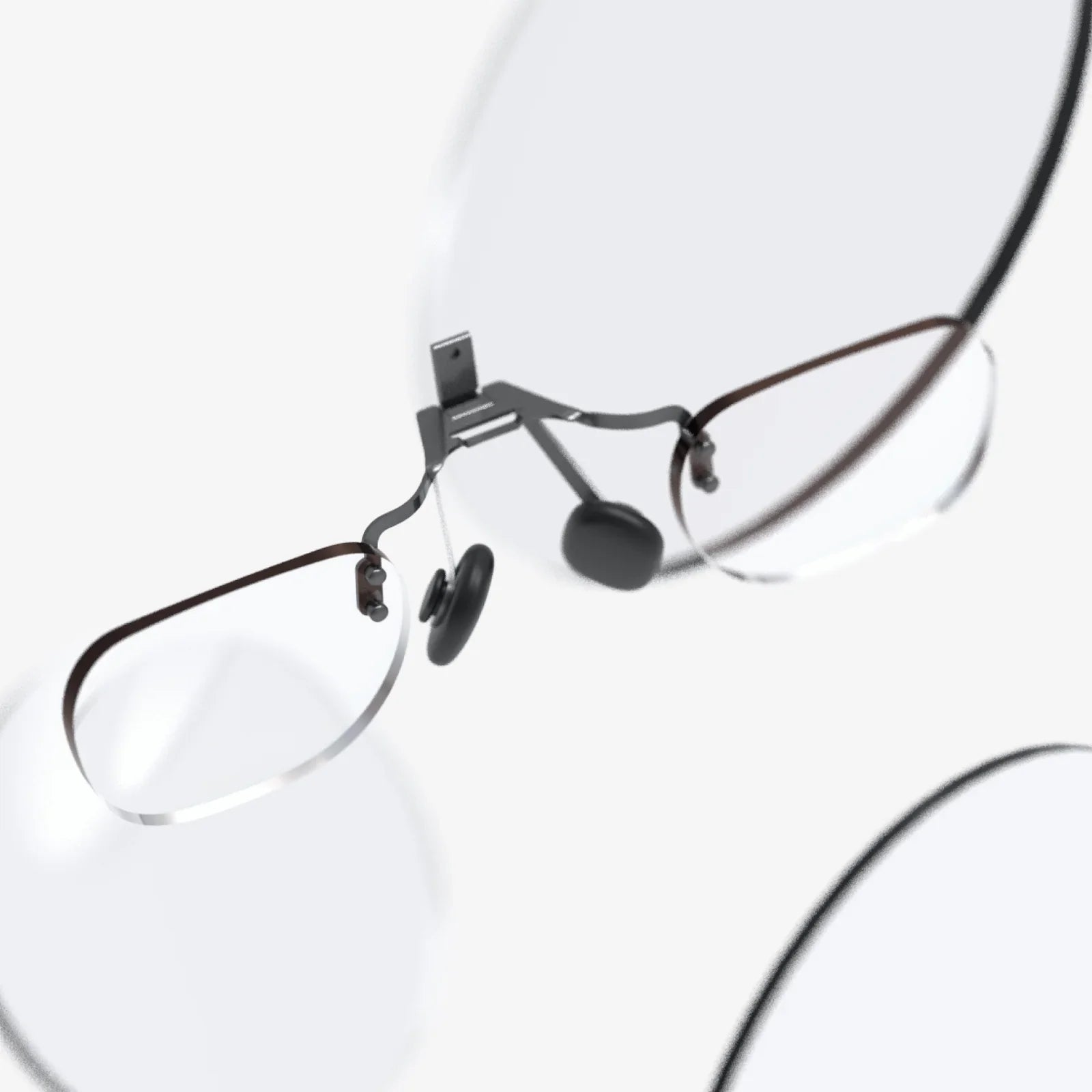
But resolution is only one piece of the puzzle. A high-resolution panel is useless if the optics distort the image or cannot bring it into clear focus. This is where pancake lenses and other sophisticated optical stacks come into play. Unlike the simple Fresnel lenses of the past, these new systems are complex assemblies that minimize god rays, glare, and chromatic aberration. They provide a much larger 'sweet spot'—the area where the image remains perfectly sharp—making the headset more comfortable and accessible for a wider range of users without constant adjustment. This marriage of cutting-edge displays and precision optics is what truly creates the 'super screen' effect.
The Brain Behind the Beauty: Processing Power and Performance
Driving these incredible screens requires an immense amount of computational power. Rendering two separate, ultra-high-resolution views at a buttery-smooth 90Hz, 120Hz, or even higher refresh rates is a monumental task for any graphics processor. This is where technologies like foveated rendering become a game-changer.
Foveated rendering is a clever technique that mimics the way the human eye works. Our central vision (the fovea) is extremely sharp, while our peripheral vision perceives much less detail. Super Screen VR headsets with eye-tracking technology can detect exactly where the user is looking and render the center of their gaze in full, high-resolution glory while subtly reducing the rendering quality in their peripheral vision. This massive reduction in processing load allows even current-generation hardware to drive these super screens without compromising on frame rate or visual quality, ensuring a comfortable and stutter-free experience that is critical for maintaining immersion and preventing motion sickness.
A World of Applications: Beyond Gaming
While the immediate application for many will be gaming—and what an application it is—the implications of Super Screen VR extend far beyond entertainment. The ability to create a convincing and comfortable digital reality opens doors in nearly every professional field.
- Enterprise and Design: Architects and engineers can walk clients through photorealistic renders of unbuilt structures. Design teams can collaborate on 3D models in a shared virtual space, manipulating them at life-size scale with an unprecedented level of detail, spotting potential flaws long before physical prototyping begins.
- Medicine and Healthcare: Medical students can practice complex surgical procedures on hyper-realistic virtual cadavers, making mistakes without consequence. Therapists are already using immersive VR to treat phobias, PTSD, and anxiety disorders, and Super Screen VR makes these therapeutic environments more believable and thus more effective.
- Remote Work and Collaboration: The concept of the 'metaverse' for business is transformed with Super Screen VR. Virtual meetings cease to be a grid of video feeds and become a shared room where colleagues from across the globe can interact with 3D data, whiteboards, and prototypes as if they were in the same physical space.
- Education and Training: History students can explore ancient Rome recreated with archaeological accuracy. Mechanics can train on the intricate systems of a jet engine. The potential for experiential learning is limitless when the virtual world is indistinguishable from the real one.
The Human Factor: Comfort, Accessibility, and the Future
For all its technological marvels, Super Screen VR must ultimately serve the human wearing the headset. This means tackling longstanding issues of comfort and accessibility. Higher-resolution displays and better optics don't necessarily mean heavier, bulkier headsets. In fact, advancements often lead to more streamlined and ergonomic designs. The reduction of visual fatigue through clearer imagery and higher refresh rates also means users can stay immersed for longer periods productively and comfortably.
Furthermore, this leap in quality is a crucial step towards mass adoption. The learning curve for VR becomes much flatter when the experience is intuitive and visually flawless. It removes the technical barrier that previously alienated non-enthusiasts and opens the door for VR to become a mainstream computing platform, much like the smartphone or personal computer.
Challenges on the Horizon
The path forward for Super Screen VR is not without its obstacles. The computational demands are immense, pushing the boundaries of what is possible even with foveated rendering. Creating content that truly leverages this resolution requires new tools, pipelines, and significantly more artistic resources. There are also questions of cost, as the cutting-edge components required for such an experience remain expensive, though history shows that costs will fall as the technology matures and scales.
Finally, there is the philosophical challenge: as the virtual world becomes more appealing than the real one, how do we ensure a healthy balance? This technology is a tool, and like any powerful tool, its impact will be determined by how we choose to use it.
The revolution is not coming; it is already here. Super Screen VR technology has broken the visual barrier that constrained virtual reality for decades. It is the key that unlocks the full potential of immersive computing, transforming it from a novel gadget into an indispensable tool for creativity, connection, and exploration. The line between the real and the virtual is dissolving, and on the other side awaits a future limited only by our imagination. Are you ready to see it for yourself?
Share:
Best Selling Smart Glasses: The Ultimate Guide to the Hottest Tech on Your Face
AR Brace: The Future of Injury Recovery and Enhanced Mobility