


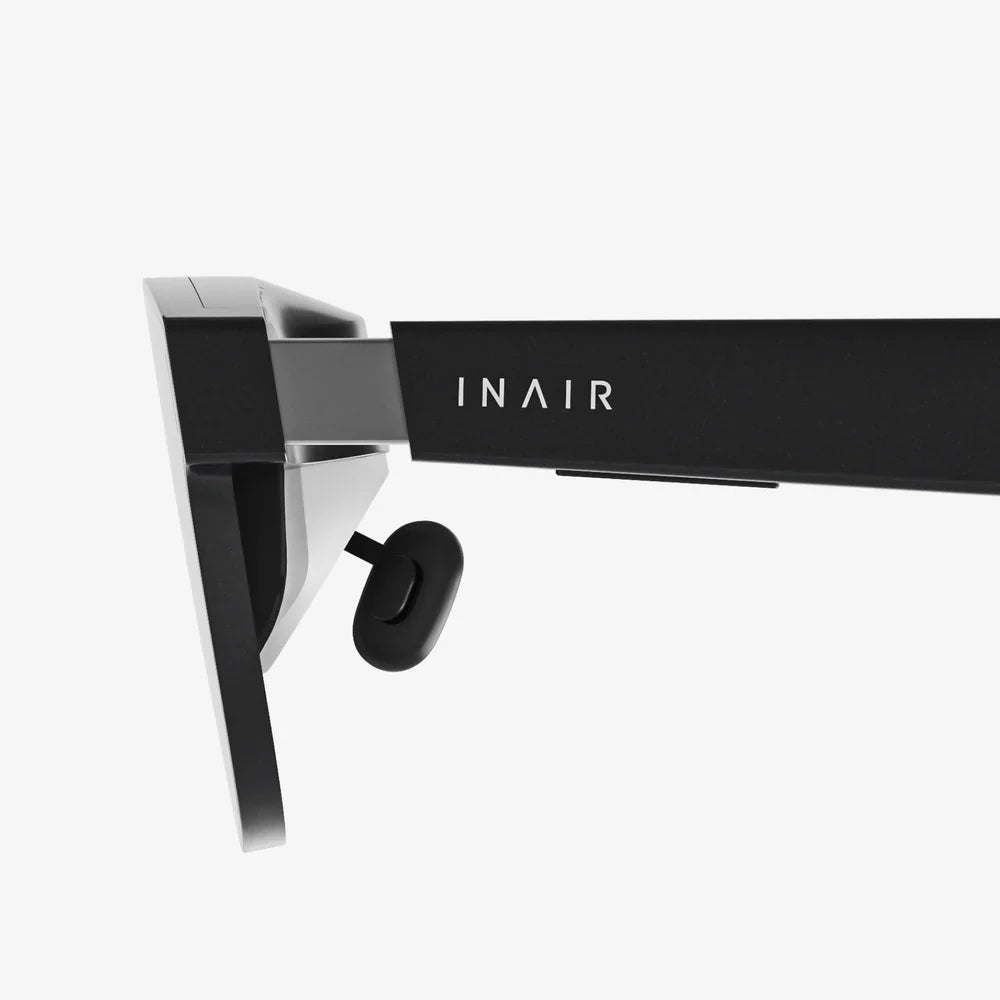
Imagine slipping on a headset and instantly being transported. You’re no longer in your living room; you’re standing on the surface of Mars, the red dust crunching under your virtual boots. You’re performing a complex surgical procedure with a steady hand you never knew you had. You’re walking through a meticulously reconstructed ancient Roman city, hearing the echoes of a civilization long gone. This is the captivating, world-bending promise of virtual reality, a technology that doesn’t just show you a new world but convinces your entire being that you are truly within it. It’s a portal to the impossible, and its story is one of the most fascinating in modern technology.
The Genesis of a Dream: A Brief History of VR
The idea of escaping into a synthetic reality is not new. For decades, it lived firmly in the realm of science fiction, a tantalizing concept explored in novels and films. However, the tangible journey of VR began long before the sleek headsets of today.
The first inklings emerged in the 1950s and 60s with Sensorama, a mechanical arcade cabinet that aimed to stimulate all the senses with short films, complete with aromas, wind, and vibrations. Shortly after, the first head-mounted display (HMD) systems were created, though they were crude and graphical by today's standards. For years, VR remained a niche, expensive tool primarily for government and military simulations, notably for flight training.
The late 1980s and early 1990s saw the first major wave of public awareness, fueled by tech evangelists and pop culture. This era introduced the term "virtual reality" to the masses, promising a future that was just around the corner. Yet, the technology of the time—bulky hardware, low-resolution graphics, and high costs—could not deliver on the hype, leading to a period of disillusionment known as the "VR winter."
The true renaissance began in the 2010s. A pivotal moment was the development of a simple yet effective prototype that would become the Oculus Rift, sparking a new arms race in VR development. This modern era was built on the back of rapid advancements in smartphone technology: high-resolution displays, precise motion sensors, and powerful, compact processors. For the first time, creating immersive and accessible virtual reality was not just a dream but a viable consumer product, launching us into the current age of exploration and innovation.
How It Works: The Magic Behind the Visor
Virtual reality's power lies in its ability to hijack your senses, primarily sight and sound, to create a persuasive illusion. This feat is achieved through a sophisticated combination of hardware and software working in perfect harmony.
The Head-Mounted Display (HMD)
The HMD, or headset, is the gateway. Inside are two small high-resolution screens, one for each eye, which display slightly different images to create a stereoscopic 3D effect, granting depth and scale. These screens are placed behind specially designed lenses that focus and reshape the picture for your eyes, creating a wide field of view that fills your peripheral vision, which is crucial for immersion. The goal is to eliminate the sensation of looking at a screen and instead create the feeling of looking out into a world.
Tracking and Movement
For the virtual world to feel solid and responsive, the system must know precisely where your head and body are located and how they are moving. This is done through a combination of technologies:
- Inside-Out Tracking: Cameras on the headset itself look outward, tracking the position of your controllers and identifying fixed points in your physical room to understand its movement in space.
- Outside-In Tracking: External sensors or base stations placed around the room emit signals that are picked up by the headset and controllers, providing extremely precise positional data.
- Inertial Measurement Units (IMUs): These are internal sensors—gyroscopes, accelerometers, and magnetometers—that measure the rotation and acceleration of your head, providing crucial data between camera updates.
This tracking data is processed in milliseconds, ensuring the virtual world moves with you in perfect lockstep, preventing the disorientation and motion sickness that plagued earlier systems.
Audio and Interaction
Immersion is shattered if you hear sound from a static speaker on your head. 3D spatial audio is essential. It mimics how sound waves interact with the human head and ears, allowing you to perceive sounds as coming from specific points in the virtual space—behind you, above you, or far away. The rustle of leaves to your left will sound different than the same rustle to your right.
Interaction is handled through dedicated motion controllers. These are tracked in 3D space and often feature buttons, triggers, joysticks, and haptic feedback motors. They become your virtual hands, allowing you to grab, push, throw, and manipulate the digital environment. More advanced systems are experimenting with hand-tracking technology, which uses cameras to directly interpret the movements of your bare hands, making interactions even more intuitive and natural.
Beyond Gaming: The Expansive Universe of VR Applications
While gaming is the most famous and commercially successful application, the potential of VR stretches far beyond entertainment, revolutionizing fields from medicine to manufacturing.
Education and Training
VR offers an unparalleled tool for experiential learning. Instead of reading about the human heart, medical students can don a headset and step inside a photorealistic, beating model, watching blood flow through chambers and valves. History students can witness historical events unfold around them. Astronauts, surgeons, and pilots use highly detailed VR simulators to practice complex and dangerous procedures in a consequence-free environment, building muscle memory and expertise without risk.
Healthcare and Therapy
The therapeutic benefits of VR are profound. It is being used for:
- Exposure Therapy: Treating phobias (fear of heights, flying, spiders) by gradually and safely exposing patients to their triggers within a controlled virtual environment.
- Pain Management: Immersive experiences can act as a powerful distraction for patients undergoing painful procedures like wound care or physical therapy, reducing perceived pain levels and anxiety.
- Rehabilitation: Motivating stroke victims and others recovering from physical trauma to perform repetitive exercises by turning them into engaging VR games.
- Cognitive Training: Helping patients with cognitive decline by recreating familiar environments for memory recall and mental stimulation.
Enterprise and Design
Architects and engineers are using VR to walk clients through unbuilt structures long before the first brick is laid, allowing for design changes in real-time. Car manufacturers design and test vehicles in VR, examining ergonomics and aesthetics at a 1:1 scale. Virtual showrooms and remote collaboration tools allow global teams to meet and interact with 3D models as if they were in the same room, saving immense time and travel costs.
Social Connection and Experiences
VR is evolving into a new platform for social interaction. Social VR platforms allow people to meet, talk, play games, and attend events using personalized avatars. This offers a sense of physical presence and shared experience that traditional video calls cannot match, potentially connecting people across vast distances in a more meaningful way. You can attend a virtual concert with friends from across the globe, feeling as if you are standing in the same crowd.
The Challenges and Considerations on the Road Ahead
Despite its incredible progress, VR technology is not without its hurdles and important ethical questions.
Technical and Physical Hurdles
Simulator Sickness: A disconnect between what the eyes see and what the inner ear feels can still cause nausea and discomfort for some users. Reducing latency—the delay between a user's movement and the screen's update—is key to combating this.
Cost and Accessibility: High-end PC-powered VR systems represent a significant financial investment, while standalone headsets, though more affordable, represent a trade-off in processing power and graphical fidelity.
Form Factor and Comfort: Headsets are becoming smaller, wireless, and more comfortable, but the goal of a pair of lightweight, all-day sunglasses that can deliver a full VR experience remains on the horizon.
Ethical and Societal Questions
Privacy and Data Security: VR headsets are data collection powerhouses. They can track your movements, eye gaze, vocal inflections, and even your physiological responses. How this incredibly intimate data is stored, used, and protected is a paramount concern.
The Reality Gap: As experiences become hyper-realistic, the potential for psychological effects, addiction, and the blurring of lines between the virtual and the real world must be carefully studied.
Access and Inequality: There is a risk that immersive virtual worlds could become gated communities, exacerbating social and economic divides if access to the technology is not widespread.
The Future is Virtual: What Comes Next?
The trajectory of VR points toward a future where the technology becomes increasingly seamless, immersive, and integrated into our daily lives. We are moving towards headsets that are more compact, powerful, and socially acceptable to wear. The concept of the "metaverse"—a persistent network of interconnected virtual spaces—represents the next evolutionary step for the internet, with VR and AR as its primary interfaces.
Breakthroughs in haptics will allow us to not just see and hear the virtual world but to feel it, through advanced gloves and suits that simulate touch and pressure. Eye-tracking and facial expression tracking will make avatars more lifelike and interactions more nuanced. Brain-computer interfaces, though far off, hint at a future where we could control virtual environments with our thoughts.
This technology will continue to transform how we work, learn, receive healthcare, and socialize. It will create new industries, new art forms, and new ways of understanding our own reality. The journey is just beginning, and the destination is limited only by our imagination.
The invitation is now open. The headsets are booting up, the virtual worlds are loading, and the experiences waiting on the other side are more profound than ever before. This is not just about new technology; it’s about a new dimension of human experience, a canvas for our collective creativity, and a tool that will fundamentally reshape our relationship with the digital universe. The only question that remains is not what virtual reality is, but what you will choose to do with it once you step through the looking glass.
Share:
What Can You Do With a Virtual Reality Headset - A Deep Dive Into the Possibilities
How to Make a Virtual Reality Tour: A Comprehensive Guide to Immersive Storytelling