


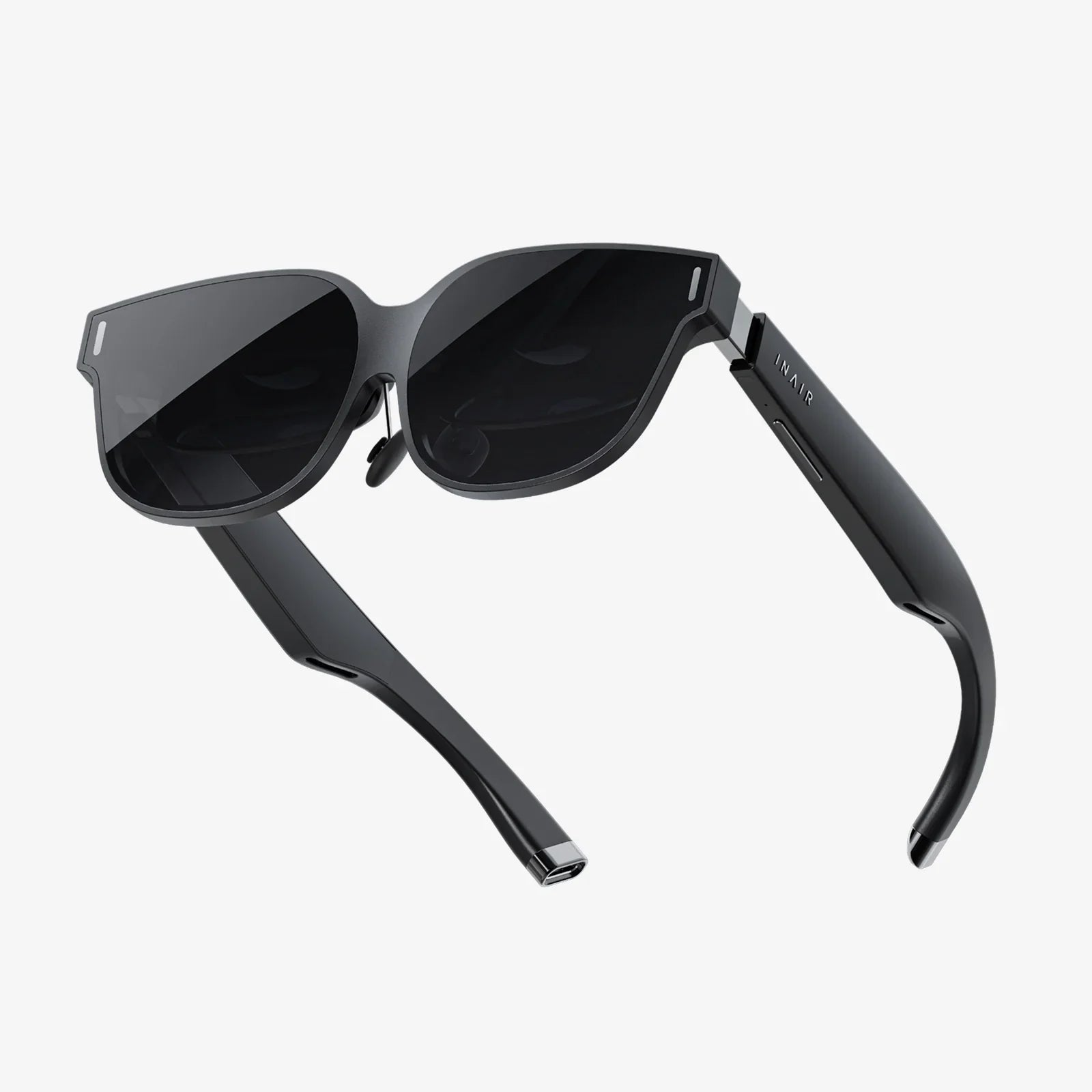
Imagine a world where digital information doesn't just live on a screen but is seamlessly woven into the fabric of your everyday life, enhancing your perception, informing your decisions, and transforming how you work, learn, and play. This is the tantalizing promise of augmented reality (AR), a technology that has spent decades in the wings but is now stepping decisively into the spotlight. The journey from science fiction to tangible reality has been long and winding, but we are now at a pivotal moment where the foundational pieces are in place, setting the stage for a revolution that could redefine our relationship with technology.
From Niche Novelty to Mainstream Momentum
The narrative surrounding AR has dramatically shifted. Once perceived as a gimmick largely confined to viral social media filters and a single breakout mobile game, the technology has matured into a serious tool with profound implications across countless industries. The catalyst for this shift was the widespread adoption of powerful smartphones, which placed a capable AR device in billions of pockets almost overnight. This ubiquitous hardware platform democratized access and allowed developers and users alike to experiment with the technology's potential without a significant upfront investment.
This period of experimentation was crucial. It moved the conversation beyond mere entertainment and into practical utility. Today, the current state of augmented reality is characterized by a vibrant and expanding ecosystem. It is no longer a question of if AR will be impactful, but rather how and where its impact will be most profoundly felt. The technology is currently straddling two worlds: the accessible, marker-based experiences on mobile devices and the more immersive, hands-free potential of dedicated wearable headsets. This duality defines the present moment, offering a spectrum of experiences from the simple to the sophisticated.
The Hardware Landscape: A Spectrum of Experience
The devices enabling AR experiences today can be broadly categorized into three tiers, each offering a different level of immersion and capability.
1. Smartphone-Based AR: The Gateway
The smartphone remains the most common portal to augmented reality. By leveraging high-resolution cameras, powerful processors, and a suite of sensors (gyroscopes, accelerometers, GPS), modern handheld devices can overlay digital content onto the real world with surprising accuracy. This approach's greatest strength is its accessibility; it requires no new hardware for most consumers. Applications range from trying on glasses virtually and visualizing new furniture in a living room to interactive educational models springing from textbook pages. However, the experience is limited by the device's form factor—users must hold up their phone, obstructing their natural view and limiting prolonged use.
2. Standalone AR Headsets: The Emerging Workhorses
This category represents a significant leap forward. These self-contained wearable devices, often taking the form of glasses or visors, are designed specifically for augmented reality. They project digital imagery directly onto transparent lenses or use cameras to pass through a video feed of the real world, which is then augmented with digital information. The key advantage is the hands-free, immersive experience, allowing users to interact with digital content while maintaining full use of their hands and a largely unobstructed field of view. These devices are rapidly becoming essential tools in enterprise and industrial settings, enabling complex tasks like remote assistance, digital workflow guidance, and sophisticated design visualization.
3. Hybrid and MR Headsets: Blending Realities
At the cutting edge are devices that blur the line between AR and virtual reality (VR), often referred to as Mixed Reality (MR) headsets. These advanced wearables typically feature opaque displays but use high-resolution outward-facing cameras to digitally reconstruct the user's environment in real-time. This allows for incredibly precise occlusion, where digital objects can convincingly pass behind real-world physical objects, creating a near-seamless blend. While currently the domain of developers, enterprises, and early adopters due to their cost and complexity, these devices represent the likely future of immersive computing, offering the highest fidelity integration of the digital and physical worlds.
Software and Development: Building the AR Metaverse
Powerful hardware is useless without sophisticated software to drive it. The current software ecosystem for AR is robust and developer-friendly, largely due to the efforts of major technology platforms that have created accessible development kits. These software frameworks provide the essential building blocks for AR applications, such as:
- Motion Tracking: Precisely understanding the device's position and orientation in space.
- Environmental Understanding: Detecting horizontal planes (floors, tables) and vertical surfaces (walls) to anchor digital content.
- Light Estimation: Analyzing ambient light to allow digital objects to cast realistic shadows and blend with their surroundings.
- Object Recognition: Identifying specific objects or images to trigger AR experiences.
These tools have dramatically lowered the barrier to entry for creating AR experiences. Furthermore, the emergence of WebAR is a significant trend. This technology allows users to access AR experiences directly through a web browser without needing to download a dedicated application. This frictionless access is pivotal for mass adoption, enabling everything from instant product visualizations on e-commerce sites to interactive marketing campaigns.
Transforming Industries: AR's Practical Revolution
While consumer applications capture headlines, the most profound and immediate impact of AR is occurring within enterprise and industrial sectors. Here, the technology is providing tangible returns on investment by solving real-world problems.
Manufacturing and Field Service
Technicians wearing AR glasses can receive remote expert guidance, with digital arrows and annotations overlaid directly onto the machinery they are repairing. Complex assembly instructions can be projected onto workstations, reducing errors and training time. This "see-what-I-see" capability is revolutionizing maintenance, repair, and operations (MRO) workflows.
Healthcare and Medicine
Surgeons are using AR to visualize patient anatomy, such as CT scans and MRI data, projected directly onto the surgical field, improving precision and outcomes. Medical students can learn anatomy through interactive 3D holograms, and nurses can use AR to locate veins more accurately for injections.
Retail and E-Commerce
The ability to "try before you buy" has been supercharged. Customers can see how a new sofa fits in their room, how clothes look on their avatar, or how a new shade of paint appears on their walls. This not only enhances customer confidence but also significantly reduces return rates.
Education and Training
Textbooks are becoming living documents. Students can explore the solar system from their desk, dissect a virtual frog, or walk through historical sites reconstructed in their classroom. AR provides an engaging, interactive learning modality that caters to different learning styles.
Persistent Challenges on the Path to Ubiquity
Despite the exciting progress, the current state of augmented reality is not without its significant hurdles. Several challenges must be overcome for AR to achieve its full potential and become as commonplace as the smartphone.
- Hardware Limitations: For wearable AR to become mainstream, the form factor must evolve. Ideal AR glasses need to be as lightweight, comfortable, and socially acceptable as regular eyeglasses. Battery life remains a constraint, often limiting use to a few hours. Achieving photorealistic rendering that perfectly blends with real-world lighting is also computationally intensive and remains a work in progress.
- The Social Conundrum: Wearing technology on your face in public raises questions of social etiquette, privacy, and digital distraction. The concept of "presence" is challenged when one person in a conversation is partially immersed in a digital layer. Establishing norms for this new form of interaction will be a societal, not just a technological, challenge.
- Content and the Killer App: While there are many valuable enterprise applications, a definitive consumer "killer app" for AR wearables—an application so compelling it drives mass adoption—has yet to emerge. The ecosystem needs a continuous stream of high-quality, engaging content to sustain user interest beyond initial novelty.
- Privacy and Security: AR devices, with their always-on cameras and microphones, collect unprecedented amounts of data about a user's environment and behavior. This raises serious concerns about data ownership, surveillance, and security. Creating clear ethical guidelines and robust security frameworks is paramount.
Glimpsing the Future: The Invisible Interface
The trajectory of AR points toward a future where the technology becomes an invisible interface, a seamless layer of cognition enhancing our daily lives. We are moving toward contextually aware systems that deliver information proactively but unobtrusively—imagine walking through a foreign city and having translations and historical facts appear next to landmarks automatically, or having your grocery list guide you through the store, highlighting items on the shelves.
The convergence of AR with other transformative technologies like 5G (and eventually 6G), artificial intelligence, and the Internet of Things (IoT) will unlock new possibilities. AI will power more intelligent object recognition and contextual understanding, while high-speed, low-latency networks will enable complex rendering to be processed in the cloud, allowing for thinner, lighter client devices. This will ultimately lead to the long-predicted dream of the "spatial web," where digital information is mapped to physical locations, creating a persistent, shared AR layer over the entire world.
The current state of augmented reality is one of dynamic transition and immense potential. It has successfully graduated from its infancy, proving its value in professional settings and capturing the public's imagination. The foundational technologies are advancing at a breakneck pace, the developer tools are more powerful than ever, and real-world applications are delivering measurable value today. The path forward is not without obstacles, but the direction is clear. We are steadily marching toward a future where the digital and physical realms are no longer separate, but are fused into a single, enhanced continuum of experience. The bridge between our world and the digital one is being built before our eyes, and it is a sight to behold.
Share:
VR Headset Goggles: Your Portal to New Realities and the Future of Human Connection
Projector Glasses: The Ultimate Guide to Wearable Display Technology