


- by wangfred
Top AI Glasses 2025: The Dawn of a Seamless Augmented Reality Future
- by wangfred
Imagine a world where information flows as effortlessly as sight, where digital intelligence is woven into the very fabric of your perception, and the boundary between the physical and virtual realms dissolves into a seamless, intuitive experience. This is no longer the stuff of science fiction; it is the promise held by the top AI glasses of 2025, a new class of wearable technology poised to redefine our relationship with computing, information, and each other. The race to create the ultimate pair of intelligent eyewear is heating up, moving beyond clunky prototypes and niche applications into a era of genuine mainstream potential.
The journey to the sophisticated devices of 2025 has been a long one. Early attempts at smart glasses were often hampered by bulky designs, short battery life, limited functionality, and a significant social stigma. They were either hyper-specialized tools for industrial use or consumer gadgets that failed to find a compelling reason to be worn all day. The turning point has been the convergence of several critical technological advancements. The miniaturization of components, breakthroughs in low-power processing, and the maturation of artificial intelligence have finally aligned to make true ambient computing a reality.
The fundamental shift in 2025 is not just about what these glasses can do, but how they do it. The focus has moved from augmented display to contextual intelligence. Instead of merely projecting a heads-up display (HUD), the top models now act as a perceptual extension of the user, using a suite of sensors and on-device AI to understand the world around them and provide relevant, timely information without overwhelming the wearer.
So, what separates the best from the rest this year? Several key features have become the hallmarks of top-tier AI eyewear.
The brains of the operation are no longer in the cloud. Thanks to powerful, yet incredibly efficient, dedicated neural processing units (NPUs) built into the frames, the top AI glasses of 2025 process data locally. This enables real-time responsiveness, crucial for tasks like live translation or object recognition, while also enhancing user privacy by minimizing the need to stream personal audio and video data to remote servers. This on-device intelligence allows for personalized experiences that learn from user behavior and preferences over time.
Interacting with these devices feels natural and intuitive. Voice assistants have become remarkably advanced, capable of understanding context and natural language with near-human accuracy. However, the real innovation is in combining voice with other modalities. Subtle touch panels on the temples, gesture recognition (allowing you to swipe through menus in the air), and even emerging technologies like subvocalization detection or capacitive sensors that read facial muscle movements are creating a rich tapestry of input methods. You choose the mode that is most appropriate and discreet for your situation.
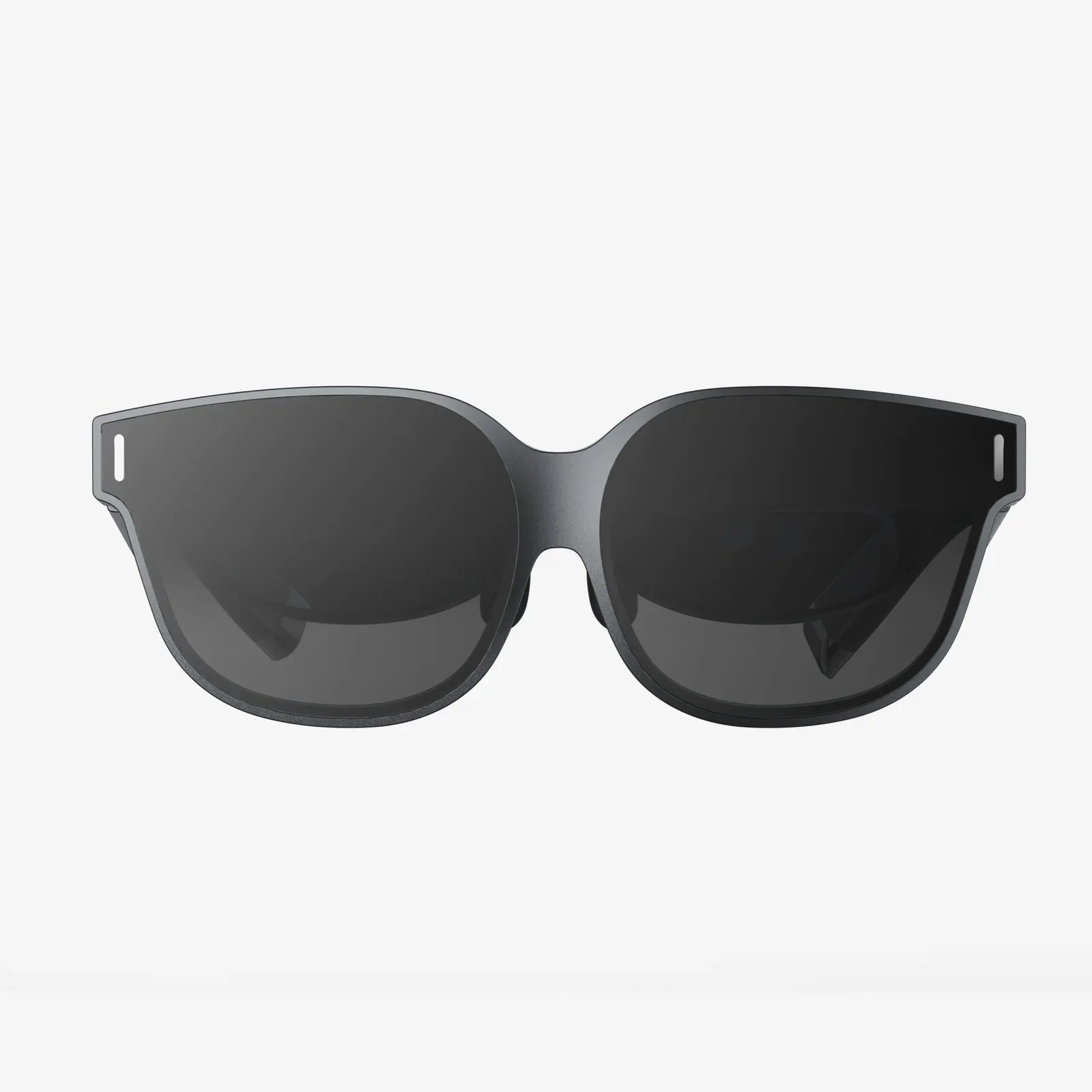
Form factor is everything. The top contenders in 2025 look strikingly similar to high-end traditional eyewear. They are lightweight, comfortable, and come in a variety of styles to suit personal taste. The once-visible cameras and projectors are now seamlessly integrated into the frame. Battery life, often the Achilles' heel of wearables, now consistently lasts a full waking day, with sleek magnetic charging cases providing top-ups on the go. This focus on aesthetics and comfort is critical for overcoming the final barrier to widespread adoption.
These glasses are not just worn; they are aware. They understand their position in space relative to other objects thanks to advanced simultaneous localization and mapping (SLAM) technology. A complex array of sensors—including high-resolution RGB cameras, depth sensors, LiDAR, and inertial measurement units (IMUs)—creates a real-time 3D map of your environment. This allows digital objects to interact convincingly with the physical world. Directions can be painted onto the sidewalk in front of you, a virtual monitor can appear fixed to your wall, or a recipe can hover stably over your mixing bowl.
The potential applications for this technology are vast and are already beginning to transform numerous sectors.
For the professional, AI glasses are becoming the ultimate productivity tool. Imagine attending a virtual meeting where life-sized holograms of your colleagues sit around your table, all while you have your hands free. Complex manuals or schematics can be overlaid directly onto the machinery you are repairing. Real-time data dashboards can be visible only to you during a presentation. For remote assistance, an expert can see exactly what a field technician sees and annotate their world with arrows and notes to guide them through a complex procedure, drastically reducing downtime and errors.
Navigation moves beyond a blue dot on a phone screen. Directions are intuitively integrated into your path, with arrows appearing on the street corner you need to turn at. For tourists, historical information about a landmark can pop up as you look at it, and restaurant reviews and menus can be viewed by simply glancing at the establishment. This creates a layer of discoverable information atop the entire world.
One of the most immediately impactful features is real-time translation. Conversing with someone who speaks a different language becomes effortless. As they speak, subtitles appear in your field of view, translated instantly and accurately. Similarly, text in the world—street signs, menus, documents—can be translated on the fly. This functionality alone has profound implications for global business, travel, and cultural exchange.
AI glasses are emerging as powerful assistive devices. For individuals with visual impairments, they can identify and read out text, recognize faces and describe expressions, detect obstacles, and highlight curbs or doorways. For those with hearing impairments, they can provide real-time captioning of conversations. They can even be tuned to amplify specific sounds or filter out background noise, enhancing auditory perception for everyone.
With such transformative power comes significant responsibility. The widespread adoption of always-on, camera-equipped AI glasses raises critical questions that society must grapple with.
The concept of privacy in public is being fundamentally challenged. The ability to surreptitiously record video, identify strangers using facial recognition, or gather data on people's activities without their consent creates a potential for surveillance that is unprecedented. The top manufacturers are addressing this with clear hardware indicators—like LED lights that show when recording is active—and robust privacy controls that give users ownership over their data. However, a broader cultural and legal conversation about digital etiquette and the "right to be forgotten" in public is urgently needed.
There is a risk that this technology could exacerbate existing inequalities. If AI glasses become essential tools for work, education, and social interaction, a new kind of digital divide could emerge between those who can afford them and those who cannot. Furthermore, the constant access to a digital overlay could impact attention spans, reduce serendipitous real-world interactions, and change the nature of memory and experience. The constant temptation to augment reality might lead some to disengage from it altogether.
These devices collect a staggering amount of sensitive personal and environmental data. Securing this data from malicious actors is paramount. A breach could reveal everything from a user's daily routines and personal conversations to the layout of their home and workplace. Ensuring end-to-end encryption and giving users transparent control over their data is not a feature but a foundational requirement for any reputable device in this category.
The AI glasses of 2025 are impressive, but they are merely a stepping stone. The trajectory points toward even more profound integration. We are moving toward contact lenses with full AR capabilities, and further out, to potential neural interfaces that could project information directly into our visual cortex, eliminating the need for a physical device altogether. The ultimate goal is technology that feels less like a tool and more like an extension of our own cognition—a true partnership between human and machine intelligence.
The top AI glasses of 2025 are not just another gadget; they are the harbinger of the next computing paradigm. They represent a shift away from pulling a rectangle out of our pocket and toward a future where computing is ambient, contextual, and seamlessly integrated into our lives. The challenges are real and must be navigated with care, but the potential to enhance human capability, connect us in new ways, and help us perceive and understand our world more deeply is an opportunity too significant to ignore. The future is not on your phone screen; it's right in front of your eyes, waiting to be unlocked.
Share:
How Do Smart Sunglasses Work: A Deep Dive Into Wearable Tech
AR Glasses Virtual Monitors: The End of the Physical Screen and the Dawn of a New Digital Workspace