


Imagine slipping on a headset and instantly being transported to the front row of a concert on the other side of the world, walking on the surface of Mars, or sitting face-to-face with a long-lost relative. This is the tantalizing promise of virtual reality, a technology that has captivated our collective imagination for decades. But as we stand amidst a new wave of VR innovation, a pressing question echoes through tech conferences, living rooms, and research labs alike: Virtual Reality, how far are we, truly, from that seamless, all-encompassing digital future we were promised?
The Genesis: A Journey from Prototype to Promise
The concept of virtual reality is far from new. Its roots can be traced back to the mid-20th century, with Morton Heilig's Sensorama machine in the 1960s, which attempted to engage multiple senses for a cinematic experience. The term itself was popularized in the 1980s by Jaron Lanier, whose company, VPL Research, developed some of the first commercial goggles and gloves. These early iterations were bulky, prohibitively expensive, and offered low-fidelity graphics, confining them primarily to university and military research facilities. The 1990s saw a failed attempt to bring VR to the masses with clunky arcade systems and infamous home console add-ons that ultimately delivered more nausea than immersion, casting a long shadow over the technology's potential.
This cycle of hype and disappointment defined VR for years. The technology remained on the periphery, a fascinating but impractical novelty. The turning point arrived in the 2010s, driven by a convergence of factors: the proliferation of powerful mobile processors, high-definition displays, and precise motion-tracking sensors—all initially developed for the smartphone industry. A pivotal moment was the success of a grassroots development kit, which demonstrated that compelling, immersive VR was finally within technological and financial reach, leading to the launch of the first generation of modern PC-powered headsets. This marked the end of VR's winter and the beginning of its earnest, albeit still evolving, spring.
The Present Landscape: Where We Stand Today
Today's virtual reality landscape is a vibrant and complex ecosystem. We have advanced tethered headsets that deliver high-fidelity, immersive experiences powered by powerful computers. Simultaneously, a revolution has occurred with all-in-one devices. These standalone headsets have integrated all necessary computing power, sensors, and displays into a single wireless unit, severing the physical tether to a PC and dramatically lowering the barrier to entry. This has been the single biggest driver of mainstream adoption, making VR accessible, convenient, and social.
The applications have expanded far beyond gaming. While interactive entertainment remains a massive driver, VR is now a serious tool in fields like:
- Medicine and Healthcare: Surgeons train for complex procedures in risk-free simulated environments. Medical students explore detailed anatomical models in 3D. Therapists use controlled VR exposures to treat phobias, anxiety, and PTSD.
- Education and Training: Students can take virtual field trips to historical sites or inside the human bloodstream. Corporations from aviation to retail train employees in complex tasks and soft skills through realistic simulations.
- Enterprise and Design: Architects and engineers walk clients through unbuilt structures. Design teams around the world collaborate on 3D models in a shared virtual space as if they were in the same room.
- Social Connection: Platforms exist where users, represented by digital avatars, can meet, watch movies, play games, and attend events, creating a nascent version of the much-hyped metaverse—a persistent network of shared virtual spaces.
This demonstrates a significant leap. We are no longer asking if VR works, but rather how it can be best applied to solve real-world problems and create meaningful human connections.
The Technological Frontiers: Breaking Through the Barriers
Despite this incredible progress, the question "how far are we" implies a journey toward an ideal. That ideal is a perfect "virtual reality"—an experience so seamless, comfortable, and convincing that the brain accepts it as real. We are not there yet, and several significant technological hurdles remain.
Visual Fidelity and The Screen Door Effect
Early headsets suffered from a low resolution and a visible "screen door effect," where users could perceive the gaps between pixels. While modern devices have made massive strides with higher-resolution displays, often using fast-switching LCDs or vibrant OLED panels, the quest for perfection continues. The next frontier is varifocal displays, which dynamically adjust focus to mimic how our eyes naturally work, reducing eye strain and increasing realism. Furthermore, achieving photorealistic graphics in real-time requires immense computational power, pushing the limits of current hardware.
The Comfort Conundrum: Form Factor and Ergonomics
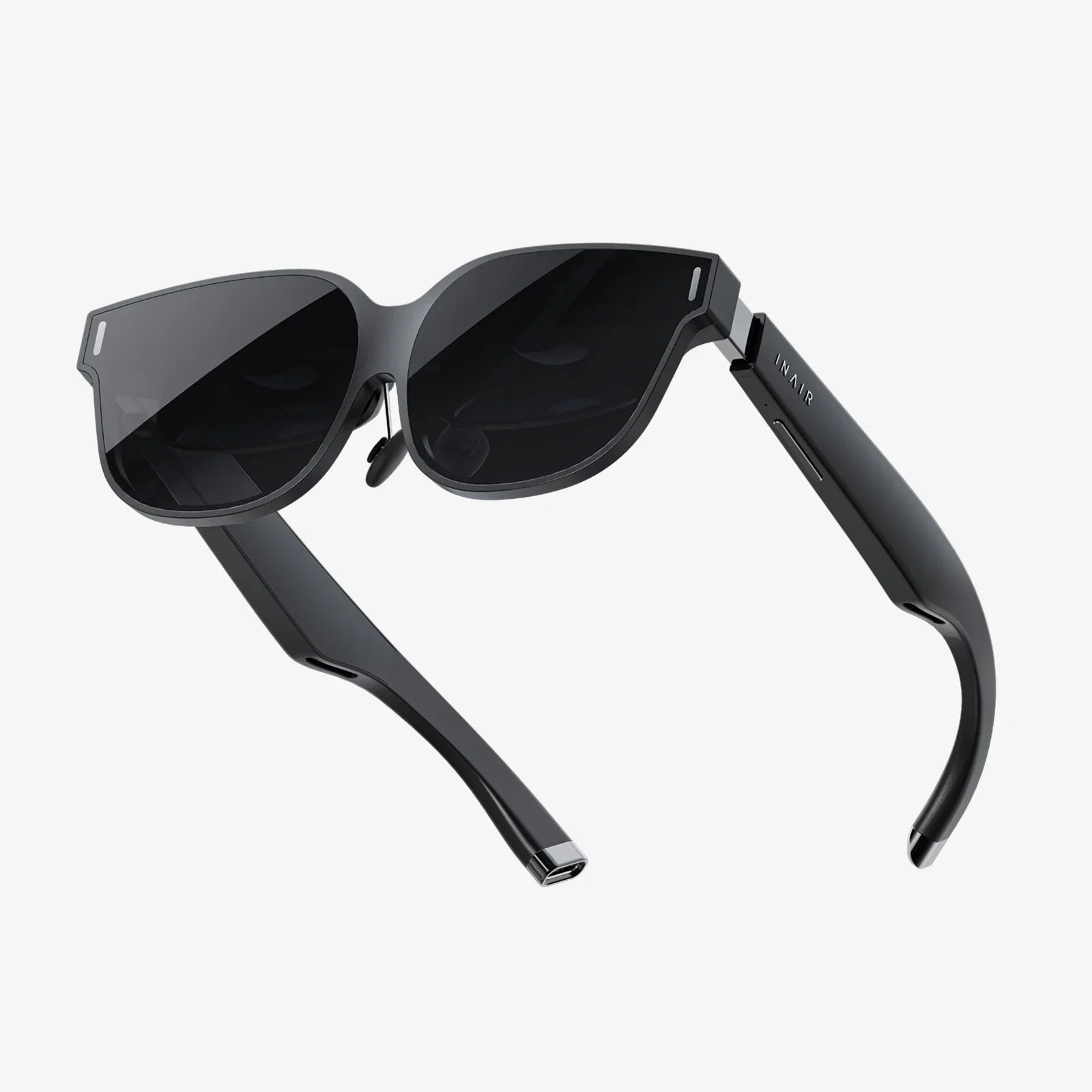
For VR to become a all-day productivity or social platform, the hardware must become as comfortable and socially acceptable as a pair of eyeglasses. Current headsets, even the standalone ones, are still too heavy, too bulky, and too isolating. The industry is aggressively pursuing smaller, lighter form factors using pancake lenses and new material science. The ultimate goal is a pair of sleek, stylish glasses that can seamlessly transition between augmented reality (AR) and virtual reality (VR), a form factor that would truly unlock ubiquitous computing.
Conquering Cybersickness: A Physiological Hurdle
A significant portion of users experiences cybersickness, a form of motion sickness caused by a disconnect between what the eyes see (movement in the virtual world) and what the vestibular system in the inner ear feels (no physical movement). This is one of the most persistent barriers to adoption. Mitigation strategies include higher refresh rates (90Hz and above), improved positional tracking for rock-solid stability, and software techniques like vignetting during movement. However, a full solution may require a fundamental breakthrough in inner ear stimulation or neural interfacing.
The Input Problem: Beyond Controllers
Hand-held controllers are effective but inherently artificial. The next evolution is towards natural input. Inside-out tracking now allows most headsets to use onboard cameras to track the user's hands with increasing accuracy, enabling gesture-based controls. Haptic feedback technology is also advancing, from simple vibrations in controllers to more sophisticated gloves and vests that can simulate touch, pressure, and impact. The holy grail is a full-brain interface that could translate neural signals into digital actions, but this remains firmly in the realm of long-term research.
The Societal and Economic Hurdles
The journey of VR is not just a story of transistors and code; it is also shaped by human and economic factors.
- Content Ecosystem: Hardware is useless without compelling software. While the library of VR experiences grows daily, it still lacks a vast, must-have "killer app" that would drive every household to purchase a headset, akin to the spreadsheet for the PC or the browser for the internet. The development of such an application, whether in entertainment, social connection, or productivity, is critical.
- Cost and Accessibility: Prices have fallen dramatically, but a quality VR setup still represents a significant investment for the average consumer. Further reducing costs while increasing capability is a constant challenge for manufacturers.
- Privacy and Ethics: Immersive VR collects unprecedented amounts of biometric data—eye gaze, body movement, voice recordings, even emotional responses. This raises profound questions about data ownership, psychological manipulation, and surveillance that society is only beginning to grapple with.
- The Social Divide: As with any new technology, there is a risk of a digital divide. Will access to immersive education and revolutionary telepresence be available to all, or will it become a privilege for the wealthy, exacerbating existing social inequalities?
The Horizon: What Does "There" Look Like?
So, how far are we? We are past the starting line and well into the race, but the finish line is still on the horizon. The next five to ten years will be defined by the erosion of the remaining barriers. We will see headsets evolve into glasses, haptic suits become more common, and social VR platforms become as normalized as video calling is today. The lines between VR and its cousin, augmented reality (AR), will blur into a spectrum of mixed reality (MR) experiences.
The true endpoint, the moment we can say "we have arrived," is not about a specific technical specification. It will be the moment when VR ceases to be a distinct "technology" we consciously use and simply becomes a seamless tool and a natural medium. It will be when a doctor doesn't "use VR" to plan a surgery but simply "plans the surgery"; when friends don't "meet up in VR" but simply "meet up." It will be when the headset itself disappears, either miniaturized into everyday wearables or rendered obsolete by direct neural interfaces—a development that is still the stuff of science fiction but is the subject of serious, albeit early, scientific inquiry.
The distance we have left to travel is measured not just in pixels and milliseconds, but in creativity, ethical foresight, and cultural adoption. The hardware is racing ahead, but it must be guided by human-centric design and purposeful application. We are building the foundation of a new reality, and its ultimate shape will be determined by the choices we make today. The journey from a novel gaming peripheral to a fundamental transformative technology is underway, and every breakthrough brings the horizon of that full, seamless virtual reality tantalizingly closer. The question is no longer if it will happen, but how quickly we can get there, and more importantly, what we will choose to build when we do.
You've now glimpsed the present and future of a technology poised to redefine human experience—the next step is to see it for yourself and decide where you believe the final frontier truly lies.
Share:
How to Try Virtual Reality: Your Ultimate Guide to Entering the Metaverse
Virtual Reality in Everyday Life: The Seamless Integration of the Digital and Physical Worlds