


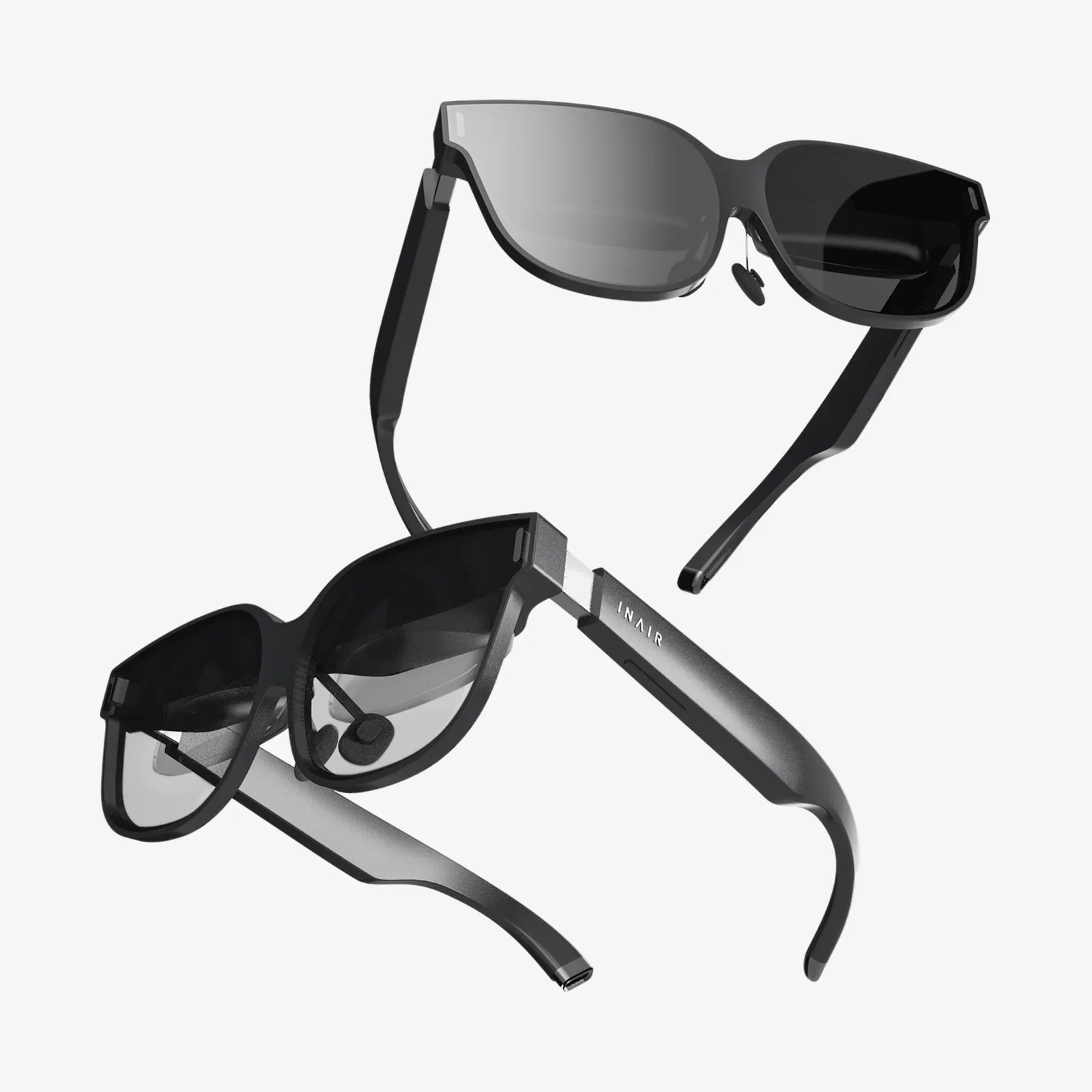
- by wangfred
VR & Augmented Reality Companies: Architects of a New Digital Reality
- by wangfred
The digital and physical worlds are colliding, and at the epicenter of this seismic shift are the pioneering VR & augmented reality companies quietly building the infrastructure for our future. What was once the stuff of science fiction is now a multi-billion-dollar industry, teeming with innovation, competition, and the promise of fundamentally altering how we work, play, learn, and connect. This isn't just about putting on a headset; it's about a fundamental reimagining of human-computer interaction, and the race to define this new paradigm is already underway.
Before diving into the ecosystem, it's crucial to understand the distinct domains these companies operate within. While often grouped together, Virtual Reality (VR) and Augmented Reality (AR) offer profoundly different experiences.
Virtual Reality companies are in the business of immersion. They create entirely digital, computer-generated environments that replace the user's real-world surroundings. Using headsets that block out the physical world, these experiences transport users to fantastical game worlds, meticulous surgical simulators, or virtual meeting rooms. The goal is presence—the convincing feeling of being somewhere else.
Augmented Reality companies, conversely, focus on overlay. They superimpose digital information—images, text, 3D models—onto the user's view of the real world. This is typically achieved through transparent lenses in smart glasses or, more commonly today, through the camera view on a smartphone or tablet. The goal here is contextual enhancement, providing relevant data and interactions within your existing environment, from navigation arrows on the street to repair instructions hovering over a malfunctioning engine.
A third, often-mentioned category is Mixed Reality (MR), which sits on the spectrum between AR and VR. MR not only overlays digital objects but also allows them to interact with and be occluded by the physical world in real-time, creating a more cohesive and believable blend of realities.
The ecosystem of VR & augmented reality companies is not a monolith. It is a complex, interconnected stack of specialized firms, each contributing a critical piece of the puzzle. This structure can be broken down into several key layers.
This layer comprises the companies designing and producing the physical devices that serve as our portals into these new realities. This is a fiercely competitive space, requiring expertise in advanced optics, display technology, sensor fusion, ergonomics, and power management.
On the VR side, the market is segmented. There are standalone, all-in-one headsets that offer wireless freedom and accessibility, and there are tethered headsets, connected to powerful computers or consoles, which deliver the highest-fidelity, most immersive experiences. Companies here are engaged in a constant arms race to increase resolution, expand field-of-view, reduce latency and weight, and develop more intuitive controllers and input methods.
The AR hardware landscape is arguably even more challenging. The holy grail is a pair of socially acceptable smart glasses that can deliver high-quality, persistent augmentation throughout the day. This requires monumental leaps in waveguide optics, battery life, processing power, and thermal management. Current offerings range from enterprise-focused glasses designed for specific tasks to more nascent consumer prototypes.
If hardware is the body, software is the soul. This layer includes the companies building the operating systems, development platforms, and engines that power XR experiences. These are the foundational tools upon which everything else is built.
Key players here include the developers of major game engines, which have become the de facto standard for creating real-time 3D content for VR and AR. Their powerful toolsets allow creators to build worlds, script interactions, and optimize performance across a myriad of devices.
Furthermore, dedicated XR platform companies provide crucial software infrastructure. This includes features like robust tracking systems that understand the user's environment (a process known as simultaneous localization and mapping, or SLAM), cross-device application stores, social avatars and networking layers, and cloud services for storing and streaming complex 3D assets.
This is the most diverse and creatively explosive layer of the ecosystem. It encompasses a vast array of studios and developers focused on creating the actual applications, games, and experiences that give the technology its purpose and value.
Behind the scenes, a critical layer of specialized technology companies provides the essential components and IP that make advanced XR possible. These are the unsung heroes powering innovation.
This includes firms specializing in:
The XR industry is being shaped by powerful economic currents and strategic battles. Currently, the enterprise sector is a primary driver of revenue for many AR companies and a significant portion of the VR market. The value proposition is clear: increased efficiency, reduced errors, enhanced training outcomes, and remote collaboration all translate into a strong return on investment for businesses.
The consumer market, while massive in potential, has been more challenging. VR gaming is well-established but still niche, and the dream of all-day AR glasses for the masses remains on the horizon. Adoption is hampered by the classic challenges of cost, content library (the "killer app"), and hardware comfort.
Investment and mergers & acquisitions activity is intense. Major technology giants are investing billions, either through internal development or by acquiring promising startups to bolster their portfolios. This consolidation is creating powerful vertically-integrated stacks, where one company controls the hardware, software, and platform. Simultaneously, there is a vibrant ecosystem of independent startups focusing on specific niches or promoting open standards to ensure a diverse and interoperable future.
For all its progress, the industry must clear significant technological and societal hurdles to achieve its full potential.
The trajectory of VR & augmented reality companies points toward a future where digital information is seamlessly integrated into our perception of reality. We are moving toward spatially aware interfaces that understand our context and intent. The line between creator and consumer will blur as tools for building virtual worlds become more accessible.
The ultimate vision, often called the "metaverse," is a network of interconnected, persistent virtual spaces—a successor to the mobile internet. It won't be built by any single company but will be a collaborative effort across this entire ecosystem. In this future, VR & augmented reality companies will be the architects of our new shared reality, transforming every industry and reshaping human experience in ways we are only beginning to imagine. The foundations are being poured today, and the blueprint for tomorrow is being drawn in code and light.
Imagine a world where your field of vision becomes an infinite canvas, where knowledge appears as you need it, and where distance is no barrier to shared experience. This is the destination, and the journey is being mapped by the relentless innovation and fierce competition within the ranks of today's VR and augmented reality pioneers. The next decade will not be about simply adopting new gadgets, but about navigating a fundamental shift in the very fabric of reality itself, all engineered by the visionaries building the next great computing platform right before our eyes.
Share:
Simple Definition of Augmented Reality: A Beginner's Guide to the Digital Overlay
The Glasses Multimodel AI Now: A New Vision for Human-Computer Interaction