


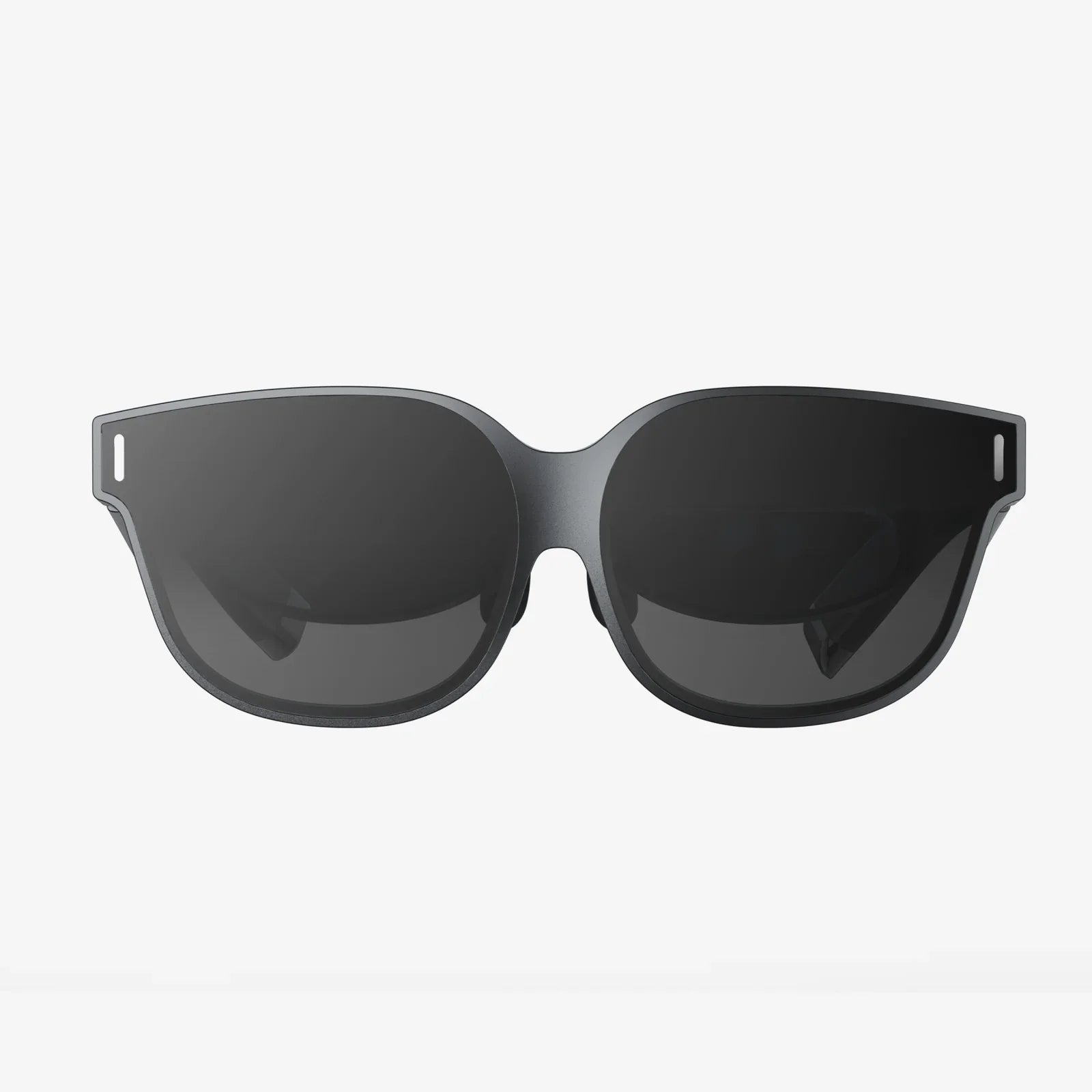
You slip it over your eyes, a seemingly simple piece of wearable technology, and in an instant, the world you know vanishes. The hum of your room is replaced by the serene sounds of a deep ocean trench, the chatter of a foreign marketplace, or the stark silence of a lunar landscape. This is the immediate magic, the undeniable allure. But to truly understand what a VR headset means, we must dive far deeper than the initial spectacle. It means more than just gaming or entertainment; it is a fundamental shift in the human-computer interface, a redefinition of presence, and a portal that is challenging our very perception of what is real and what is possible.
The Literal Anatomy: More Than Just a Screen on Your Face
At its most basic, functional level, a VR headset, or head-mounted display (HMD), is a device that isolates your visual and auditory senses from your physical environment and replaces them with a digitally generated one. But this simple description belies a symphony of complex technology working in perfect harmony.
The core components include:
- High-Resolution Displays: Positioned mere centimeters from your eyes, these screens provide a stereoscopic image—a slightly different view for each eye—which is the foundational trick that creates the illusion of depth and three-dimensionality.
- Precision Lenses: Placed between your eyes and the displays, these lenses focus and reshape the flat images, wrapping your field of view and making the virtual world appear life-sized and immersive.
- Advanced Tracking Systems: This is where the magic of presence is truly conjured. A combination of internal sensors (like gyroscopes and accelerometers) and external cameras or lasers tracks the precise rotation and translation of your head. This means when you turn, tilt, or lean, the world responds instantly and fluidly, maintaining the illusion and preventing the disorientation known as simulator sickness.
- Immersive Audio: Spatial or 3D audio is non-negotiable. It means sounds don’t just play in your ears; they come from specific points in the virtual space. The chirp of a bird will subtly shift as you turn your head, and footsteps behind you will sound exactly that—behind you. This auditory layer is critical for suspending disbelief.
- Controllers and Haptic Feedback: Our interaction with the world is not purely visual and auditory; it is tactile. VR controllers, and increasingly advanced haptic gloves and suits, allow you to reach into the digital realm and manipulate it. The sensation of a vibration when you pull a virtual trigger or the resistance felt when pushing a button completes the feedback loop, making the experience tangible.
This intricate hardware ballet is useless without the software to guide it. Powerful rendering engines draw the complex worlds in real-time, ensuring that every movement is met with a flawless visual response. It is this seamless marriage of cutting-edge hardware and sophisticated software that transforms a helmet of components into a window to another existence.
The Philosophical Shift: Redefining Presence and Experience
Beyond the silicon and code, the true meaning of a VR headset is philosophical. It represents a fundamental leap in how we experience digital information. For decades, we have interacted with computers through a pane of glass—a monitor, a smartphone screen. We observed worlds from the outside looking in. VR shatters that pane.
It means the democratization of experience. It means a student in a under-resourced classroom can don a headset and stand amidst the Roman Forum, watching history unfold around them, rather than merely reading about it in a textbook. It means a medical student can perform a complex surgical procedure dozens of times in a risk-free environment, gaining muscle memory and confidence before ever touching a real patient. It means an elderly individual confined to their home can virtually visit the Louvre or walk along a beach, combating isolation and improving mental well-being.
This technology challenges the very concept of "presence." Where are you when your physical body is in a living room, but your conscious mind is utterly convinced it is navigating a space station? VR introduces a form of teleportation not for the body, but for the mind. It creates a powerful psychological state where the brain accepts the virtual environment as its reality. This phenomenon, known as "embodiment,"> can be so strong that studies have shown that experiencing a virtual body of a different age, race, or even species can profoundly alter perceptions and reduce implicit biases.
A VR headset, therefore, is a tool for empathy on an unprecedented scale. It is one thing to watch a documentary about a refugee crisis; it is an entirely different, more visceral thing to experience a simulation of fleeing a conflict zone. This empathic potential is perhaps one of the most profound and socially significant meanings of the technology.
Transformation Across Industries: The Practical Revolution
The theoretical implications are staggering, but the practical applications already underway solidify what a VR headset means for our future. It is not a toy; it is a transformative tool reshaping entire sectors.
Healthcare and Therapy
In medicine, VR means enhanced precision, training, and treatment. Surgeons use VR simulations to plan complex operations, navigating 3D models of a patient's specific anatomy. It is used for physical rehabilitation, turning painful or repetitive exercises into engaging games that improve patient compliance. Perhaps most powerfully, it has revolutionized exposure therapy, allowing patients with phobias, PTSD, and anxiety disorders to confront and manage their triggers in a safe, controlled, and gradual manner.
Education and Corporate Training
VR means moving from passive learning to active doing. Instead of watching a safety video, an employee can experience the consequences of a mistake on a virtual factory floor without any real-world danger. Architects and engineers can walk clients through unbuilt designs, and mechanics can learn to repair complex machinery by taking apart a perfect digital twin. The retention rates for experiential learning in VR dwarf those of traditional methods.
Design and Architecture
For creators, a VR headset is the ultimate prototyping tool. It means stepping inside a car design long before a physical model is built, checking sightlines, ergonomics, and aesthetics at a 1:1 scale. Architects can walk through their buildings, feeling the space and making adjustments to ceiling heights, window placements, and lighting in real-time, saving millions in costly post-construction changes.
Social Connection and Remote Work
In an increasingly global and remote world, VR means the next evolution of communication. Video conferencing is a poor substitute for physical presence. VR social platforms and meeting spaces allow avatars to gather around a virtual whiteboard, make eye contact, use body language, and share a sense of "being there" together. It promises to make remote collaboration more natural, effective, and human.
The Challenges and Responsibilities: Navigating the New Frontier
To discuss what VR means without acknowledging its challenges and ethical dilemmas would be incomplete. This powerful technology is a double-edged sword.
Issues of privacy and data security are paramount. The data a VR headset can collect is incredibly intimate—it’s not just what you search for; it’s how you move, where you look, how you react, your biometric responses. This "biometric data" is a treasure trove that must be protected with robust ethical frameworks and regulations.
There are also serious concerns about prolonged use. The potential for addiction, reality-blurring, and social isolation are real risks that developers and users must be mindful of. Furthermore, ensuring equitable access is crucial to prevent a new "digital divide," where transformative experiences are available only to the wealthy.
The very nature of experience itself becomes malleable, raising questions about authenticity and truth. If we can simulate any reality, how do we ground ourselves in a shared, objective one? These are not technical problems but profound human ones that society must grapple with as the technology matures.
A Glimpse into the Future: The Invisible Interface
The journey of the VR headset is far from over; in fact, it is just beginning. The current generation, while impressive, is still clunky, isolating, and tethered to powerful computers or batteries. The future points toward miniaturization and integration.
We are moving toward sleek, lightweight glasses that can seamlessly toggle between a fully immersive virtual world and an augmented reality overlay on the real world. Advancements in varifocal displays will solve eye strain, and neural interfaces may eventually allow us to navigate virtual spaces with our thoughts alone, making controllers obsolete. The headset itself will fade into the background, becoming an invisible gateway that we dip in and out of as effortlessly as putting on a pair of sunglasses.
This evolution will further blur the lines between the digital and physical, integrating information and experience directly into our perception of reality. It will become less of a distinct device and more of a persistent layer of our existence.
So, the next time you see someone wearing a VR headset, don’t just see a gamer lost in a fantasy. See a surgeon practicing a life-saving technique, an architect feeling the flow of a new space, a grandparent revisiting a childhood home, or a team of colleagues brainstorming as if they were in the same room. A VR headset means the end of the screen and the beginning of experience. It is the key to a million different doors, each leading to a new way to learn, to connect, to heal, and to understand our world and ourselves. The greatest journeys no longer require leaving your home—they simply require the will to look.
Share:
What VR Headset Does Not Require a PC - A Guide to Standalone Freedom
Affordable PC VR Headset 2025: The Ultimate Buyer's Guide to Next-Gen Budget Virtual Reality