


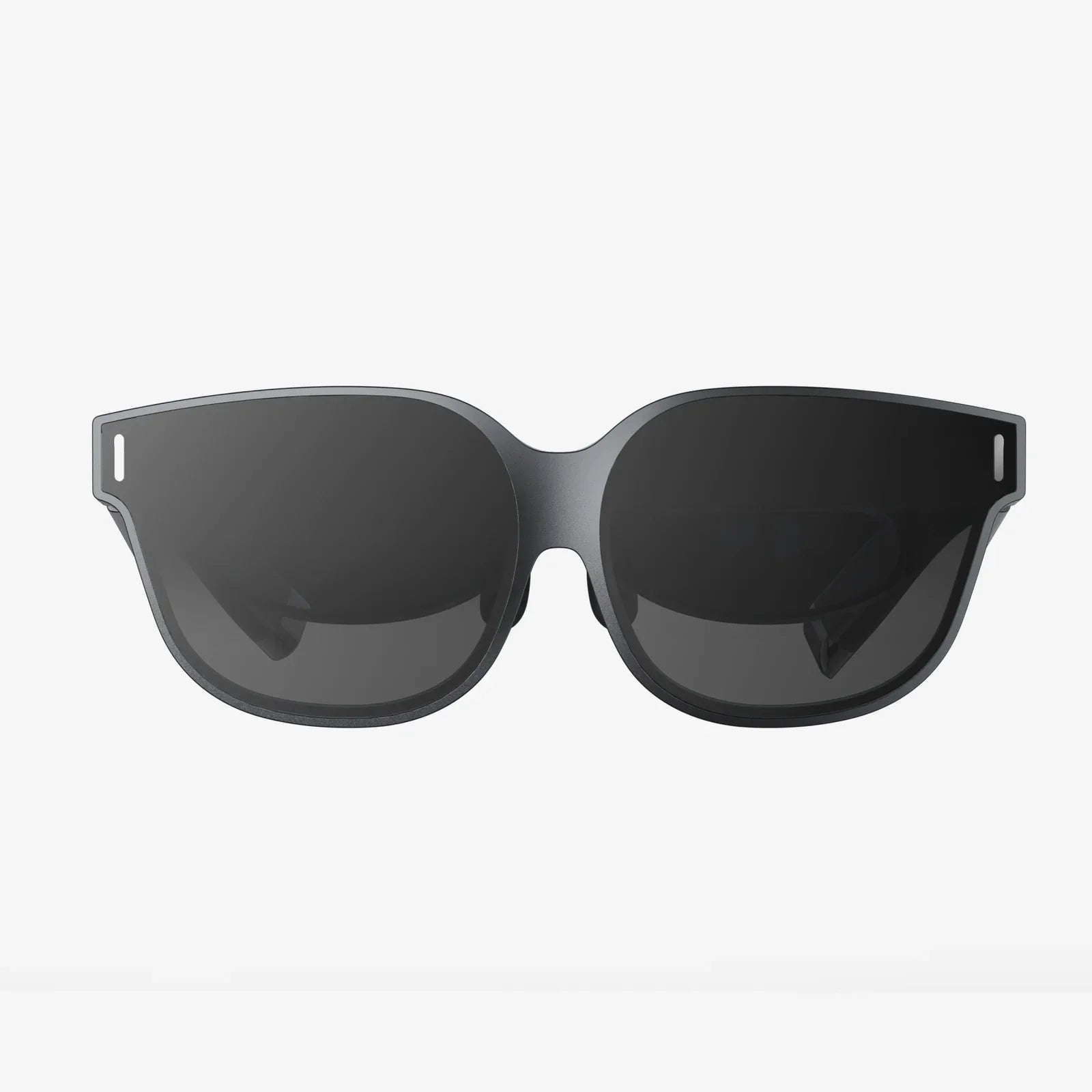
Imagine a world where your entire digital universe—your sprawling multi-monitor workstation, your immersive home theater, your portal to distant friends and places—fits into a pair of sleek glasses you can wear anywhere. This is no longer the stuff of science fiction; it’s the imminent reality being forged by the rapid advancement of VR screen glasses. This technology promises to untether us from our desks and devices, projecting crisp, vast virtual screens into our physical surroundings and fundamentally altering our relationship with information and entertainment. The journey from clunky headsets to elegant, everyday eyewear is underway, and it’s poised to change everything.
Beyond the Headset: Defining the VR Screen Glasses Revolution
The term "VR screen glasses" represents a significant evolution in the field of immersive technology. Unlike their bulkier Virtual Reality (VR) and Mixed Reality (MR) headset predecessors, which often prioritize fully immersive, all-encompassing experiences for gaming or specialized enterprise applications, VR screen glasses have a different, more integrated ambition. Their primary function is not to replace your reality but to augment it seamlessly by superimposing high-resolution, floating virtual displays onto your real-world environment.
Think of them not as a portal to a completely digital world, but as the ultimate personal monitor. You can be sitting on your sofa, in a coffee shop, or on an airplane, and with a tap on the temple of your glasses, a 100-inch screen can appear before you, visible only to you. This core capability—private, portable, and massive screen real estate—is the killer app that distinguishes this category. It’s a shift from immersive escapism to practical augmentation, focusing on productivity, personal media consumption, and on-the-go connectivity.
How the Magic Works: The Technology Inside the Frame
The ability to project a convincing, high-fidelity virtual screen into a user’s field of view is a marvel of modern engineering, combining breakthroughs in optics, display technology, and miniaturization.
Optical Heart: Pancake Lenses and Waveguides
At the core of any VR screen glasses are the optical systems that make the tiny micro-displays appear large and distant. Two primary technologies enable this:
- Pancake Lenses: These compact, multi-element lenses use polarization folding to bounce light multiple times within a very thin assembly. This dramatically shortens the distance required between the user's eye and the display panel, allowing for a significantly slimmer and lighter form factor compared to the traditional Fresnel lenses used in older headsets.
- Waveguide Technology: Often used in even sleeker designs, waveguides are transparent glass or plastic substrates that use diffraction gratings to "pipe" light from a micro-projector on the temple of the glasses into the user’s eye. This technology is key to creating a truly glasses-like profile, as it allows the display engine to be completely offset from the direct line of sight.
The Displays: Micro-OLED Brilliance
The quest for visual clarity is won or lost at the display level. Older LCD technology struggled with issues like screen-door effect (where the gaps between pixels are visible) and inadequate brightness. The gold standard for VR screen glasses is now Micro-OLED (Organic Light-Emitting Diode). These displays are manufactured directly onto a silicon wafer, enabling incredibly high pixel densities that eliminate the screen-door effect entirely. They also offer exceptional contrast ratios with true blacks, vibrant colors, and high peak brightness—essential for overcoming ambient light in a variety of environments.
Spatial Awareness: Cameras and Sensors
To anchor virtual screens in your physical space, the glasses must understand their environment. This is achieved through a suite of tiny, sophisticated sensors typically embedded in the front of the frame:
- Inside-Out Tracking Cameras: These cameras continuously map the room, tracking surfaces, objects, and their geometry. This allows the glasses to pin a virtual screen to your wall or have it float steadily in front of you, even if you move your head.
- Depth Sensors: Some models include dedicated depth sensors (like time-of-flight sensors) to precisely gauge distances, making the virtual objects feel more solid and real within your space.
- Eye Tracking: An advanced feature that uses infrared cameras to monitor the position and gaze of the user’s eyes. This enables intuitive control (navigating interfaces with your gaze), dynamic foveated rendering (which concentrates processing power only where you are looking to save battery life), and even advanced biometric authentication.
A World Transformed: The Multifaceted Applications
The potential applications for VR screen glasses stretch far beyond a novel way to watch movies. They are poised to disrupt numerous aspects of daily life.
The Ultimate Productivity Machine
For knowledge workers, the implications are profound. Imagine replacing your physical monitors with an infinite canvas of virtual screens. You could have your email, coding environment, research browser, and communication apps all laid out around you, customizable with a gesture. Your perfect workstation is no longer tied to a physical desk; it travels with you. This offers unparalleled flexibility for digital nomads, programmers, designers, and anyone who thrives on multi-tasking. Working from a laptop on a cramped airplane tray table becomes a tolerable, even productive, experience when you have a virtual triple-monitor setup hovering in the space in front of you.
Immersive Entertainment, Anywhere
This is the most immediately obvious application. VR screen glasses promise a truly personal theater experience. You can watch films, sports events, or play cloud-streamed games on a massive, private screen with high-quality spatial audio from the built-in speakers, all without disturbing those around you. The quality of the Micro-OLED displays means this experience can rival, and in some cases surpass, a high-end physical television in terms of perceived size and contrast, all from the comfort of your favorite chair or while lying in bed.
Redefining Social Connection and Collaboration
The future of remote work and socializing is spatial. With VR screen glasses, a video call could transform from a flat grid of faces into a virtual living room where your colleagues or friends appear as life-sized avatars or video streams seated around you. You could collaboratively review a 3D model, watch a presentation together on a shared virtual screen, or simply hang out in a way that feels significantly more present and natural than current technologies allow. This has the potential to dissolve geographical barriers in a more meaningful way.
Navigating the Obstacles: Challenges on the Path to Adoption
For all their promise, VR screen glasses must overcome significant hurdles before they can achieve mainstream, all-day adoption.
The Form Factor Dilemma
The holy grail is a pair of glasses that are indistinguishable in size and weight from a premium pair of sunglasses. While progress is rapid, current technology often requires trade-offs. Achieving high resolution, wide field of view, and long battery life currently demands more bulk and weight than is ideal for all-day comfort. Balancing performance with aesthetics and wearability remains the central challenge for engineers.
The Battery Life Conundrum
Driving high-resolution displays and powerful processors is energy-intensive. Many early models offer only 2-3 hours of use on a single charge, which is insufficient for a full workday. Solutions are emerging, such as companion compute pucks that house the battery and processing unit in a separate device that fits in a pocket, or the use of more efficient chipsets. Ultimately, achieving all-day battery life within the glasses themselves is critical for true ubiquity.
Software and Ecosystem: Building the Spatial Web
The hardware is only half the equation. Its success depends on a rich ecosystem of apps and services built for a spatial computing environment. Operating systems need to be intuitive, allowing users to effortlessly arrange windows, interact with content via gesture or voice, and seamlessly integrate with their existing phone and computer workflows. Developers must be incentivized to create experiences that leverage the unique capabilities of the glasses, moving beyond simple screen mirroring.
Social Acceptance and the Privacy Question
Walking around in public with cameras on your face raises valid privacy concerns. Clear visual and audio indicators that recording is active will be essential. Furthermore, social norms will need to adapt. Is it considered rude to wear your glasses during a conversation? Will restaurants and public spaces have specific policies? Navigating the etiquette of this new always-on augmented layer of reality will be a societal challenge.
Gazing Into the Crystal Ball: The Future is Transparent
The current generation of VR screen glasses is just the first step. The trajectory points toward a future where this technology becomes as ubiquitous and essential as the smartphone is today. We can anticipate glasses that offer variable transparency, allowing users to dial between full augmented reality and a fully immersive VR mode with a tap. Haptic feedback gloves and more advanced neural interfaces could replace controllers, allowing us to reach out and physically manipulate virtual objects with our hands. The distinction between our physical and digital possessions—our books, our photos, our tools—will blur until it disappears entirely.
The journey from the first room-sized computers to the smartphone in your pocket was a revolution in miniaturization and connectivity. The next leap is about internalizing the digital world, making it a contextual and instantaneous overlay on our physical reality. VR screen glasses are the critical first step in this next great computing paradigm shift, moving us from looking at a device to looking through a window into a blended world of infinite possibility. The screen, as we know it, is about to vanish, only to reappear everywhere we look.
Share:
How Does Augmented Reality Works: A Deep Dive Into Digital Overlays
AI Glasses Benefits: Transforming Daily Life Through Augmented Intelligence