


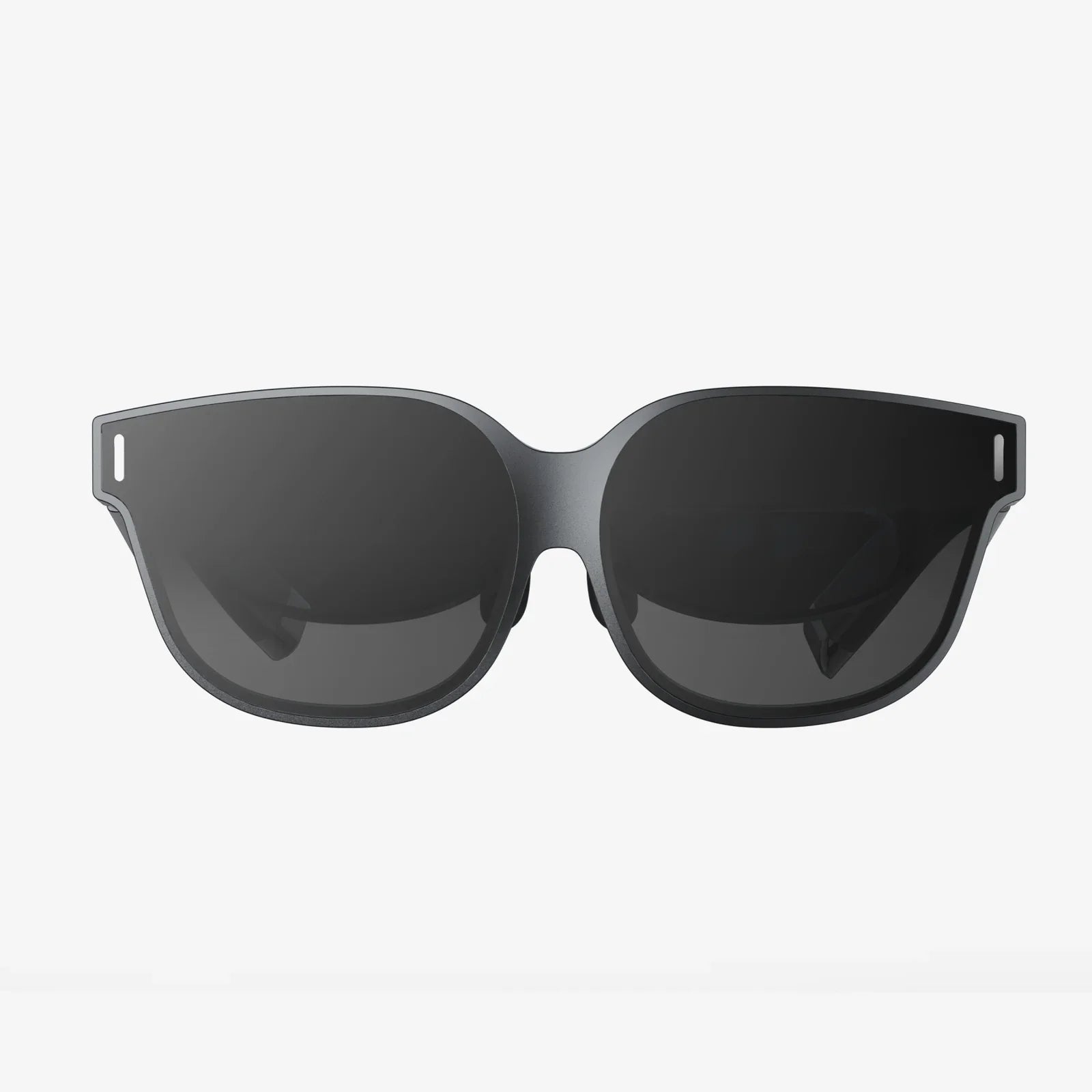
Imagine a world where your most stylish accessory is also your most powerful computer, a seamless blend of cutting-edge artificial intelligence and classic sun protection that transforms how you interact with the world. This isn't a distant sci-fi fantasy; it's the immediate promise of AI sunglasses. These devices are poised to leap from the pages of tech blogs and into our everyday lives, offering a glimpse into a future where information is overlaid onto our reality, communication barriers are dissolved, and our environment becomes an interactive, intelligent space. The question is no longer if such technology will arrive, but what incredible—and concerning—capabilities it will unlock right before our eyes.
The Convergence of Form and Function
At their core, AI sunglasses represent the next logical step in the evolution of wearable technology. They build upon the foundation laid by other devices but with a crucial advantage: they sit directly in our line of sight. This prime real estate allows for a more intuitive and immersive experience than looking down at a wrist or pulling a device from a pocket. The technology integrates miniature displays, often using waveguides or micro-LED projectors to beam information onto the lenses, creating the illusion that text, graphics, and interfaces are floating in the world around you. Coupled with powerful onboard processors, an array of sensors including cameras, microphones, and inertial measurement units (IMUs), and a constant connection to cloud-based AI via cellular or Wi-Fi, these frames become a portal to an augmented existence.
Real-Time Language Translation: Breaking Down Barriers
One of the most instantly compelling and socially transformative applications is real-time language translation. Imagine traveling in a country where you don't speak the language. Someone speaks to you, and within milliseconds, subtitled translations of their words appear on your lenses. You can then respond, and the system can translate your speech into the other person's language, either through text displayed for you to read aloud or even through a synthesized voice played from the glasses. This goes far beyond simple phrasebook assistance; it facilitates genuine, fluid conversation, effectively acting as a universal translator. This capability has the potential to revolutionize tourism, international business, diplomacy, and everyday interactions in multicultural societies, making the world feel significantly smaller and more connected.
Augmented Reality Navigation and Contextual Information
Forget squinting at a phone screen with the sun glaring down. AI sunglasses can project turn-by-turn navigation arrows directly onto the pavement in front of you, highlight the entrance to your destination, or overlay distance markers as you walk or cycle. This heads-up, hands-free guidance is not only convenient but also significantly safer for pedestrians and cyclists. Beyond simple directions, these devices can provide a layer of contextual information about your surroundings. Look at a restaurant, and see its reviews and today's specials float beside it. Glance at a historical landmark, and receive a brief history lesson. Walk through a museum, and see exhibits come to life with additional facts and multimedia. The world becomes an interactive, informative canvas, with the AI working constantly to identify objects and surfaces and serve up relevant data.
Advanced Computer Vision and Object Recognition
The integrated cameras and powerful AI models enable a form of synthetic synesthesia, allowing the glasses to "see" and interpret the world for you. This functionality can be tailored to an astonishing number of use cases:
- Accessibility: For the visually impaired, the glasses can identify and audibly describe people, objects, text, and currency denominations. They can read signs aloud, detect obstacles and changes in elevation on a path, and even recognize familiar faces and whisper their name into the ear.
- Productivity: A quick glance at a complex piece of machinery could bring up a digital schematic or instruction manual overlaid on the device itself. They can scan barcodes or items on a shelf to instantly pull up inventory data, prices, or specifications, invaluable for logistics and warehouse workers.
- Learning and Discovery: Point your gaze at a plant in a garden, and the AI can identify its species and care instructions. Look at the night sky, and see constellations mapped out with their names and mythology.
Personal Assistant and Health Monitoring
Integrated with a virtual assistant, AI sunglasses become the most seamless way to manage your digital life. You can receive discreet notifications for calls, messages, and calendar appointments without ever touching a device. You can set reminders, dictate notes, or control smart home devices with simple voice commands, all while your hands remain free. Furthermore, the biometric sensors embedded in the nose pads or temples can continuously monitor key health metrics such as heart rate, and there is active development in non-invasive methods to track indicators like blood alcohol content or blood glucose levels. This constant health feedback loop could provide early warnings for medical events, track fitness goals, and offer insights into personal well-being, all passively throughout the day.
Content Creation and First-Person Perspective
The always-available cameras open up new frontiers in content creation. From capturing a child's first steps from your own perspective to recording a thrilling mountain bike descent, the footage is inherently immersive and stable. Vloggers and journalists can document events without the barrier of a camera, maintaining eye contact with their subjects. The AI can help frame shots, highlight the best moments, and even live-stream directly from the point of view of the wearer. This creates an entirely new genre of "first-person perspective" media that is more intimate and engaging than traditional filming methods.
The Inevitable Privacy Paradox
However, this incredible power comes with a profound and unavoidable responsibility. The very features that make AI sunglasses so potent—constant recording, facial recognition, and environmental data collection—also make them a significant privacy concern. The potential for mass surveillance, either by corporations or governments, is staggering. The ability to secretly record conversations and identify strangers in public challenges fundamental social norms and legal frameworks. The ethical development of this technology demands robust, transparent, and user-centric privacy controls. Features like a prominent recording indicator light, local on-device processing for sensitive data instead of cloud transmission, and clear, opt-in consent for data collection are not just features; they are essential safeguards for a technology that must earn public trust to succeed.
Societal and Ethical Considerations
The widespread adoption of AI sunglasses will force society to grapple with complex questions. How do we interact with someone who may be recording us without our knowledge? What new forms of digital distraction might these devices introduce, potentially pulling our attention even further away from our immediate physical environment? There is also the risk of creating a new "digital divide," where those who can afford this augmented reality have access to information and capabilities that others do not, exacerbating existing inequalities. Furthermore, the accuracy and potential biases of the underlying AI models must be scrutinized; a mis-translation or mis-identification could have serious real-world consequences.
The Future on the Horizon
The current generation of devices is merely the opening chapter. Future iterations will feature improved battery life, more seamless and brighter displays, and even more sophisticated AI models capable of deeper understanding and anticipation of user needs. We can expect tighter integration with other devices and the emerging "metaverse,"> blurring the lines between physical and digital realities even further. The ultimate goal is for the technology to become so lightweight, efficient, and intuitive that it fades into the background, becoming an invisible extension of our own cognition and perception.
The true power of AI sunglasses lies not in any single feature, but in their aggregation. They combine the intuitive, hands-free convenience of voice assistants with the rich, contextual overlay of augmented reality, all packaged in a socially acceptable and always-accessible form. They promise to make us more knowledgeable, more connected, and more efficient. Yet, they simultaneously challenge us to redefine the boundaries of privacy, consent, and our very humanity in an increasingly quantified and augmented world. The frames on your face are about to become a window into a future that is as awe-inspiring as it is uncertain, and what you see through them will change everything.
Share:
How to Do VR with Android: Your Ultimate Guide to Mobile Virtual Reality
Best VR Headset for Windows: Your Ultimate Guide to PC-Powered Immersion