


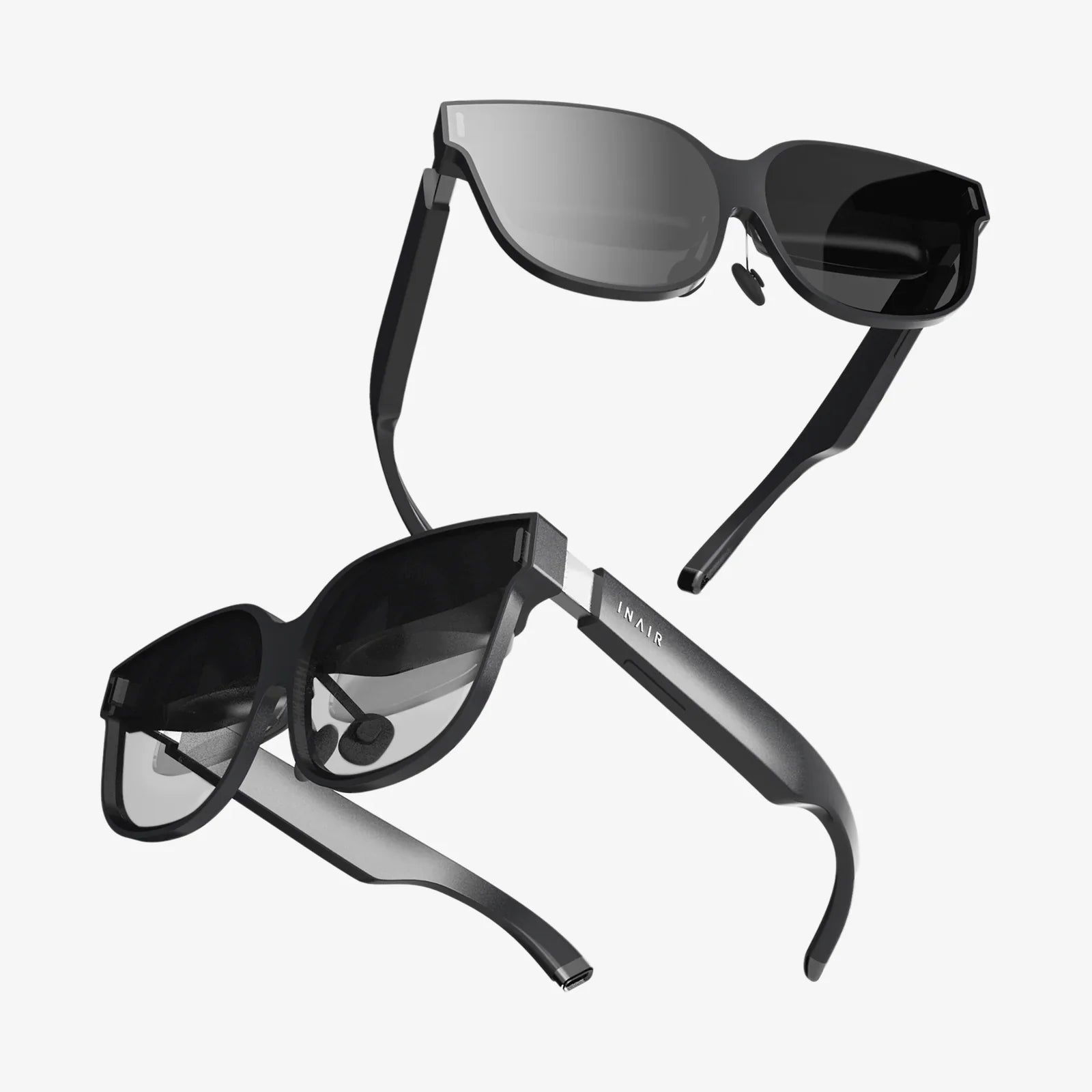
Step beyond the screen and into a new dimension; the world of Virtual Reality (VR) promises an escape, an adventure, a new way to work and play. But have you ever stopped to wonder what fuels this incredible leap from the flat, two-dimensional world of traditional computing into a fully immersive, three-dimensional universe? The magic of VR isn't just in the sleek headset you wear—it's in the vast, intricate, and often invisible river of data flowing behind the scenes, a digital lifeblood that makes the illusion of reality possible. This data is the true engine of immersion, a complex symphony of information types working in perfect harmony to trick your senses and transport your consciousness.
The Architectural Blueprint: 3D Environmental and Model Data
At the very foundation of any VR experience lies the virtual world itself. This is constructed from a rich tapestry of data that defines every object, texture, and space the user can interact with.
Geometric Meshes and Polygons
The skeleton of every virtual object is a mesh, a complex network of vertices, edges, and faces. This wireframe data defines the shape and form of everything from a simple coffee cup to a sprawling alien landscape. The complexity of a mesh is often measured in polygon count; higher counts allow for smoother, more detailed objects but require significantly more processing power and data bandwidth to manipulate and render in real-time.
Textures and Materials
A mesh alone is just a colorless shape. Textures are 2D image files—often high-resolution PNG, JPEG, or more advanced formats like TGA—that are mapped onto the mesh to give it color, detail, and surface properties. This includes:
- Diffuse Maps: The base color and pattern of a surface.
- Normal Maps: A clever data trick that simulates small surface details like bumps and grooves without adding more polygons.
- Specular Maps: Define how shiny or reflective certain parts of a surface are.
- Roughness/Metalness Maps: Advanced data used in physically-based rendering (PBR) to accurately simulate how light interacts with different materials like wood, metal, or fabric.
Environmental and Lighting Data
To create a believable world, VR systems use data to construct the environment. This includes:
- Skyboxes and Skydomes: 360-degree panoramic images or generated skies that create the illusion of a distant environment.
- Lightmaps: Pre-computed data that stores the complex interplay of light and shadow in a static scene, reducing the computational load for real-time rendering.
- Light Probes: Data points placed throughout a scene that capture lighting information for dynamic objects, ensuring they appear naturally lit within their environment.
The Symphony of the Senses: Audio and Haptic Data
Visuals are only one part of the immersion puzzle. Convincing the ears and the body is just as critical, and this requires its own specialized streams of data.
Spatialized 3D Audio
VR audio is not simple stereo. It's dynamic 3D sound that changes based on the user's head position and orientation. This is achieved through:
- Head-Related Transfer Functions (HRTFs): These are complex sets of audio filters, based on data from human subjects, that simulate how sound waves interact with a listener's head, pinnae, and torso. This data allows a sound coming from a specific point in 3D space to be accurately rendered through standard headphones.
- Ambisonic Audio: A full-sphere surround sound format. Instead of storing data for specific speaker channels, it captures a sound field, which can then be decoded and personalized in real-time based on the user's head rotation.
Haptic Feedback Data
The sensation of touch is a powerful tool for presence. Haptic data is relatively simple but precisely timed:
- Waveforms and Patterns: Controllers and haptic suits receive simple command data that triggers specific vibration patterns—a short, sharp buzz for a button press, a long, rumbling waveform for an explosion, or a complex sequence to simulate rain.
- Force Feedback: In advanced systems, data is used to control motors that provide physical resistance, simulating the feel of pushing a heavy object or drawing a bowstring.
The Bridge to Reality: Tracking and Biometric Data
For the virtual world to respond to you, it must constantly be watching you. This bidirectional flow of data is what separates VR from any other medium.
Positional and Rotational Tracking
This is the live, high-frequency data stream that answers the question: "Where is the user?"
- Inside-Out Tracking: Cameras on the headset capture a constant stream of visual data of the surrounding room. Algorithms process this data to identify unique features and use their movement between frames to calculate the headset's own position and rotation in space.
- Outside-In Tracking: External sensors or lasers blanket the play area. They emit signals (like infrared light) that are picked up by sensors on the headset and controllers. The system triangulates this data to pinpoint their exact coordinates with extreme precision.
- Inertial Measurement Units (IMUs): These sensors (gyroscopes, accelerometers, magnetometers) provide high-frequency data on rotational movement and acceleration, filling in the gaps between camera updates to prevent motion blur and lag.
User Input Data
Every button press, trigger pull, thumbstick movement, and gesture is a packet of data sent from the controller to the VR system. This data is incredibly low-latency, ensuring your virtual hands move in perfect sync with your real ones.
Biometric Data (The Future Frontier)
Emerging VR systems are beginning to incorporate user physiological data to enhance immersion and enable new applications:
- Eye-Tracking: Infrared sensors map pupil position and gaze direction. This data is used for foveated rendering (drastically reducing rendering load by focusing detail only where the user is looking), creating more realistic social avatars with lifelike eye contact, and for analytical purposes in training and research.
- Hand and Finger Tracking: Using optical sensors or EMG bands on the wrist, this data captures the nuanced movement of individual fingers, enabling controller-free interaction and more natural communication.
- Heart Rate and Galvanic Skin Response: Sensors can detect user arousal and stress levels. This data could be used to dynamically adapt a horror game to be more or less frightening, or to monitor user focus in a therapeutic setting.
The Invisible Infrastructure: Network and Latency Data
For social, enterprise, and cloud-based VR, the data doesn't just live on a local machine; it travels across networks, introducing a new set of critical data constraints.
The Latency Kill Chain
The single most important technical metric in VR is motion-to-photon latency—the time between a user moving their head and the display updating to reflect that movement. This must be under 20 milliseconds to prevent disorientation and simulator sickness. Every step in the data pipeline contributes to this:
- Sensor Data Capture: Reading the IMU and tracking cameras.
- Positional Calculation: Processing the raw sensor data.
- Rendering: The GPU drawing the new frame from the updated perspective.
- Display: The screen physically switching to the new image.
Data must flow through this pipeline with brutal efficiency.
Cloud Streaming and Social VR Data
Platforms that stream VR content from the cloud or connect multiple users in a shared space handle a monumental data task:
- Compressed Video Streams: The rendered frames are encoded into a high-bitrate video stream (like a supercharged version of a streaming service) and sent to the headset.
- Network State Synchronization: In a multiplayer experience, the position, actions, and audio of every user must be constantly broadcast to every other user's device and synchronized with near-perfect timing. This state data is the glue that holds the shared illusion together.
- Volumetric Data: For photorealistic social avatars, systems may capture and transmit dense 3D mesh data of a user's face and body in real-time, representing the absolute pinnacle of bandwidth requirements.
The Lifecycle of VR Data: From Creation to Consumption
The journey of a single piece of VR data is a long one, often involving multiple specialized tools and pipelines.
Authoring and Creation
Artists and developers use professional software to create the core assets. This stage produces massive, high-fidelity source files—multi-gigabyte texture sets, incredibly dense 3D models, and uncompressed audio recordings.
Optimization and Baking
This is the most crucial data-alchemy stage. The high-fidelity source data is processed and optimized specifically for the real-time constraints of VR:
- 3D models are decimated (reducing polygon count).
- Textures are compressed into GPU-friendly formats like ASTC or ETC2.
- Lighting data is "baked" into lightmaps.
- Audio files are processed with spatialization plugins.
This process often involves a significant trade-off between visual fidelity and performance, a constant balancing act for developers.
Runtime and Execution
Inside the headset and the connected computer, a relentless cycle occurs, typically aiming for 90 times per second or more:
- Data Ingestion: The system takes in the latest tracking and input data.
- World Update: The game or application logic runs, updating the state of the virtual world based on the new data.
- Rendering: The GPU calls upon the optimized asset data (meshes, textures) to draw the scene from the updated perspective.
- Output: The final frame data is sent to the display, and audio data is sent to the headphones.
The next time you don a headset and find yourself marveling at a digital horizon, remember that you are not just looking at a game—you are swimming in an ocean of data. Every shimmer on the water, every echoing footstep in a cavern, and the perfect, one-to-one movement of your virtual hands is the product of countless data streams converging in a precise, real-time dance. This complex ecosystem of environmental, audio, tracking, and network information is the true architecture of immersion, the unsung hero building worlds from the ground up and convincing your brain, against all odds, that you are truly there. It is this invisible framework of information that transforms code into experience and a headset into a portal.
Share:
Metaverse vs Virtual Reality: Understanding the Digital Frontier
How to Use a 3D Virtual Reality Headset: Your Ultimate Guide to Immersive Experiences