


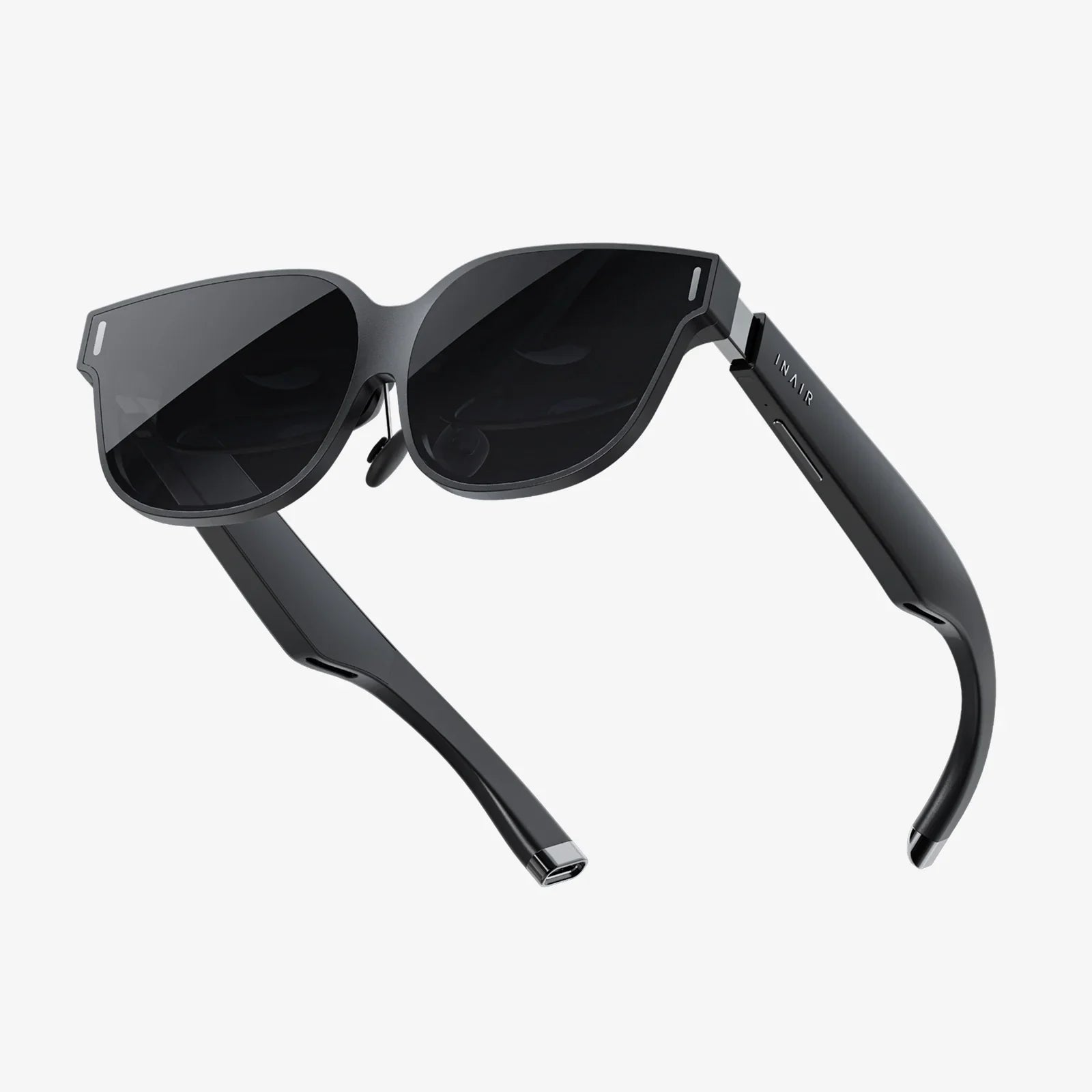
Imagine a world where the digital and physical seamlessly intertwine, where information overlays your vision and virtual objects occupy real space—this is the tantalizing promise that is fueling a multi-billion dollar technological arms race. But beneath the surface of this innovation lies a fierce and increasingly direct battle for dominance, a battle not between two distinct categories, but between two sides of the same coin. The lines are blurring, the technologies are converging, and the market is shaping a future where only the most adaptable will survive. This is the story of why AR and MR are locked in a state of perfect competition, a economic reality that will define the next decade of how we interact with the world.
Deconstructing the Digital Spectrum: Defining AR and MR
Before we can understand their competition, we must first define the players. For years, the industry has operated with a spectrum of terminology, often used interchangeably but representing distinct, if adjacent, concepts.
Augmented Reality (AR) is the technology of superimposing computer-generated information—be it images, text, or data—onto a user's view of the real world. The primary characteristic of a pure AR experience is that the digital elements are simply an overlay; they do not interact with or understand the physical environment in a spatially aware manner. Think of a heads-up display in a vehicle projecting speed onto the windshield or a smartphone app placing a virtual piece of furniture in your living room through the camera view. The real world remains the foundation, enhanced by a layer of data.
Mixed Reality (MR), often positioned as the more advanced evolution, sits further along the spectrum. It not only overlays digital content but also anchors it to and allows it to interact with the real world in real-time. This requires sophisticated sensors, cameras, and algorithms to map the environment, understand surfaces, occlude digital objects behind physical ones, and allow for user interaction. A virtual character that walks around your real coffee table, or a digital tennis ball that bounces off your real wall, are hallmarks of a true MR experience. It creates a hybrid environment where physical and digital objects co-exist and interact.
The critical distinction lies in environmental understanding and interaction. While AR adds a layer, MR blends the layers into a cohesive whole. However, this theoretical distinction is rapidly crumbling in the practical market, setting the stage for intense competition.
The Economic Theory: Hallmarks of a Perfectly Competitive Market
In classical economics, a state of perfect competition is an ideal market structure characterized by several key factors. While no real-world market is ever perfectly perfect, the forces pushing AR and MR together align remarkably well with these principles, creating a fiercely competitive landscape.
- Many Buyers and Sellers: The market for immersive technologies is not dominated by a single monolithic entity. Instead, it is a fragmented landscape with numerous large technology corporations, well-funded startups, and software developers all vying for position. This multitude of actors ensures that no single company can dictate terms or control the market direction unilaterally.
- Homogeneous or Highly Similar Products: This is the core of the argument. To the average consumer, the marketing terms "AR" and "MR" are increasingly meaningless. They seek a solution: a way to see instructions overlaid on a machine they are repairing, to train for a complex surgical procedure, or to play a game that invades their living room. Whether that solution is delivered via high-end AR glasses or a more advanced MR headset matters less than the quality and utility of the experience itself. The end goal—merging digital and physical—is identical, making the products substitutes for one another.
- Low Barriers to Entry and Exit: While developing hardware requires significant capital, the software and application ecosystem, which drives hardware adoption, does not. The development tools and software development kits (SDKs) provided by major players are often free or low-cost, empowering a vast global developer community to build applications. A developer can often build an experience that functions on both AR and MR platforms with minimal adjustments, further eroding the distinction.
- Perfect Information: In the digital age, consumers and enterprises are exceptionally well-informed. Reviews, technical specifications, developer documentation, and video demonstrations are readily available. This transparency means that buyers can easily compare the capabilities of an AR device against an MR device, weighing factors like price, field of view, processing power, and battery life. This easy access to information forces companies to compete directly on specs and price.
These economic conditions create a marketplace where innovation is relentless, prices are driven down by competition, and producers must be highly responsive to consumer demand to survive.
The Great Convergence: How Technology is Blurring the Lines
The theoretical competition is being made inevitable by a rapid technological convergence. The hardware and software that enable AR are the foundational stepping stones to MR.
Consider the components. Both AR and MR devices require:
- Displays: Waveguides, micro-LEDs, OLED displays—the technology to project images in front of the user's eyes is fundamental to both.
- Sensors: Cameras, LiDAR, depth sensors, and inertial measurement units (IMUs) are essential for any device that hopes to understand its position in the world. A basic AR device might use a simple camera for marker-based tracking, while an MR device uses a suite of sensors for full spatial mapping. However, the line is blurring as cost-effective, powerful sensors become ubiquitous, getting baked into even mid-range AR hardware.
- Processing Power: The computational demand of recognizing environments, tracking surfaces, and rendering complex 3D graphics in real-time is immense. The same advances in mobile and dedicated processors that power high-fidelity AR are simultaneously enabling more affordable and capable MR.
- Software Platforms: Major technology platforms are explicitly building unified development environments. These platforms allow developers to create a single application that can scale its capabilities based on the hardware it's running on. On a smartphone, it might offer simple AR; on advanced glasses, it might unlock full MR interaction. This software strategy actively dismantles the wall between the two categories, forcing them to compete on the same playing field.
This shared technological foundation means that the difference between a high-end AR device and a low-end MR device is often just a software update or a minor hardware iteration away. They are not separate markets; they are points on a continuum, and companies are racing to move their products along that continuum to capture more value.
The Battle for the Same Use Cases and Consumer Dollars
Competition is ultimately defined by vying for the same resources. For AR and MR, this means competing for the same enterprise contracts, the same developer mindshare, and the same consumer wallet share.
In enterprise and industrial settings, a company looking to improve efficiency might evaluate both AR glasses for remote expert guidance and MR headsets for complex assembly training. The decision often comes down to a cost-benefit analysis: does the added cost of the MR device's advanced interaction capabilities provide a sufficient return on investment over the simpler AR solution? This direct comparison in procurement decisions is a textbook example of substitutable goods in competition.
For developers, time and resources are finite. Choosing which platform to build for—AR or MR—is a strategic decision. However, as platforms converge, the decision is less about choosing a side and more about choosing how deeply to implement environmental interaction features. They are developing for the functionality, not the label, further forcing the two categories to compete directly on the merit of their capabilities.
Most importantly, they compete for the same budget. An early adopter or a tech-forward business has a limited amount to spend on immersive technology. A higher price point for an MR device must be justified against a capable, but less expensive, AR alternative. This creates intense pressure on pricing, feature sets, and marketing, hallmarks of a competitive market.
The Consumer Perception: Why Labels Don't Matter
The ultimate driver of this perfect competition may be the end-user. For the mass market, the acronyms AR, MR, and even VR (Virtual Reality) are often conflated and poorly understood. The marketing term "spatial computing" is now being used by some industry leaders precisely to avoid this confusion and encompass all these technologies under one umbrella.
Consumers do not buy technology; they buy solutions, experiences, and emotions. They want to play a fun game, learn how to fix something, or be more productive. They care about:
- Is it easy to use?
- Is it comfortable to wear?
- Does the battery last?
- Is the experience compelling and valuable?
- Is it affordable?
Whether the technology inside is classified as AR or MR is irrelevant. This consumer mindset forces producers to compete on these tangible benefits rather than on technical jargon. A company that tries to market pure MR as a premium category distinct from AR risks being undercut by a competitor that offers a "good enough" AR experience at half the price for many of the same tasks. This dynamic is the essence of perfect competition.
The Future: A Battle of Ecosystems, Not Just Devices
The competition will only intensify, but it will evolve. The winner will not be determined by who has the best AR device or the best MR device in a single year. Victory will belong to whoever builds the most robust and compelling ecosystem.
This ecosystem includes:
- The hardware platform.
- The operating system and development tools.
- The app store and content marketplace.
- The cloud services for data storage, rendering, and AI.
- A strong community of loyal developers.
The companies that succeed will be those that recognize they are not in an AR-specific or MR-specific market. They are in the spatial computing market. Their competition is anyone else providing a device that merg the digital and physical worlds. Their strategies, therefore, are not focused on defending a technological category but on aggressively expanding their ecosystem's reach, functionality, and appeal to both developers and users, often by encroaching on the other's perceived territory.
The path forward is not one of peaceful coexistence but of inevitable collision. The shared technological base, identical end goals, and common target audience have placed Augmented Reality and Mixed Reality on a direct competitive course. They are competing for the same developers, the same enterprise contracts, and the same consumers, all armed with perfect information and a plethora of choices. In this economic reality, defined by the relentless pressures of perfect competition, only those who innovate faster, understand user needs better, and build more compelling ecosystems will ultimately define the future of how we see our world.
This isn't just a race to build a better headset; it's a fundamental reshaping of human-computer interaction, and the intense rivalry between these twin technologies is ensuring that the final victor—whether we call it AR, MR, or something else entirely—will be forced to be nothing short of revolutionary. The convergence is already happening in labs and on store shelves, and the choices made today will echo through the very fabric of our digital tomorrow.
Share:
VR Headset Egypt: Unlocking Ancient Worlds and Shaping a Digital Future
How to Do VR with Android: Your Ultimate Guide to Mobile Virtual Reality