


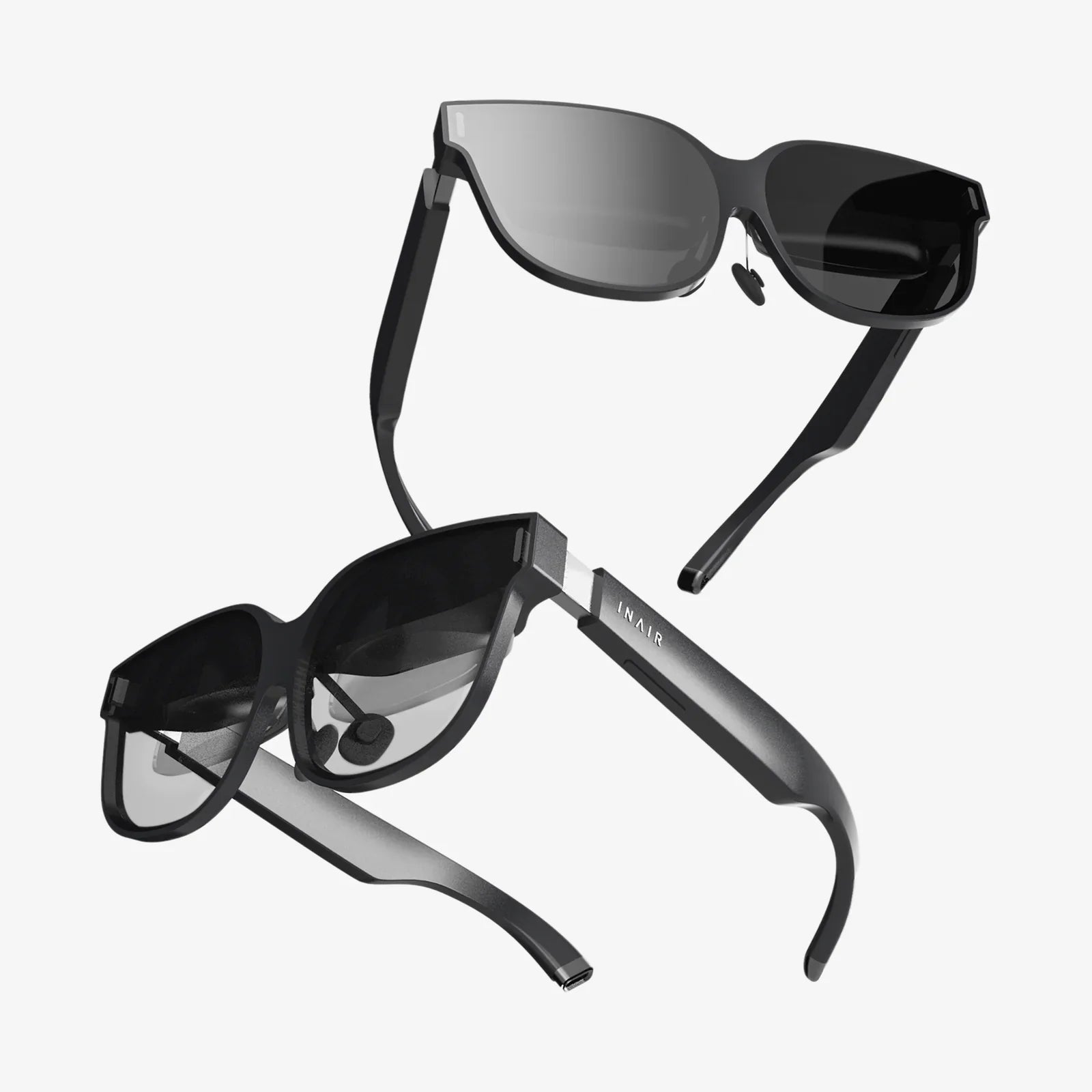
Imagine slipping on a headset and stepping through your computer screen, leaving the flat, two-dimensional confines of your desktop behind for a universe of depth, scale, and possibility. This is the promise of Windows Virtual Reality, a bold initiative that sought to democratize immersive computing and redefine our relationship with the digital realm. It’s a story of ambition, accessibility, and the ongoing evolution of how we interact with technology, a narrative that continues to shape the future of spatial computing.
The Genesis of a Platform: A Unified Vision for Immersion
The concept of virtual reality is decades old, but for much of its history, it remained a niche pursuit, hampered by exorbitant costs, technical complexity, and a lack of cohesive software support. The landscape began to shift in the mid-2010s as consumer-grade hardware emerged, yet a significant barrier remained: the need for a powerful, often expensive, gaming computer and a suite of external sensors for room-scale tracking. This is where the Windows Virtual Reality platform made its entrance.
Introduced not as a single device but as a holistic hardware and software ecosystem, the initiative aimed to streamline the VR experience for the average user. The core innovation lay in its approach to tracking. Instead of relying on external cameras or lasers placed around a room, Windows Mixed Reality headsets pioneered the use of inside-out tracking. This technology integrated cameras directly onto the headset itself, allowing it to map its environment and understand its position in space without any external beacons. This was a monumental leap in convenience and accessibility, effectively eliminating a major pain point for consumers.
Furthermore, the platform was built on a foundation of hardware standardization. While multiple manufacturers produced headsets, they all adhered to a set of specifications defined by Microsoft, ensuring a consistent baseline experience across different devices. This included integrated audio solutions, motion controllers with haptic feedback, and a high-resolution display. The goal was clear: to make entering virtual reality as simple as connecting a monitor, with the Windows operating system serving as the unifying gateway.
The Technical Architecture: How Windows Powers the Virtual World
At the heart of the Windows Virtual Reality experience is a sophisticated software stack seamlessly integrated into the Windows operating system. This deep integration is its greatest strength, providing a layer of stability and familiarity that standalone platforms often lack.
The journey begins in the Windows Mixed Reality Portal. This application acts as the staging ground, the airlock between our reality and the virtual one. It handles device setup, driver management, and environment calibration. Once inside, users are greeted by the Cliff House, a default virtual home environment that serves as a spatial manifestation of the Windows desktop. Here, traditional applications appear as interactive panels that can be pinned to virtual walls, resized, and arranged in three-dimensional space. A user could have a web browser open on one wall, a video player on another, and their personal photos displayed on a virtual shelf, creating a productivity and entertainment hub unlike any other.
The technical magic is performed by a combination of low-level operating system services and high-level APIs. The motion controllers, for instance, communicate their position and button states through drivers that feed data directly into the Windows motion stack. The headset's cameras continuously capture imagery, which is processed in real-time by computer vision algorithms to perform simultaneous localization and mapping (SLAM). This creates a persistent spatial map, allowing the system to remember the layout of your room between sessions—a feature that adds a profound sense of consistency to the experience.
This architecture also allowed for a concept known as Mixed Reality Capture, where a user's physical environment could be digitally reconstructed and incorporated into the virtual space. Using the headset's sensors, the system could generate a low-polygon mesh of your room, allowing virtual objects to interact with real-world obstacles, like a virtual robot scurrying under your physical desk. This blurring of the lines between the real and the virtual hinted at the true potential of mixed reality, of which immersive VR was just one part.
A Universe of Experiences: Gaming, Enterprise, and Beyond
The true value of any platform is measured by the experiences it enables. Windows Virtual Reality, with its access to the vast library of Windows applications and a growing store of native content, offered a diverse portfolio that extended far beyond gaming.
The Gaming Renaissance
For gamers, the platform was a gateway to some of the most acclaimed titles in the VR canon. Through partnerships with storefronts and its own native store, users had access to a wide array of experiences. The inside-out tracking provided a robust and surprisingly accurate foundation for everything from frantic wave shooters to intricate puzzle games. The motion controllers, with their thumbsticks, touchpads, and grip buttons, became natural extensions of the player's hands, enabling intuitive interactions like wielding a lightsaber, drawing a bow, or manipulating complex control panels in a starship cockpit. This accessibility brought a premium gaming experience to a much wider audience who may have been previously deterred by the cost and complexity of alternative setups.
Transforming Productivity and Enterprise
Perhaps the most revolutionary applications were found in professional fields. The ability to inhabit 3D space transformed workflows across numerous industries:
- Design and Architecture: Architects could walk clients through photorealistic renderings of unbuilt homes. Engineers could examine full-scale 3D models of complex machinery, identifying potential design flaws long before manufacturing began.
- Education and Training: Medical students could practice intricate surgical procedures on virtual patients. Mechanics could learn to repair engines by taking them apart virtually, with step-by-step instructions overlaid in their field of view.
- Remote Collaboration: Teams distributed across the globe could meet in a shared virtual boardroom, interacting with 3D data models as if they were in the same physical space, a concept that has only grown more relevant.
This enterprise adoption highlighted VR's potential not just as an entertainment medium, but as a powerful tool for visualization, simulation, and collaboration, fundamentally changing how complex work is done.
The Challenges and the Evolutionary Crossroads
Despite its ambitious vision and technical achievements, the Windows Virtual Reality platform faced significant headwinds. The VR market itself was, and still is, a rapidly evolving and competitive space. The platform's initial consumer momentum was challenged by the rise of more convenient standalone headsets, which offered a compelling, untethered experience without any computer required.
Furthermore, while inside-out tracking was revolutionary for its convenience, early iterations sometimes struggled with precision, particularly with controller tracking when held outside the headset's camera field of view. This could lead to moments of immersion-breaking behavior in highly demanding applications. The need for a specific version of Windows and a graphics card that supported the platform also created a minor fragmentation issue within the broader PC ecosystem.
These challenges prompted a strategic pivot. The focus began to shift from broadly marketing consumer VR to developers and enterprise users, while simultaneously investing in the next generation of the technology stack. This evolution saw the branding gradually transition from "Windows Mixed Reality" to a broader focus on the underlying platform that could power a new class of devices, including those from other manufacturers. This wasn't an end, but a metamorphosis, refining the tools for the creators who were building the future.
The Legacy and The Future Horizon
The impact of the Windows Virtual Reality initiative is undeniable. It succeeded in its primary mission: to lower the barrier to entry for high-quality PC-based virtual reality. It brought immersive experiences to countless users who would have otherwise never tried them, fostering a larger and more diverse community of developers and enthusiasts.
Its most enduring legacy, however, is technological. The inside-out tracking technology it championed has now become the industry standard, adopted by nearly all major headset manufacturers for its elegance and convenience. The deep integration of mixed reality concepts into the Windows shell provided a tantalizing glimpse into a future where our digital and physical realities are not separate, but intertwined.
Today, the foundational work continues. The software platform and its APIs remain a critical part of the Windows ecosystem, providing the underlying support for a new wave of immersive devices. The lessons learned about user experience, spatial interaction, and enterprise application are directly informing the development of next-generation augmented reality (AR) and VR hardware. The quest is no longer just about creating a virtual world to escape to, but about building a persistent spatial layer over our own world—a digital landscape of information, interaction, and connection.
The journey through the virtual pane of glass is far from over; if anything, the view is just now becoming clear. As the technology continues to shrink, become more powerful, and more deeply woven into the fabric of our daily computing, the early vision of an accessible portal to another dimension, pioneered by this platform, will be seen as the crucial first step. The door it opened remains ajar, inviting us to imagine what lies on the other side and to step through into the next chapter of human-computer interaction.
Share:
How Did Virtual Reality Start: The Incredible Journey From Sci-Fi Fantasy To Modern Marvel
Spatial Audio Meetings: The Revolutionary Shift in Remote Collaboration and Connection