


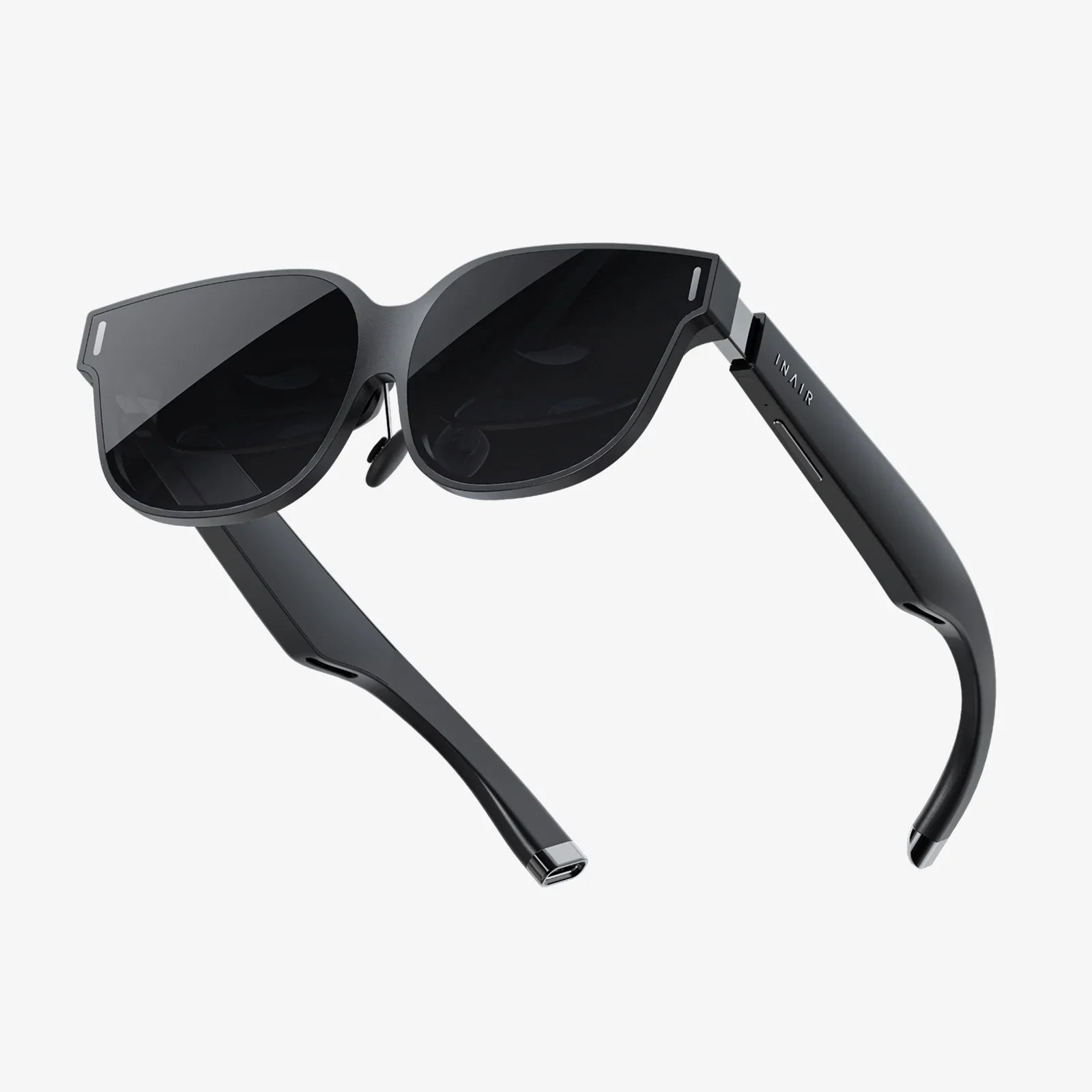
Remember the clunky, futuristic promises of wearable computing from sci-fi movies? Hold onto your seat, because 2024 isn't just meeting those expectations—it's shattering them, transforming XR glasses from a curious novelty into an indispensable tool for work, play, and everything in between. This is the year the digital and physical worlds don't just coexist; they converge seamlessly on the bridge of your nose.
The Great Leap Forward: Beyond the Gimmick
For years, the conversation around augmented and mixed reality was dominated by either fantastical hype or disappointing reality checks. The hardware was often too heavy, the field of view too narrow, the battery life too short, and the price too high. 2024 represents a fundamental shift, not merely an incremental update. The components that power these devices have undergone a quiet revolution, culminating in a generation of glasses that feel less like a prototype and more like a finished product.
The most noticeable advancement is in optical engineering. Waveguide technology, the method by which digital images are projected onto the lenses, has matured dramatically. We're seeing devices with significantly wider fields of view that no longer feel like looking through a small window, but rather like having a vast, persistent screen floating in your environment. Furthermore, advancements in micro-LED and laser beam scanning have solved the age-old problem of brightness and contrast. The visuals are now clear and vibrant enough to be visible and usable even in direct sunlight, a previous Achilles' heel for outdoor use.
Under the hood, a new class of dedicated spatial co-processors is handling the immense workload of simultaneous localization and mapping (SLAM). These chips are designed from the ground up to understand the geometry of a room, track the user's position within it, and anchor digital objects with rock-solid stability, all while sipping battery power instead of guzzling it. This efficiency is the key to all-day usability. Combined with sleek, lightweight form factors that increasingly resemble premium traditional eyewear, the physical barriers to adoption are crumbling.
The Engine Room: Powering the Immersive Experience
Hardware is nothing without the software and connectivity to bring it to life. In 2024, the ecosystem surrounding XR glasses has become robust and sophisticated.
Connectivity: The 5G and Wi-Fi 6E Effect
The true potential of XR glasses is unlocked through seamless, high-bandwidth, low-latency connectivity. The widespread deployment of 5G networks and the adoption of Wi-Fi 6E in homes and offices are critical enablers. These technologies allow for complex rendering tasks to be offloaded to more powerful remote servers (cloud rendering), reducing the processing burden—and thus the heat and size—of the glasses themselves. This means a user can experience a photorealistic 3D model or a high-definition virtual meeting without their device overheating or stuttering, as the heavy lifting is done elsewhere and streamed flawlessly to their lenses.
The AI Co-pilot
Perhaps the most significant software evolution is the deep integration of on-device artificial intelligence. Modern XR glasses are not just display devices; they are perception engines. Using their array of cameras and sensors, they constantly analyze the user's environment. AI models can now understand context in real-time: recognizing objects on your desk, translating text on a foreign menu as you look at it, or identifying the parts of a machine you are trying to repair and overlaying the correct section of the manual. This transforms the glasses from a passive screen into an active, intelligent assistant that anticipates your needs.
Killer Apps: From Productivity to Human Connection
The technological specs are impressive, but it's the applications that make the technology stick. 2024 has seen the emergence of clear, compelling use cases that provide tangible value.
Redefining the Workspace
The concept of the virtual office is being realized. Knowledge workers are no longer tethered to physical monitors. With their XR glasses, they can create multiple virtual screens of any size, positioned anywhere in their physical space. This portable, limitless workspace increases focus and productivity. Collaborative design and engineering have been revolutionized; teams spread across the globe can meet in a shared virtual space and interact with a 3D holographic model of a new product as if it were physically present, making edits and annotations in real time. For field service technicians, step-by-step instructions and schematics are overlaid directly onto the equipment they are servicing, drastically reducing errors and training time.
The Social Layer on Reality
XR is adding a new, rich layer to social interaction. Instead of flat video calls, friends and family can appear as life-like avatars or even full volumetric captures in your living room, able to share and manipulate 3D content together—from planning a vacation by exploring a virtual hotel room to studying the human heart by examining a detailed hologram. This shared presence fosters a deeper sense of connection than traditional video conferencing can ever achieve.
Contextual Computing and Accessibility
The applications extend far beyond work and socializing. For individuals with visual impairments, real-time scene description and navigation cues can provide unprecedented independence. For language learners, instant translation overlays on signs and conversations break down barriers. In retail, shoppers can virtually try on clothes or see how a new piece of furniture would look in their home at full scale before buying. The device is becoming a universal tool for enhancing human capability.
Navigating the New Frontier: Challenges and Considerations
This rapid adoption is not without its growing pains. The pervasive, always-on nature of the sensors in XR glasses raises serious and valid questions about privacy and data security. The industry is grappling with establishing clear norms and robust security frameworks to ensure that this intimate data is never misused. There is a critical need for "privacy by design" principles, with features like physical camera shutters and clear, user-controlled indicators of when data is being captured.
Furthermore, the potential for digital addiction and the blurring of lines between the real world and the digital one present societal challenges that we are only beginning to understand. Establishing digital wellness features and promoting healthy usage patterns will be essential for the long-term health of the ecosystem.
The Road Ahead: A World Transformed
Looking forward, the trajectory is clear. The XR glasses of 2024 are the foundational platform upon which the next decade of computing will be built. We are moving towards a future where information is not confined to rectangles in our pockets or on our desks but is elegantly integrated into our perception of reality itself. This will unlock new forms of creativity, solve complex problems through enhanced visualization, and connect humanity in ways we are only starting to imagine.
The journey into this spatial computing era is no longer a speculative fantasy; it's a present-day reality with profound implications. The devices on the market today are the gateway to a more efficient, creative, and connected way of living, offering a glimpse into a future where our digital and physical lives are not separate, but synergistically enhanced. The revolution isn't coming; it's already here, and it's waiting for you to put it on.
Share:
Virtual Glasses Fitting: The Future of Eyewear Shopping is Here
Virtual Gaming Glasses: The Next Frontier in Immersive Play